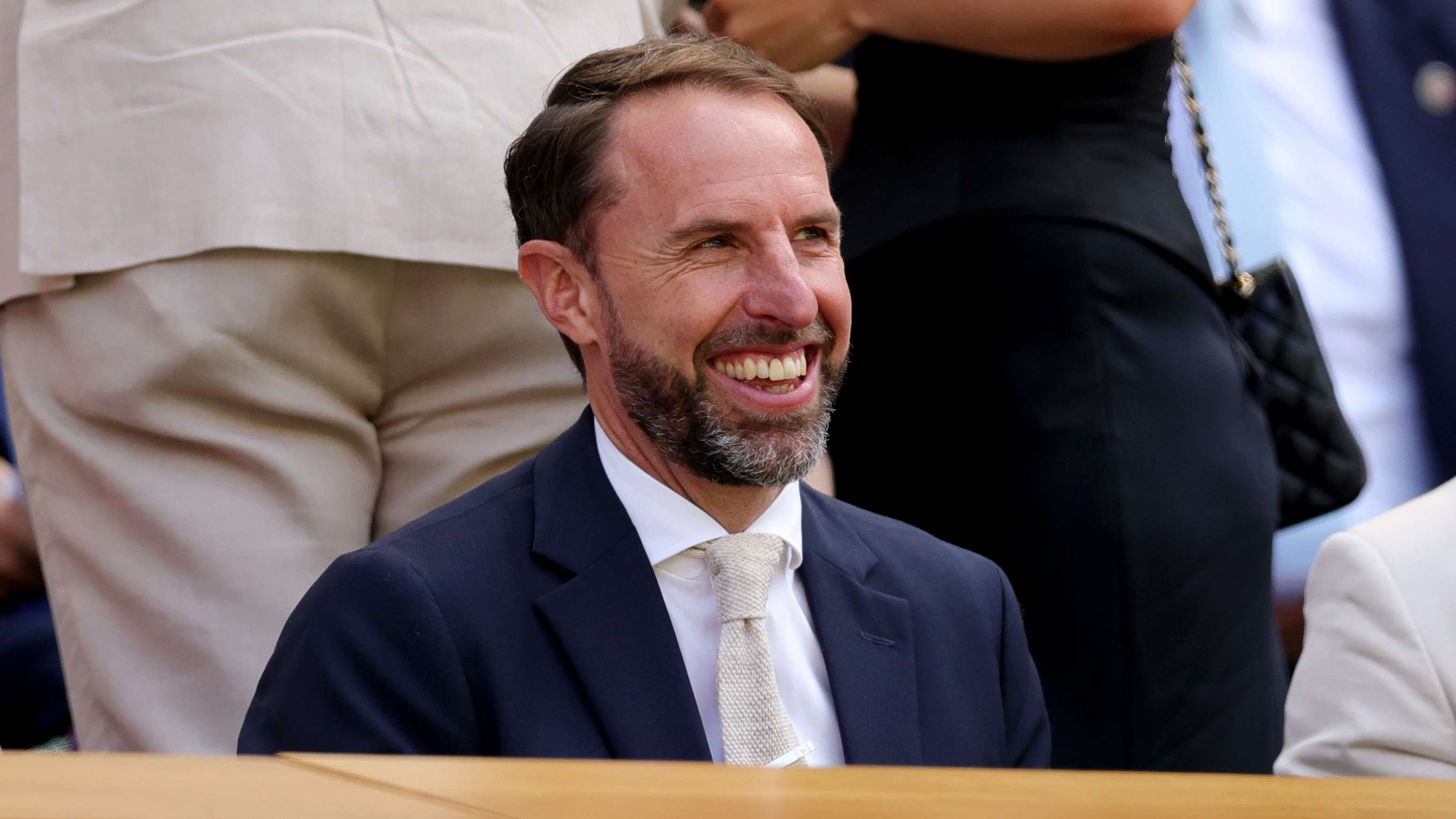

Gareth Southgate Rules Out Premier League Return as He Rediscovers Life Beyond Football
Gareth Southgate has ruled out a return to Premier League management, saying he lost his enjoyment of football during the final stretch of his England tenure and is now embracing a life away from the pressure of matchdays. The former Three Lions manager has not taken charge of a team since stepping down after England’s defeat to Spain in the Euro 2024 final.
Southgate’s comments should put an end, at least for now, to speculation linking him with a return to the dugout. His name has previously surfaced in discussions about major club vacancies, including Manchester United, where he was mentioned during the closing period of Erik ten Hag’s reign. Any future uncertainty around the Old Trafford job could prompt fresh rumours, but Southgate has made his position clear.
Speaking on The Amol Rajan Connection podcast, he was asked whether he could imagine managing in the Premier League again. His response was direct: “I don’t see a scenario where that could happen.”
Why Southgate says the appeal of management faded
Southgate spent eight years leading England, guiding the national team to the 2018 World Cup semi-finals and the Euro 2020 final, which was played in 2021. England reached another European Championship final at Euro 2024, but lost to Spain, bringing his time in charge to a close.
Those achievements made Southgate one of the most prominent figures in English football. Yet he has now described how the emotional rewards of the job diminished as the years went on. Winning, once the result that could lift the pressure and justify the work, eventually provided only brief relief.
“At the end of my time with England, I stopped enjoying it, at least for a period of time, and the wins were what kept me going,” he said. He added that, by the end, he no longer enjoyed victories for more than a couple of minutes and had barely watched football matches.
His remarks offer a revealing perspective on the demands placed on elite managers. Results are only the most visible part of the role: international managers also face relentless scrutiny, public debate over selection, and the responsibility of representing a nation. When that pressure becomes constant, even success can lose its ability to provide lasting satisfaction.
Crystal Palace’s historic cup win brought him back to a stadium
Southgate’s relationship with watching football has changed since leaving the England job. One occasion did bring him back to the stands: the 2025 FA Cup final, where Crystal Palace won the first major trophy in the club’s history. Southgate, a Palace supporter, attended to see the achievement in person.
He said he had not visited another football stadium since that final, adding that his desire to be involved in the sport had shifted. The moment was significant not only because of Palace’s historic success, but also because it was a rare matchday experience chosen for personal reasons rather than professional duty.
For supporters, football is often a source of excitement, belonging and weekly routine. For someone whose career has revolved around preparation, performance and public judgment, stepping away can create space to experience the game differently—or not to follow it closely at all. Southgate’s account suggests he is not rushing to replace one demanding role with another.
New work, new perspectives and a different chapter
Since leaving the England post, Southgate has explored opportunities outside coaching. He presented a BBC documentary examining challenges facing boys and young men in the United Kingdom and took on a visiting lecturer role at Harvard Business School in the United States. He has also met people from politics and the media and travelled to learn about leadership in different settings.
Southgate described the change as a welcome break from a career in which his sense of self had been closely tied to the result on a Saturday. “I’ve enjoyed the last 18 months of my life,” he said, reflecting on a period that has allowed him to take on unfamiliar experiences and broaden his understanding of leadership.
His comments point to a wider conversation about life after elite sport. Managers and players can spend decades inside a results-driven environment, where success and failure are measured publicly and often immediately. Moving into education, broadcasting or documentary work offers a chance to use that experience without being defined by the next fixture or league-table prediction.
Southgate has not announced a permanent career direction, and his recent projects do not necessarily mean he will never return to football in another capacity. But his current message is clear: he is enjoying the freedom to explore different interests, without the weekly pressure of preparing a team for competition.
Southgate warns that the Manchester City case has no easy outcome
The former England manager also discussed Manchester City’s legal dispute with the Premier League over alleged financial-rule breaches. An independent commission found that the majority of charges relating to the period between the 2009-10 and 2017-18 seasons were proven. City deny wrongdoing and have appealed.
Southgate cautioned against treating the case as a simple contest with an obvious winner. He acknowledged that some rival supporters may want severe punishment, such as relegation or a substantial fine, but argued that the wider consequences could be difficult for the league and the sport to manage.
Having worked inside club boardrooms and attended meetings involving UEFA and FIFA, Southgate said he understood how complicated football governance can be. He raised questions about the length of the process, the possibility of further legal action, the appropriate sanction and the challenge of preserving stability across the game.
His view was that the dispute offers little positive value to football, whatever the eventual outcome. Even if the Premier League believes a ruling supports its position, the next stage could bring further uncertainty and debate. For clubs, supporters and administrators, the case is a reminder that financial regulation is not only about punishment: it also concerns transparency, consistent enforcement and confidence in the competition.
Southgate’s comments on both his career and the City case reflect a measured approach shaped by years inside the sport. He is not offering a prediction about when he might return to football, nor endorsing a particular outcome in a complex legal dispute. Instead, he is describing a deliberate step back—from management, from constant match-watching and from the assumption that his next chapter must be decided by the game.