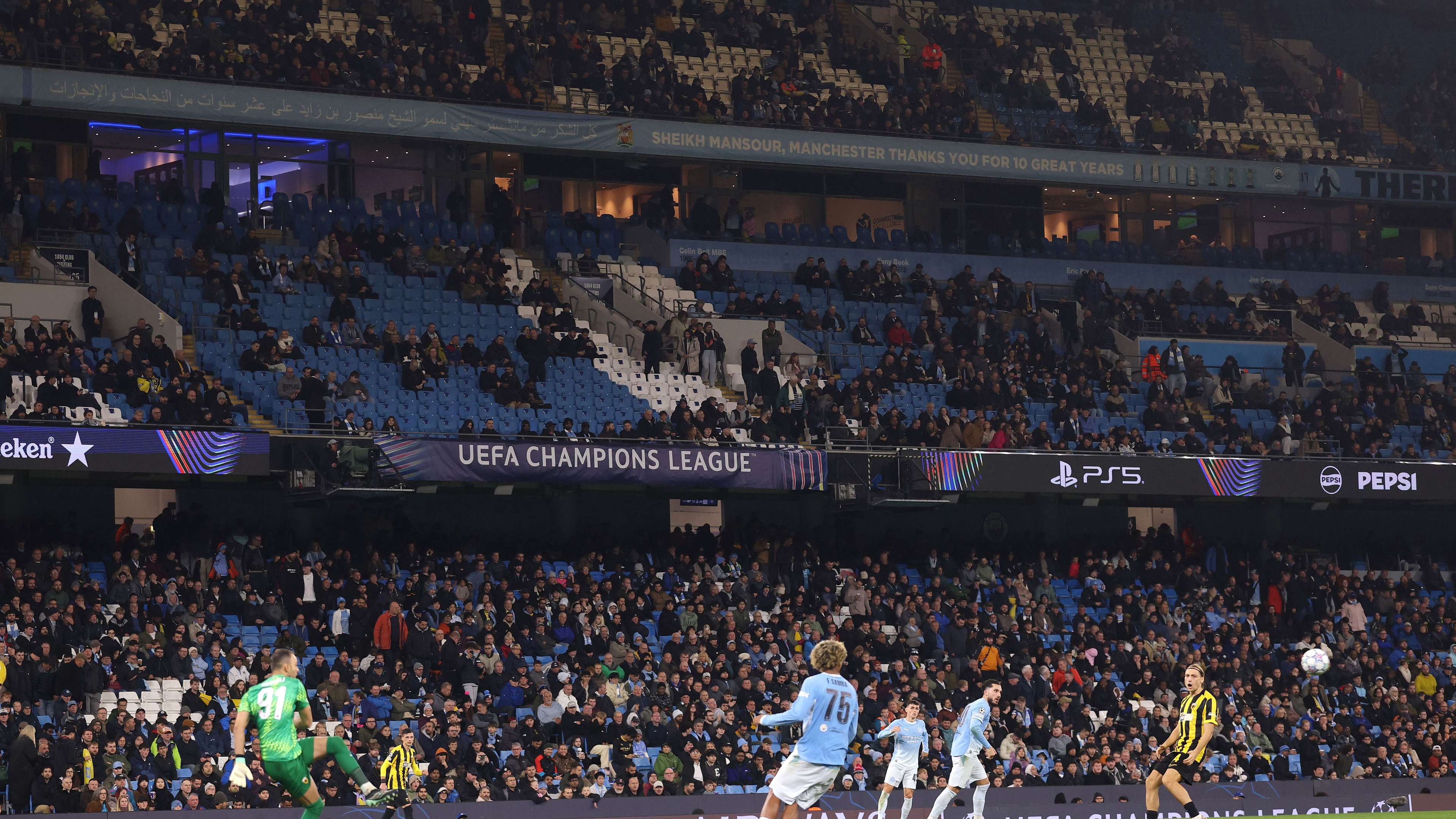

Empty Seats at the Etihad Overshadow Manchester City’s 5-1 Champions League Win
Manchester City delivered a commanding performance against AEK Athens, winning 5-1 in the third round of the Champions League league phase. But while the scoreline reflected the hosts’ superiority on the pitch, the atmosphere in the stands became a talking point after the final whistle. The Etihad Stadium appeared far from full, prompting questions about attendance, ticket demand and the appeal of a midweek European fixture.
According to the Mirror, the official attendance was 40,024. That figure was notably below the stadium’s current capacity of 61,038, leaving large sections of blue seats visibly unoccupied. Renovation work is ongoing at the Etihad, but even accounting for changes to the ground, the reported crowd meant the venue was only around two-thirds full.
A convincing result, but a quieter-than-expected crowd
On the field, City gave their supporters plenty to enjoy. Phil Foden scored a hat-trick, while Elliot Anderson and Rayan Cherki also found the net as the Premier League side overwhelmed their Greek visitors. The five-goal haul underlined the difference in quality between the teams and gave City a comfortable result in their Champions League campaign.
Yet the match did not generate the packed, high-energy spectacle often associated with a major European night at the Etihad. Empty seats were apparent during the game, and the contrast between City’s attacking display and the gaps in the stands became difficult to ignore. For a club competing among Europe’s leading teams, a modest crowd for a Champions League fixture naturally invites discussion.
The attendance should be considered in context, however. City had played three home matches in the space of seven days, a demanding schedule that can test even the most committed supporters. The run included a defeat to Paris Saint-Germain and a victory over Ipswich before the meeting with AEK. Repeated trips to the stadium, particularly for evening kick-offs, can be challenging for fans balancing work, travel and family commitments.
Fixture congestion and opponent appeal may have played a part
The identity of the opposition may also have influenced demand. AEK Athens are a respected club with a passionate following, but they were not widely viewed as one of the strongest contenders in the competition. City were expected to control the match, and the eventual 5-1 scoreline followed that general prediction. When supporters anticipate a one-sided contest, some may be less inclined to attend than they would be for a meeting with a European heavyweight.
That does not mean the fixture lacked sporting importance. Every league-phase match can affect a club’s position and its route through the competition, while a strong goal difference may prove valuable in a tightly contested table. City’s emphatic win strengthened their campaign and offered an opportunity to build momentum. Still, the balance between competitive significance and perceived entertainment value can shape how attractive a game feels to fans deciding whether to buy a ticket.
Ticket availability, pricing and travel arrangements are other factors that can influence attendance. A midweek match may require supporters to make late journeys home, while visitors from outside Manchester face additional costs and logistical hurdles. Without detailed information about ticket sales or the reasons fans stayed away, it would be premature to attribute the crowd solely to disinterest in the team or the competition.
What the attendance means for Manchester City
For City, the empty seats are unlikely to diminish the value of a decisive victory, but they do raise a broader question about how clubs maintain engagement during a crowded football calendar. Supporters are asked to follow domestic and European competitions across a long season, and a run of home fixtures in quick succession can make attendance harder to sustain. Even successful teams must consider how scheduling, ticket access and matchday experience affect the relationship between the club and its audience.
The stadium’s renovation work adds another layer to the picture. With the Etihad’s capacity listed at 61,038, construction may alter the layout or availability of certain areas, but the reported attendance still points to a substantial number of seats not occupied on the night. As redevelopment continues, the club will be expected to balance improvements to the venue with maintaining a lively atmosphere during matches.
That atmosphere matters beyond appearances. A full, vocal stadium can help create a memorable European occasion, energise players and make the ground more intimidating for visiting teams. City’s performance against AEK did not appear to suffer from the quieter crowd, but supporters remain a central part of football’s appeal. The gap between the team’s success and the attendance figure therefore attracted attention precisely because expectations at the Etihad are high.
City’s result and the wider football conversation
Foden’s hat-trick was the standout individual achievement, while the contributions from Anderson and Cherki demonstrated City’s attacking depth. The result also offered a useful reminder that Champions League progress is built through consistent performances across the league phase, not simply headline matches against famous opponents. City completed their task emphatically, even if the stands did not provide the backdrop many would expect for a European night.
For fans looking ahead to the next round, City’s attacking form will encourage optimism, although any prediction about their wider Champions League prospects depends on the challenges still to come. Stronger opposition will test their defence and ability to control games under pressure. The 5-1 win was an ideal result on paper, but it should be judged alongside the quality of the opponent and the demands of the remaining schedule.
Ultimately, the evening produced two contrasting stories: a ruthless Manchester City performance and a crowd that fell well short of the stadium’s stated capacity. The football was decisive, with Foden leading the way in a comfortable victory. The attendance, meanwhile, has renewed debate about fixture congestion, matchday costs and the challenge of filling a large stadium for every game. City will take the three points and the goals, but the empty seats ensured that the conversation did not end with the final whistle.