
Vinícius Júnior’s Hair-Pull Red Card Revives Questions About Refereeing Consistency
Vinícius Júnior is at the centre of a fresh football controversy after being sent off for pulling an opponent’s hair in Real Madrid’s match against Villarreal. The incident brought back memories of a strikingly similar episode at Valencia’s Mestalla stadium in January 2025, when Vinícius was dismissed after reacting to goalkeeper Stole Dimitrievski pulling his braids.
The two incidents unfolded under different circumstances and involved different referees, but their similarities have prompted renewed debate about consistency, VAR intervention and how officials judge physical conduct during heated matches. For supporters, the contrast raises a straightforward question: why did one hair pull lead to a red card for the player who reacted, while the other resulted in a dismissal for the player who committed it?
What Happened in the Villarreal Match?
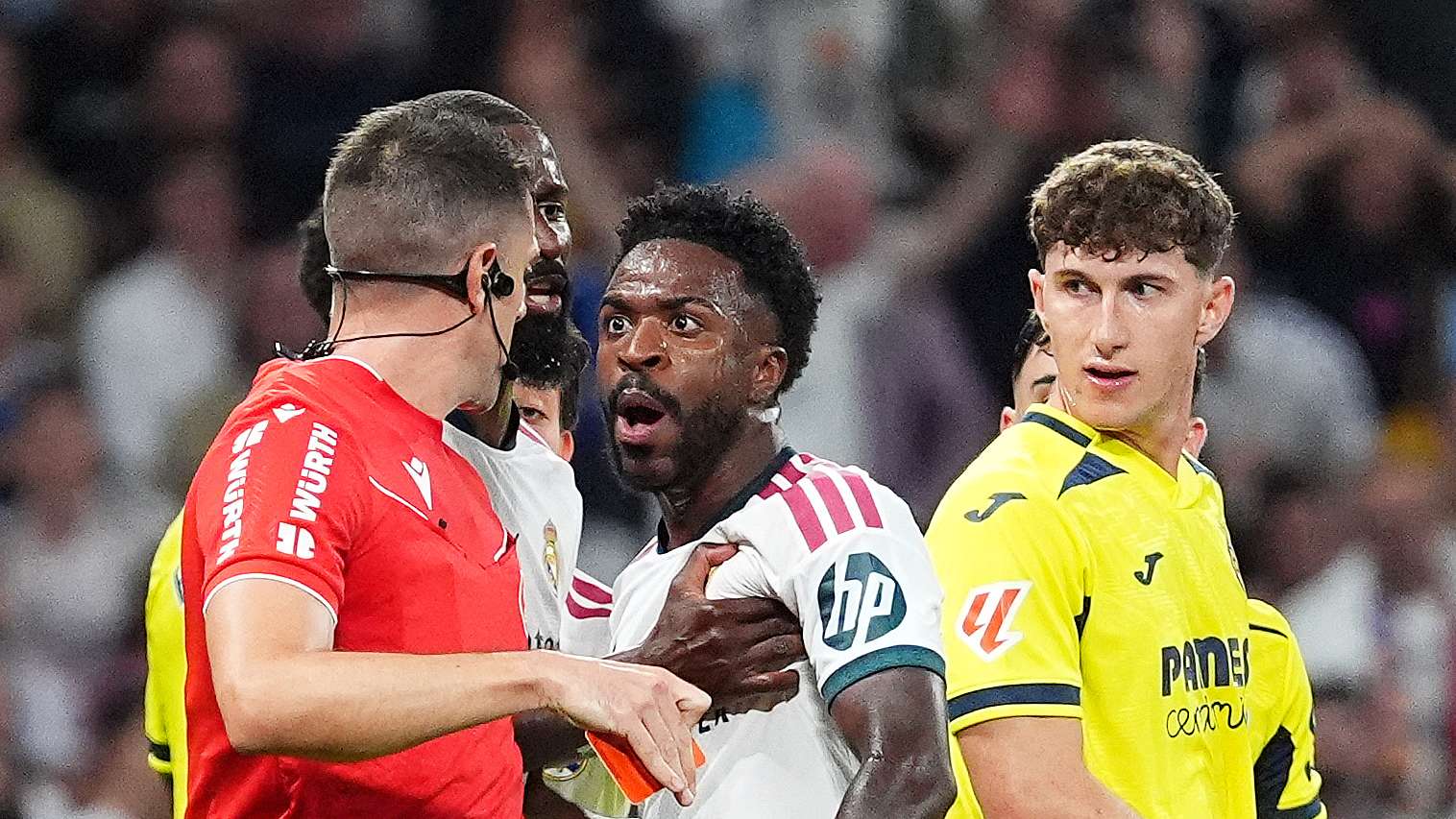
Vinícius believed he had scored his second goal against Villarreal, but the celebration was interrupted when the video assistant referee, Isidro Díaz de Mera, asked the referee to review an incident from the build-up. Replays appeared to show the Brazilian pulling Nathan Saliba’s hair while the pair were away from the ball.
After reviewing the footage, the referee disallowed the goal and showed Vinícius a straight red card. The decision turned a potential goal celebration into another flashpoint in the forward’s increasingly scrutinised career. Vinícius protested as he left the pitch, and teammates stepped in to prevent the confrontation from escalating. Antonio Rüdiger again helped guide him away.
The sequence also illustrates how VAR can reshape a match in seconds. A goal that initially seemed to extend Real Madrid’s advantage was removed from the scoreboard, while the review led to a sending-off. For coaches and players, such decisions can have consequences beyond the immediate score: a team must reorganise, manage the emotional fallout and potentially cope without a key attacker in subsequent fixtures, depending on disciplinary rulings.
The Mestalla Incident That Still Fuels the Debate
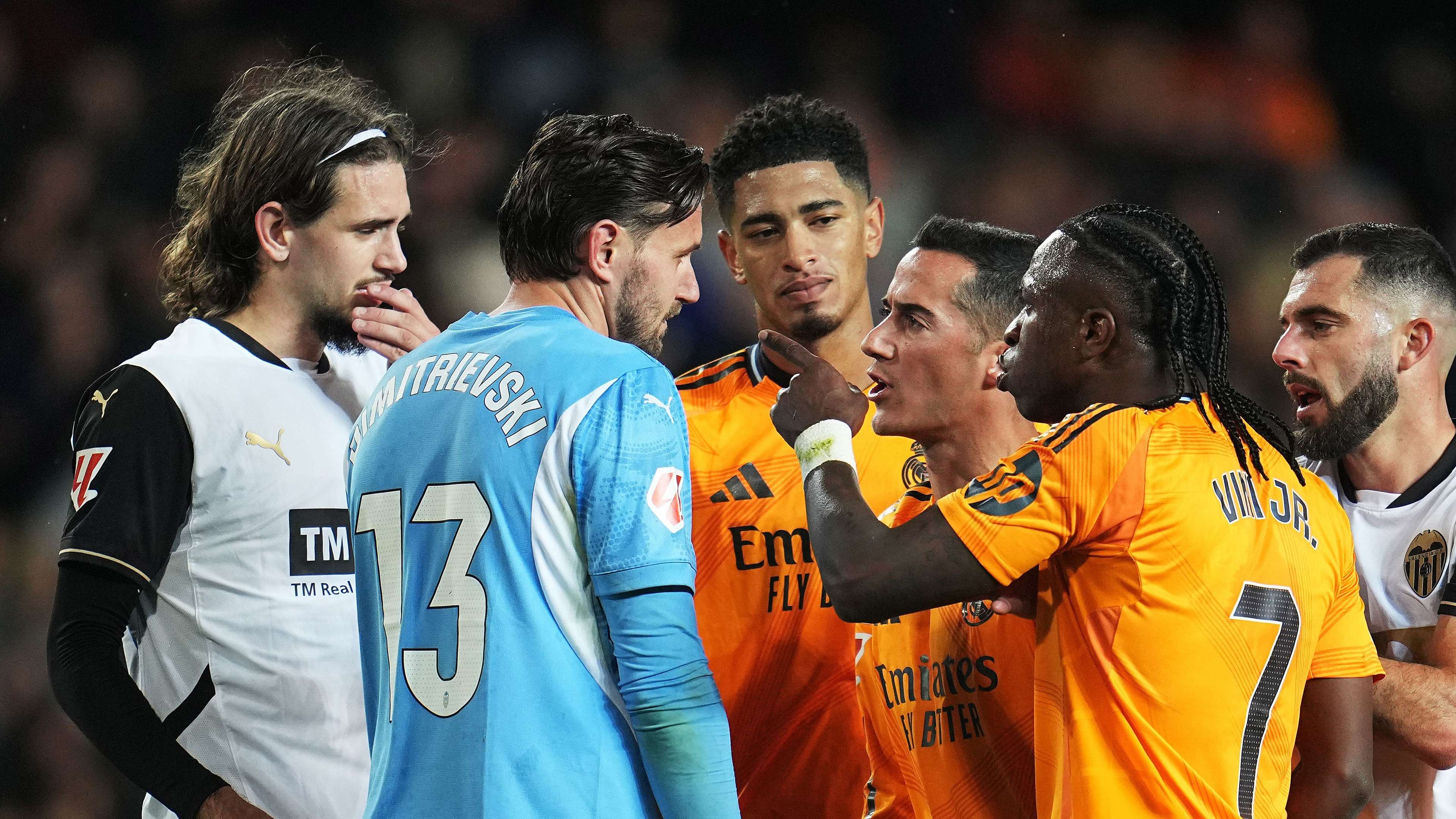
The earlier confrontation took place during Valencia’s match against Real Madrid at Mestalla in January 2025. With the result still in the balance, Vinícius went down inside the penalty area while appealing for a foul. Dimitrievski approached from behind and pulled the Brazilian’s braids.
Vinícius responded by shoving the goalkeeper, who fell to the ground. Players from both teams quickly gathered as tempers flared, and referee César Soto Grado issued yellow cards during the initial confrontation. The key moment came when VAR asked Soto Grado to review Vinícius’s reaction.
After watching the replay, the referee changed his decision and sent Vinícius off with a straight red card for the shove. Dimitrievski, who had already been booked, was not shown a second yellow for the hair pull that had preceded the push. That distinction became the central point of criticism: Vinícius was punished for his response, while the goalkeeper avoided further sanction for the act that sparked it.
The dismissal intensified the dispute. Vinícius protested strongly, and Rüdiger, along with members of the coaching staff, had to hold him back and escort him towards the dressing room. Real Madrid manager Carlo Ancelotti later questioned the decision, arguing that a yellow card for each player would have been a more balanced outcome.
Vinícius subsequently apologised for his reaction on social media and thanked his teammates for their efforts in securing the win. That response helped shift attention from the immediate confrontation to a broader discussion about how provocation and retaliation should be handled in football.
Why the Two Decisions Are Being Compared
The two episodes are not identical. In Valencia, the referee judged Vinícius’s shove after a goalkeeper had pulled his hair; in the Villarreal match, the review focused on Vinícius’s own hair pull during play. The actions, match contexts and refereeing decisions therefore need to be assessed separately rather than treated as a simple replay of the same incident.
Even so, both cases involve contact with an opponent’s hair, a VAR review or discussion, and Vinícius leaving the field amid protests. That combination makes comparisons almost inevitable. The difference in outcome has also renewed calls for clearer communication about how referees distinguish between violent conduct, unsporting behaviour and a reaction to provocation.
Under football’s disciplinary framework, pulling an opponent’s hair may be treated as serious misconduct, particularly when it is deliberate and unrelated to a genuine attempt to play the ball. Officials must also consider the force used, the location of the incident and the surrounding circumstances. VAR can recommend a review when a potential red-card offence has been missed, but the referee remains responsible for the final decision.
What the Controversy Means for Real Madrid
For Real Madrid, the immediate challenge is practical as well as disciplinary. A red card can force a tactical reshuffle, interrupt attacking momentum and leave the team with fewer options during a demanding run of fixtures. The disallowed goal adds another layer of frustration, particularly when players and fans believe a promising moment has been taken away after review.
Vinícius’s reactions are also likely to remain under close scrutiny. As one of the most recognisable players in world football, his conduct attracts intense attention, and every confrontation can quickly become a talking point. That visibility brings pressure to stay composed, especially when an opponent’s actions appear provocative. At the same time, officials face the challenge of applying the rules consistently regardless of a player’s reputation or the noise surrounding a match.
Prediction: Expect More Scrutiny Around VAR and Discipline
The latest dismissal is unlikely to end the debate. A reasonable prediction is that future hair-pull incidents involving high-profile players will draw even closer examination from referees and VAR teams, with clubs and supporters demanding greater consistency in how similar actions are punished. Clearer explanations after reviews could also help fans understand why one incident leads to a red card while another does not.
For Vinícius and Real Madrid, the best response will be to focus on the football while awaiting the relevant disciplinary decision. The wider lesson for the sport is equally clear: when a match contains provocation, retaliation and a VAR review, the quality of the decision matters—but so does the clarity with which it is explained. Until those standards feel consistent, incidents like these will continue to shape the conversation long after the final whistle.