
Vinícius Júnior’s Instagram post fuels controversy after Villarreal red card
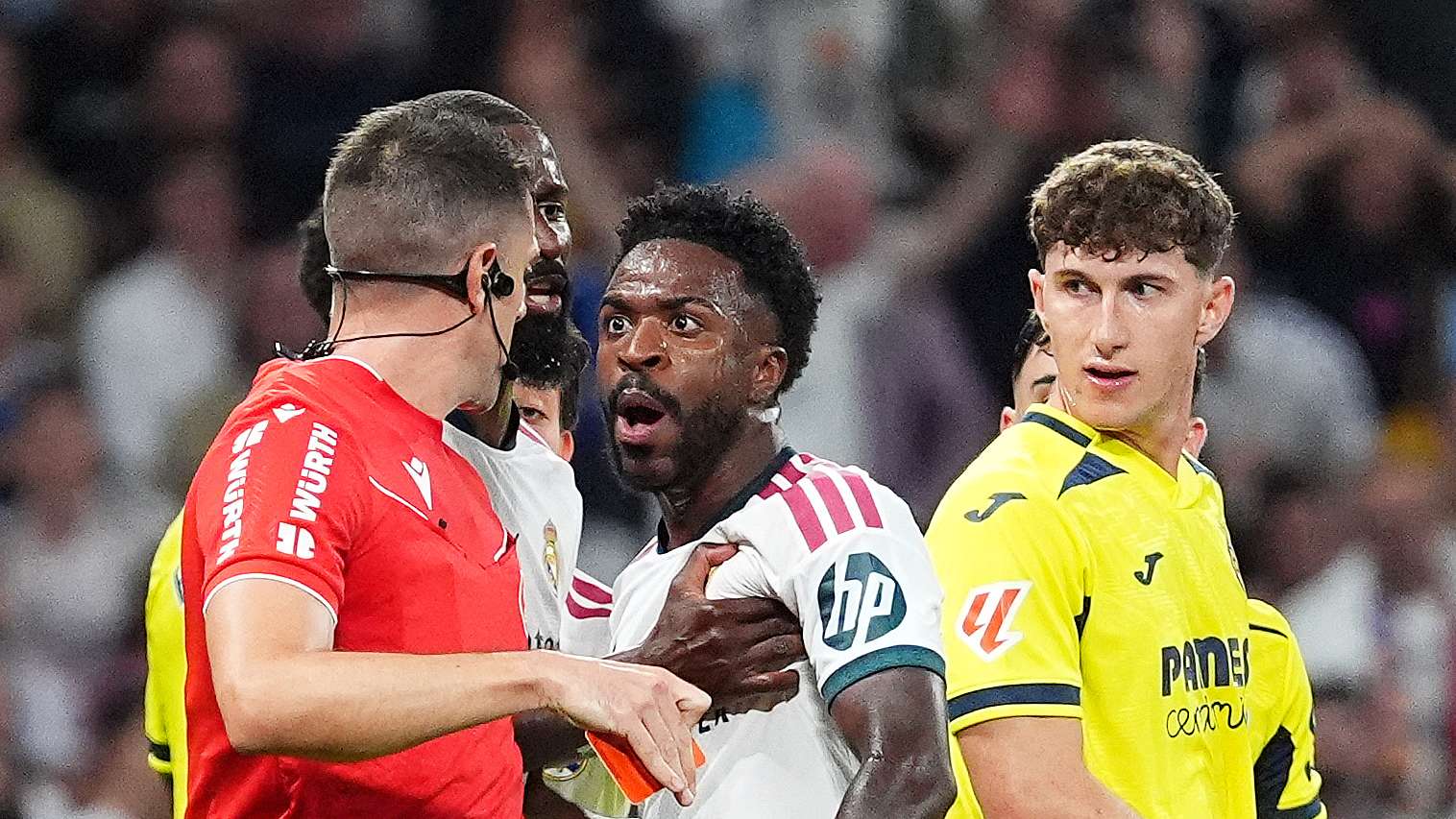
Vinícius Júnior is back at the centre of a football controversy after a dramatic appearance against Villarreal ended in a sending-off—and a social media post that reignited debate over how the Real Madrid forward is treated by referees. The Brazilian scored after coming off the bench, but his goal was disallowed and he was shown a straight red card following an incident involving a Villarreal player’s hair.
The dismissal has added another talking point to an already intense rivalry and could have significant consequences for Madrid’s next major fixture: the Clásico. Vinícius later apologised to his teammates and the club’s supporters, but a repost on Instagram Stories soon drew fresh attention and prompted questions about whether he was indirectly challenging the refereeing decision.
A decisive goal turns into a night of controversy
Vinícius entered the match as a substitute and quickly made an impact, finding the net in a moment that appeared to put the spotlight on his attacking quality. However, the goal did not stand. The referee ruled it out after reviewing the forward’s contact with a Villarreal player, with the incident described as Vinícius pulling the opponent’s hair.
The official’s decision escalated the situation: Vinícius was dismissed with a straight red card, cutting short a brief but eventful appearance. For Real Madrid, the sequence brought a sharp change in mood. A potentially celebrated goal became a disciplinary setback, leaving the club to manage the consequences as attention turned to the player’s suspension and the upcoming Clásico.
Incidents involving physical contact can be difficult to interpret in the heat of a match, particularly when players are competing closely for position. But the referee’s decision is likely to remain a major subject of discussion among supporters, pundits and football analysts. The disallowed goal, the red card and the timing of the incident have combined to make the episode more than a routine disciplinary matter.
Apology followed by a pointed social media repost
After the match, Vinícius used Instagram to apologise to his teammates and Real Madrid fans. That message appeared to acknowledge the frustration and disruption caused by his dismissal, especially with a high-profile fixture approaching. Yet the conversation shifted again when he shared a supporter’s post through the Stories feature, according to Spanish newspaper Mundo Deportivo.
The supporter’s post reportedly combined clips of Vinícius in several matches with a complaint about the disciplinary decisions he has faced. Its caption argued that the Brazilian is repeatedly the player shown yellow and red cards, describing the situation as disgraceful and accusing officials of acting as a group against him. By reposting the message, Vinícius brought that criticism to a much wider audience.
He added three smiling emojis to the story. The brief addition was open to interpretation: it could be read as a sarcastic response, a show of support for the fan’s view, or simply a way of acknowledging the post without adding a detailed statement of his own. Whatever his intention, the emojis ensured that the repost was treated as more than a neutral share.
Why the incident matters before the Clásico
The timing is especially significant because Vinícius is expected to miss the Clásico as a result of the red card. His absence would remove one of Madrid’s most influential attacking players from a fixture in which pace, one-on-one ability and movement in transition can be decisive. A suspension therefore has both an immediate sporting cost and a wider impact on the team’s tactical plans.
Real Madrid may need to adjust its forward line, redistribute responsibilities or rely on other attackers to stretch the opposition. Vinícius’s contribution is not limited to goals: his ability to draw defenders, create space and force opponents into difficult decisions can shape the flow of a match. Any replacement will be judged not only on scoring, but also on whether Madrid can maintain that threat without him.
The controversy could also influence the atmosphere around the game. Clásicos are already played under intense scrutiny, and a disputed dismissal shortly beforehand gives supporters another issue to debate. For the club, the priority will be to keep the focus on preparation and avoid allowing the social media fallout to overshadow the football itself.
Refereeing debate and the pressure on Vinícius
Vinícius has frequently been at the centre of conversations about refereeing, physical challenges and the treatment of high-profile players. His explosive style makes him a constant threat, but it also means that his actions are closely watched by opponents, officials and fans. When a match produces a red card, a disallowed goal and a viral online reaction, every detail is likely to be examined repeatedly.
That scrutiny can become part of the story in its own right. Supporters may see the latest incident as evidence of inconsistent officiating, while others will argue that the referee was responding to the specific action in front of him. Without additional context, the Instagram repost does not establish that Vinícius believes officials are deliberately targeting him. It does, however, show how quickly a single decision can become part of a broader public argument.
For players and clubs, social media offers a direct way to communicate with fans, but even a short post can carry considerable weight. A repost accompanied by three emojis can be interpreted as a statement, particularly when it follows an apology and comes before a major fixture. That makes the online reaction another layer of pressure for Madrid to manage.
What to watch next: prediction for Real Madrid
The immediate prediction is that the debate will continue until the Clásico, with attention divided between the referee’s decision and how Madrid responds without Vinícius. If the team can create chances through alternative routes, the suspension may be less damaging than it first appears. If Madrid struggles to generate width and direct attacking pressure, his absence could become one of the defining factors in the match.
Vinícius’s own response will also matter. His apology offered a chance to move forward, but the repost has ensured that the controversy remains in the headlines. The forward’s performance when he returns, and the way he handles the attention surrounding him, may shape the next chapter of the story.
For now, a night that began with a substitute’s goal has become a wider football debate about discipline, refereeing and social media. Vinícius leaves the Villarreal match with a red card, a suspension looming and renewed public scrutiny. Real Madrid must turn its attention to the Clásico, while fans wait to see whether the incident fades—or becomes another flashpoint in an already heated rivalry.