
India’s Defence Sets the Standard at the 2026 Commonwealth Kabaddi Championship
India’s raiders may have dominated the headlines at the inaugural Commonwealth Kabaddi Championship in Ahmedabad, but the foundation of the men’s title-winning campaign was built through disciplined defence. Across eight matches, India conceded just 193 points while scoring 380. No opponent managed to reach 30 points against them, and Sri Lanka were restricted to 20 in the final.
The team’s defensive numbers were impressive not only for their scale, but also for their efficiency. India recorded 75 tackle points—the highest total among the 13 men’s teams—from just 143 tackle attempts. Sri Lanka, by comparison, attempted 189 tackles and finished with 73 points. The contrast captures what made India so difficult to break down: their defenders did not need endless opportunities to make an impact.
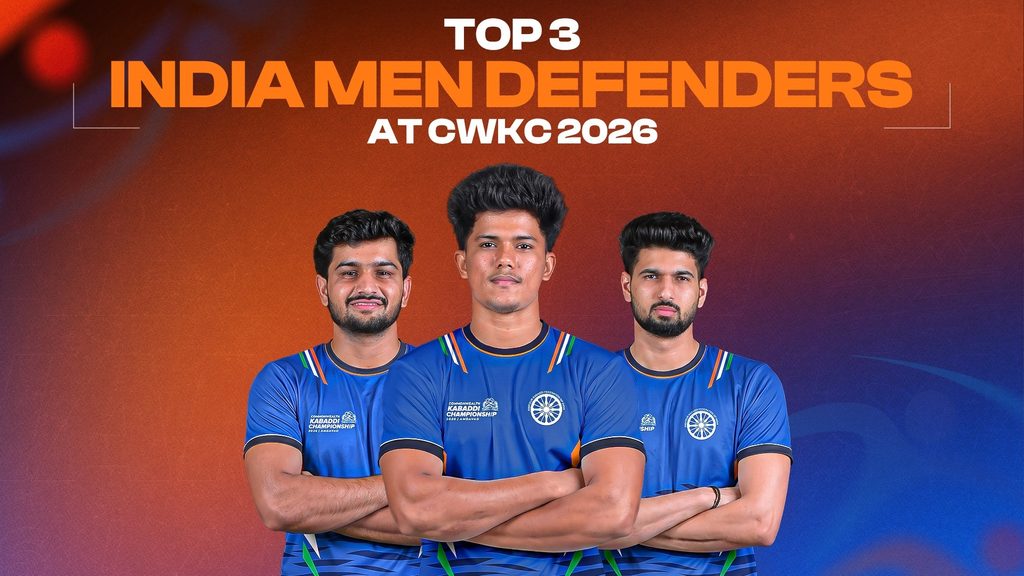
Official player statistics from the 2026 men’s competition reveal how a group of defenders with different strengths combined to create one of the tournament’s most effective kabaddi units. Deepak Sankar supplied consistency, Yogesh delivered a standout performance in the final, and Nitesh Kumar provided the workload that helped hold the system together.
Deepak Sankar: India’s Most Efficient Defender
Deepak Sankar led India’s tackle points chart, finishing with 14 from six matches. He reached that total without recording a High 5—a performance of five or more tackle points in a single match. Rather than relying on one exceptional outing, Deepak contributed steadily throughout the championship.
His efficiency was particularly striking. Deepak attempted only 19 tackles and succeeded on 14, giving him a tackle strike rate of 74 per cent. Among defenders who attempted at least 15 tackles in the men’s competition, only Kenya’s Lewis Mboya recorded a higher rate. Deepak also added two tackle points in the final against Sri Lanka.
In kabaddi, a missed tackle can give the raider a point and put the defending side under greater pressure. Deepak lost only five of his 19 attempts across the tournament. That reliability helped India limit opponents’ scoring opportunities and avoid being overwhelmed in key moments. His contribution shows why defensive value cannot be measured by tackle totals alone: making the right stop while giving away as little as possible can be just as important.
Yogesh Delivers When It Matters Most
Yogesh finished the championship with 13 tackle points from 18 attempts, a 72 per cent strike rate. He made fewer tackles than any of the three leading Indian defenders, but his biggest contribution came at the most important moment: the final.
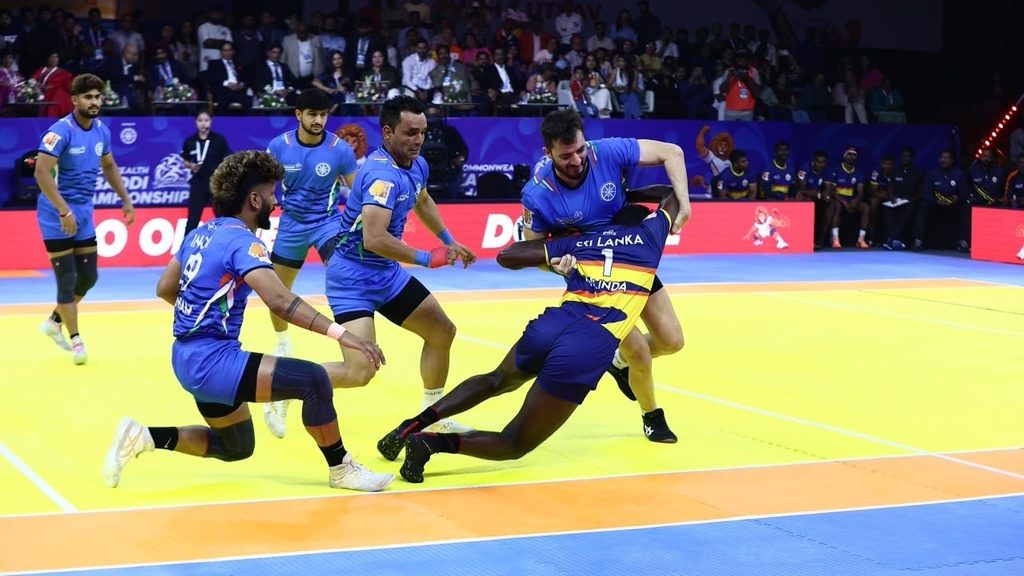
Against Sri Lanka, Yogesh produced a High 5 by completing all five of his tackle attempts. Every successful tackle came in the first half, helping India establish a 30-10 lead at the break. That advantage left Sri Lanka facing a steep challenge for the remainder of the match.
The Sri Lankan attack struggled to find a way through. Their three main raiders—Sabihan, Milinda Chathuranga and Viduranga—combined for just five raid points from 31 raids. Yogesh’s flawless first-half performance was a major part of that disruption. He did not have to make a large number of tackles to shape the final; he simply delivered repeatedly when India needed a stop.
Nitesh Kumar Provides the Defensive Workload
Nitesh Kumar played seven of India’s eight matches, more than either Deepak or Yogesh, and matched Yogesh’s total of 13 tackle points. He also recorded a High 5 during the tournament.
His figures reflect a different role. Nitesh attempted 25 tackles—the most of any Indian defender in the leading trio—and converted 52 per cent of them. A defender who takes on more tackles will naturally face more chances to miss, but that workload can also create opportunities for teammates to complete the stop.
In effect, India’s defence combined complementary skills. Nitesh took on the volume and made first contact with raiders, while Deepak converted a high share of his opportunities and Yogesh produced decisive stops in the final. Nitesh’s presence across seven matches was especially valuable in a nine-day competition, when maintaining energy and concentration can be as important as individual match figures.
India’s Defensive Strength Went Beyond Three Players
India’s defensive success was not built around a single star. Shubham Shinde finished close behind the leading trio with 12 tackle points from 19 attempts, a 63 per cent strike rate and a High 5 of his own. Ajit Pawar added eight tackle points and also recorded a High 5.
Captain Surjeet Singh played all eight matches, making him the only Indian to appear in every game. His six tackle points and 33 per cent strike rate were less eye-catching, but he contributed a Super Tackle and guided a team that won every match. A Super Tackle is made when the defending side has three or fewer players on the mat and earns an extra point.
Parvesh Bhainswal added five tackle points from just eight attempts, a 62 per cent return across five matches. Even raider Pankaj Mohite contributed defensively, recording three tackle points and a Super Tackle from four attempts. India’s four High 5s came from four different players: Yogesh, Nitesh Kumar, Shubham Shinde and Ajit Pawar.
Why India’s Team Numbers Matter More Than the Individual Rankings
The tournament’s highest tackle-point totals belonged to Singapore’s Vishnuvarthan Deva and Canada’s Anand, who each finished with 24. Anand also led the competition with three High 5s. Yet neither player reached the semi-finals, illustrating why individual defensive statistics need context. Defenders on teams under constant pressure may face more raids—and therefore have more chances to accumulate tackle points.
India faced the opposite challenge. Its strong raiding kept the team ahead, often forcing opponents to take greater risks as they tried to catch up. That could mean fewer sustained defensive opportunities. Even so, India finished with more tackle points than any other team while conceding the fewest points. Four Indian defenders reached at least 12 tackle points, a balance matched only by Sri Lanka, who needed substantially more attempts to reach their total.
No Indian defender finished among the top five individual tackle-point scorers, but that does not diminish the unit’s impact. Instead, the figures suggest that India’s strength came from sharing responsibility across the mat, leaving opponents without an obvious weak corner to target.
Deepak Sankar provided dependable efficiency, Yogesh produced a defining performance in the final, and Nitesh Kumar carried a heavy workload. Around them, Shubham Shinde, Ajit Pawar, Surjeet Singh and the rest of the squad added depth. India’s raiders helped create separation on the scoreboard, but a defence that conceded fewer than 25 points per match turned that advantage into a championship-winning run of eight victories.