
India’s Kabaddi Raiding Depth Powers Perfect Commonwealth Championship Run
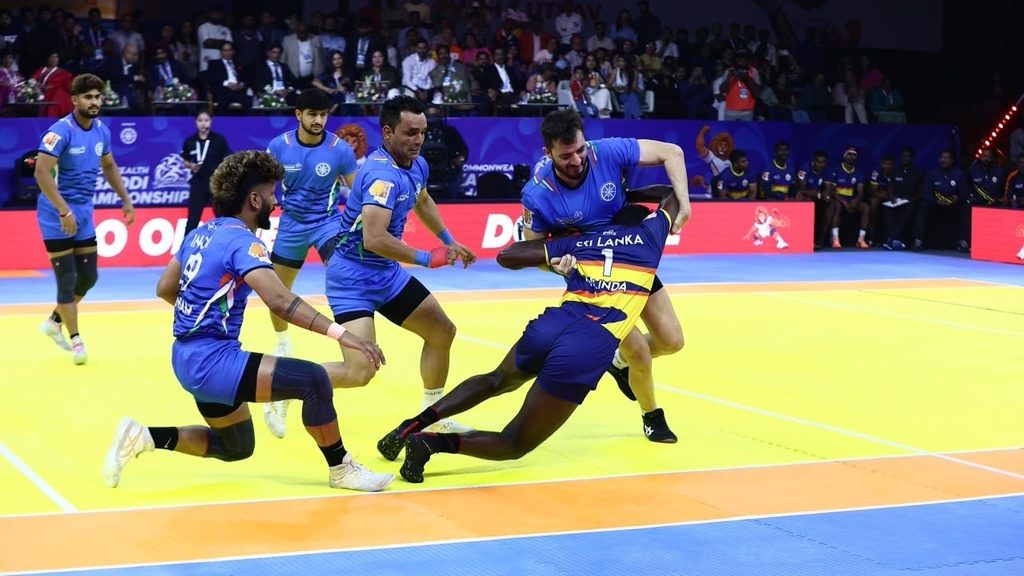
India’s men made a commanding start to the Commonwealth Kabaddi Championship, winning the inaugural title with an unbeaten record. They completed an eight-match sweep in Ahmedabad, defeating Sri Lanka 54-20 in the final on 31 October 2026. No opponent scored more than 30 points against them during the tournament—a measure of the control India maintained at both ends of the mat.
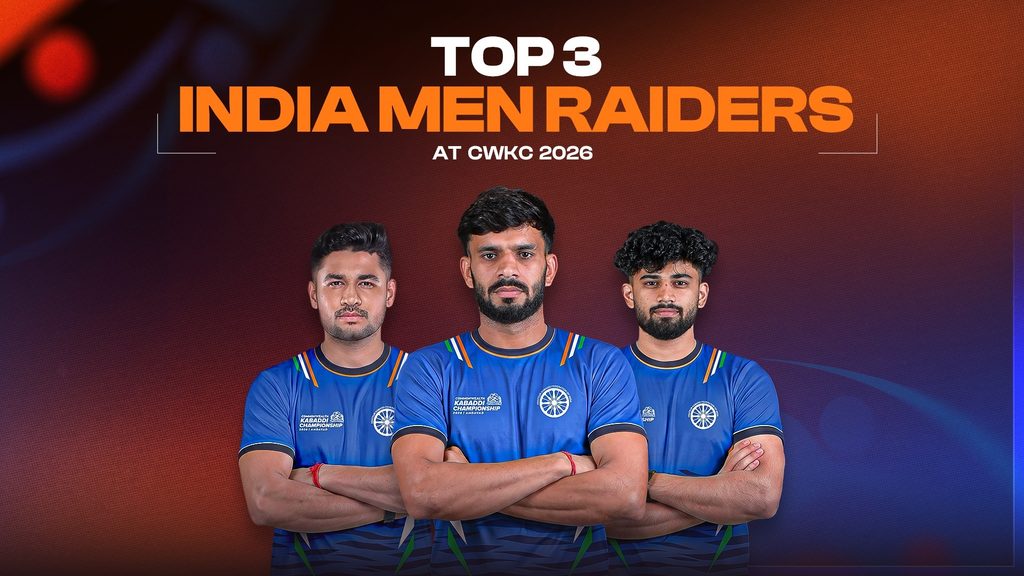
Their attack was especially productive. Indian raiders collected 244 points across the 13-team men’s competition, the highest team total in the draw. Yet the title was not built around one star carrying the workload. Neeraj Narwal, Naveen Kumar and Aditya Shinde led the scoring, while several teammates were ready to step in and contribute. Together, they gave India a versatile raiding unit that could adapt its combinations without losing momentum.
All figures below are drawn from the official men’s player statistics for the 2026 Commonwealth Kabaddi Championship.
Neeraj Narwal: India’s Most Efficient Raider
Neeraj Narwal finished as India’s leading raider with 46 raid points, despite appearing in only five of the team’s eight matches. His total was impressive, but his efficiency made the performance stand out. He attempted 56 raids and recorded an 82 per cent raid strike rate—the best mark among India’s leading raiders.
Neeraj was not the busiest attacker in the squad. Aditya Shinde and Naveen Kumar attempted more raids, but Neeraj converted his opportunities at a higher rate. Across the entire men’s competition, only four raiders who attempted at least 50 raids finished above an 80 per cent strike rate. Neeraj was one of them.
His scoring was not limited to touches. He earned 18 bonus points, tied for the fourth-highest total in the championship, and completed three Super Raids. Only Tanzania’s Juma Sultania recorded more, with four. Neeraj also produced three Super 10s in five matches, a tally surpassed by only two players in the tournament.
That combination of accuracy and variety gave India a reliable source of points. A high strike rate can reduce empty raids and limit the chances a defence gets to build pressure. In a championship where India’s opponents struggled to score freely, Neeraj’s ability to attack decisively without wasting possessions was particularly valuable.
Naveen Kumar: A Consistent Presence Across the Campaign
Vice-captain Naveen Kumar played seven matches, more than any other Indian raider, and scored 43 raid points from 57 attempts at a 75 per cent strike rate. His availability offered the coaching staff a dependable option as India rotated its attacking combinations throughout the competition.
Naveen’s numbers reveal an assertive style. He recorded 32 touch points, the eighth-highest total in the men’s tournament, while 11 of his points came from bonuses. In other words, most of his scoring came from reaching and beating defenders rather than relying on the bonus line. He also registered a Super 10, a Super Raid and a tackle point.
His contribution was clear in the final against Sri Lanka. Naveen scored five points as India built a 30-10 advantage by half-time, establishing a commanding position before the break. His regular presence also gave the team a stable foundation: even when other raiders were rested or a matchup called for a different approach, India had a proven attacker available.
Aditya Shinde Delivers When the Title Is on the Line
Aditya Shinde attempted 60 raids, the most by any Indian player, and finished with 40 raid points at a 67 per cent strike rate. He matched Neeraj’s three Super 10s, achieving the mark in five appearances. His lower conversion rate came alongside the heaviest workload in India’s raiding group, making the figure more useful when considered in context.
Aditya’s strongest performance arrived in the championship match. He led India’s scoring against Sri Lanka with 10 raid points from 14 raids, including four bonus points. His Super 10 helped cap a tournament in which he repeatedly took responsibility for pushing into the opposition’s defensive half.
Overall, Aditya collected 28 touch points and 12 bonus points. The split reflects a raider prepared to challenge defenders rather than settle for safer opportunities near the bonus line. That approach can bring greater risk, but it also creates pressure and opens up scoring possibilities—an important asset in a final.
India’s Supporting Raiders Add Another Layer
India’s depth extended well beyond its leading trio. Pankaj Mohite scored 36 raid points from 50 attempts and led the Indian squad with 33 touch points, the seventh-highest total in the men’s competition. He also recorded two Super Raids and contributed three tackle points, including a Super Tackle—an unusual defensive return for a player best known for raiding.
Bharat also finished with 36 raid points, striking at 75 per cent. In the second half of the final, he added eight points without being tackled across seven raids. Shivam Patare contributed 28 points from 39 attempts, while Sachin made a striking impact in limited appearances: he scored 15 points from 15 raids in just two matches, a 100 per cent strike rate that included a Super 10 and a Super Raid.
Five Indian raiders finished with at least 36 points. No other team had more than three players reach that mark. That spread was one of the clearest statistical signs of India’s strength: opponents could not focus their defensive plans on one attacker and expect the rest of the offence to fade.
Team Depth, Not One-Man Dependence, Defines India’s Title
India’s top three raiders combined for 129 points—more than five of the 13 men’s teams managed across the entire tournament. Narwal, Kumar and Shinde all finished among the championship’s top 13 raiders, even though none played all eight matches. Captain Surjeet Singh, a defender, was the only Indian to feature in every game.
The contrast with other teams is instructive. Tanzania’s Juma Sultania led the overall standings with 80 raid points from 117 attempts in six matches, while Canada’s Manpreet Singh and Anmol Thakur recorded 60 and 55. Those totals underline the value of individual stars, but India’s scoring was distributed across a much larger group. The team could rest key players, adjust its lineup to suit an opponent and still maintain a powerful attack.
India recorded 11 Super 10s in the men’s competition. Narwal and Shinde supplied three each, while Naveen, Pankaj, Bharat, Shivam and Sachin added one apiece. A Super 10 means a raider scores at least 10 points in a match; a Super Raid is a single raid worth three or more points. The figures capture both the team’s headline performances and its contribution across the roster.
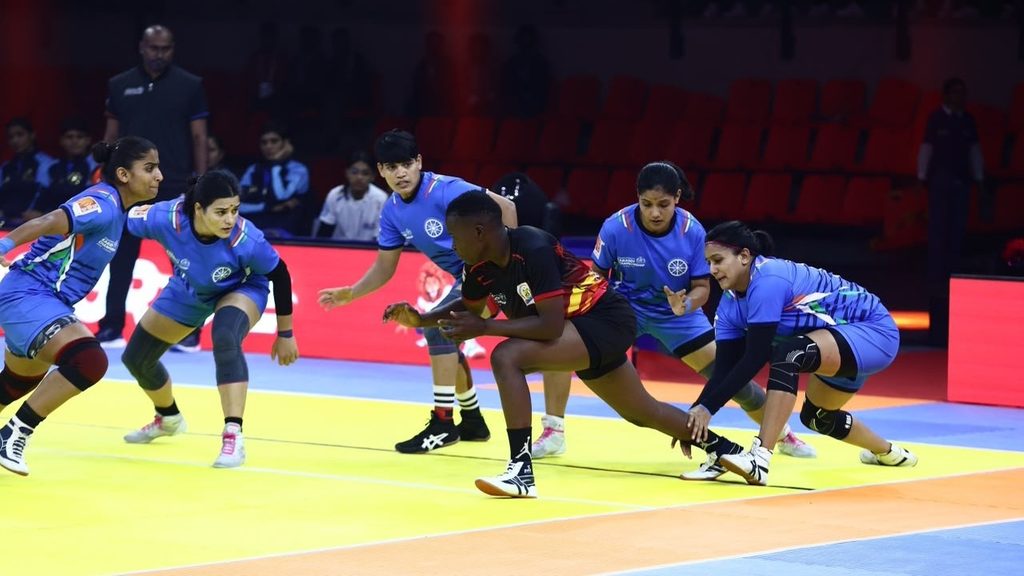
India’s men defeated Sri Lanka 54-20 to secure the inaugural Commonwealth Kabaddi Championship title, while the women’s team completed a national double by beating Uganda 35-15 in their final. For the men, the route to the trophy was built on more than an unbeaten record. Narwal supplied efficiency, Naveen brought consistency, Shinde delivered on the biggest night, and the supporting raiders made sure India never lacked another source of points. That depth turned a strong squad into a champion team.