
Abhishek Sharma Urges India to Stay Ruthless After West Indies’ Late Fightback
India may have secured a 14-run victory over West Indies at Indore’s Holkar Stadium, but Abhishek Sharma’s message after the match was clear: against an explosive side, no lead is truly safe. The visitors came close to chasing a formidable target of 224, reminding India that a T20 cricket contest can change in only a few overs.
The win gave India an advantage in the ongoing T20I series, yet the thrilling finish underlined the challenge posed by West Indies’ deep batting line-up. Abhishek said his team had anticipated that the visitors could launch a comeback, even if they lost early wickets. For India, the key was to maintain pressure, stick to their plans and avoid offering easy scoring opportunities.
Why India Could Not Afford to Relax
Abhishek described West Indies as a team capable of turning a match around from almost any position. India had seen enough of the visitors’ attacking approach to know that a substantial deficit—or a cluster of wickets—would not necessarily end the contest.
“You can never say that the match has come to us against them,” Abhishek said after the game, explaining that India had discussed the need to be ruthless in their team huddle. The plan, he added, was to keep fighting for every ball and give the opposition as few chances as possible to regain momentum.
That caution proved justified as West Indies kept swinging in the chase. Shamar Springer’s aggressive batting surprised the Indian camp, according to Abhishek, particularly because he managed to produce difficult shots under pressure. His innings served as a reminder of the visitors’ ability to make a large target look attainable when their batters find rhythm.
Abhishek said India knew they had to remain alert even if West Indies were five wickets down for 50. A strong Powerplay with the ball could create an opening, but one loose delivery might help a batter settle and shift the pressure back onto the fielding side. The Indian bowlers, he said, focused on executing their plans rather than assuming the game was already won.
Abhishek’s 69 Sets Up India’s Big Total
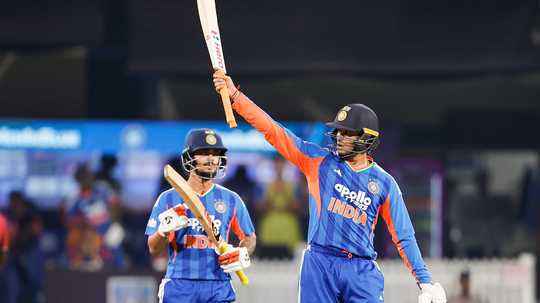
Before stressing the importance of discipline in the field, Abhishek had played a major role in putting India in control with the bat. The left-handed opener struck 69 from just 30 deliveries, helping the hosts post 223. His innings combined clean hitting with sharp placement and gave India the platform to build a challenging total.
The start, however, was unusually cautious. India managed only 13 runs from the first 14 balls and lost Sanju Samson for three from six deliveries. Abhishek later explained that the measured beginning was partly a response to West Indies’ bowling plan, rather than a sign that he was struggling to find his timing.
Roston Chase opened the bowling with off-spin, a tactic Abhishek recognised as a deliberate attempt to test him early. He said he chose to show Chase respect in the first over, noting that the bowler had been performing well during the series. Abhishek’s approach was to collect a few runs in the Powerplay while assessing the challenge—and then find a way to play beyond the plan set for him.
The shift in momentum arrived during the third over. Abhishek drove a delivery through the cover-point region for four before launching Chase for two sixes. That burst of scoring changed the atmosphere of the innings and allowed India to move from a tentative start into a commanding position.
Quick Partnership With Ishan Kishan Changes the Innings
Ishan Kishan joined Abhishek after Samson’s dismissal, and the pair quickly turned the innings around. They added 108 runs from only 40 balls for the second wicket, a partnership that gave India the scoring rate needed to push towards 224. Kishan contributed 37 from 18 deliveries, matching his partner’s attacking intent while keeping the scoreboard moving.
The two batters found boundaries regularly on a compact ground, but Abhishek said their approach was not based on a deliberate decision to favour fours over sixes. Instead, he highlighted the understanding between them and the importance of helping Kishan settle after coming to the crease during a period of pressure.
Abhishek said he tries to make Kishan laugh and feel relaxed, allowing him to play with the freedom that suits his natural style. The pair have shared partnerships in the Indian Premier League as well as other cricket settings, and that familiarity helps them read one another without lengthy conversations in the middle.
Rather than focusing too much on conditions, Abhishek said they try to enjoy each other’s batting and offer mutual support. That comfort was visible in the way they built their stand: Abhishek supplied the early acceleration, while Kishan responded with a rapid contribution that prevented West Indies from settling into a defensive rhythm.
What the Result Means for the Series
India’s 14-run win was built on a powerful batting display, but the narrow margin also offered a useful lesson. A total of 223 can put a team in a strong position, yet West Indies’ chase showed that the defending side must keep executing for the full 20 overs. In high-scoring T20 cricket, a few overs of missed lengths or misplaced confidence can quickly revive a contest.
For India, the match highlighted both the value of aggressive batting and the need for sustained discipline with the ball. Abhishek’s innings helped create the target, while his comments afterwards reflected the mindset required to defend it. The team’s challenge in the remaining fixtures will be to combine early breakthroughs with consistent pressure, rather than relying on the scoreboard alone.
Cricket Prediction: A Competitive Contest Still Lies Ahead
Any cricket prediction for the rest of the series must account for West Indies’ ability to score quickly and keep chasing matches alive. Their late surge in Indore suggests India cannot take comfort from early wickets or a sizeable total. At the same time, India’s batting depth and the partnership between Abhishek and Kishan give the hosts plenty of firepower of their own.
The Indore result therefore points to a closely contested series, with execution likely to matter more than reputation. If India can maintain the ruthless approach Abhishek described—especially during the Powerplay and at the death—they will strengthen their position. But West Indies have shown they can punish even a brief lapse, making every phase of the next match potentially decisive.