
Laporta Backs Tebas as Real Madrid’s Dispute With LaLiga Intensifies
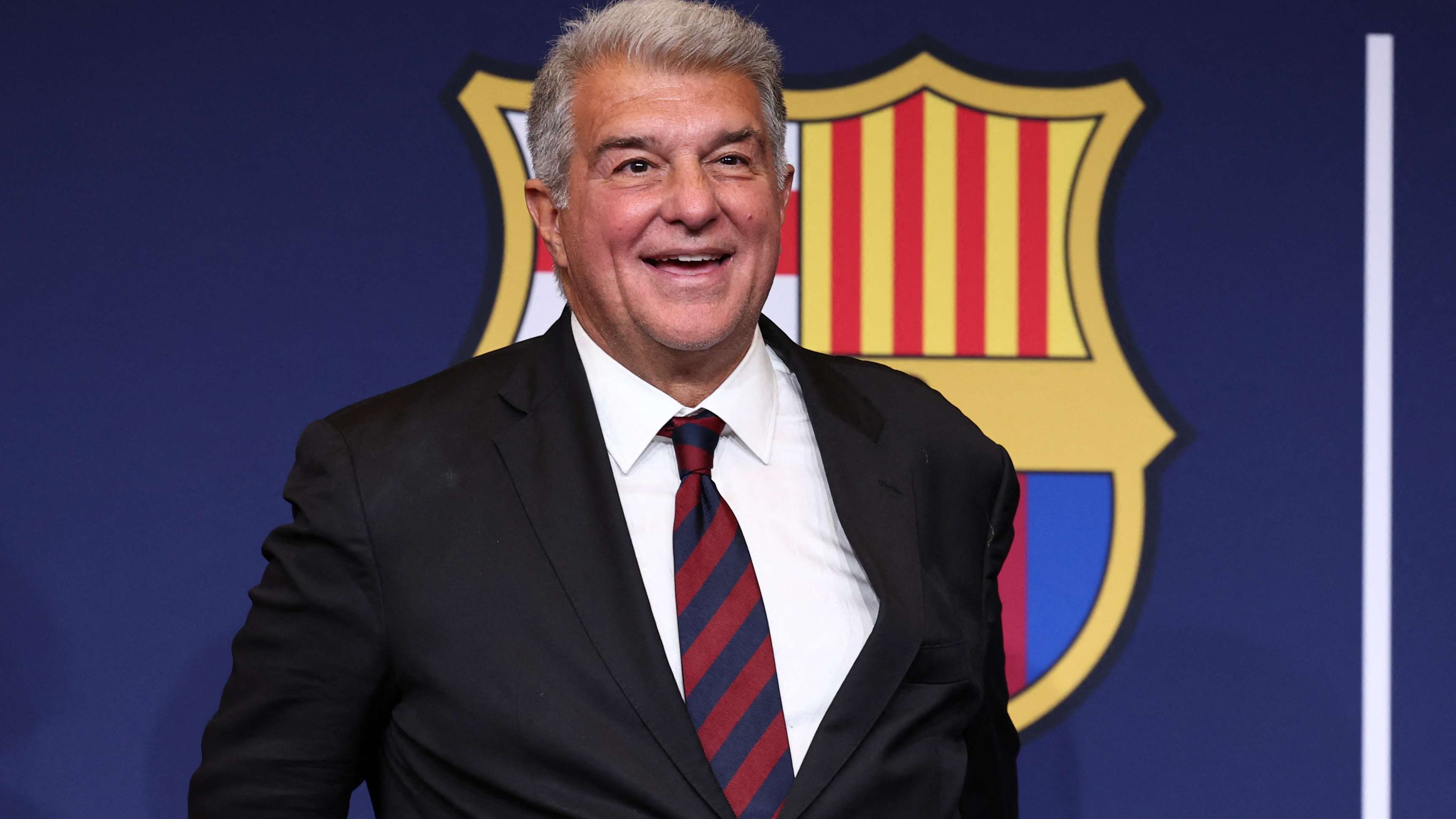
Barcelona president Joan Laporta has publicly supported LaLiga chief Javier Tebas amid an increasingly bitter dispute between the Spanish league and Real Madrid. The latest exchange has pushed tensions beyond the usual arguments over refereeing, bringing the conduct of clubs, league leadership and football media into sharper focus.
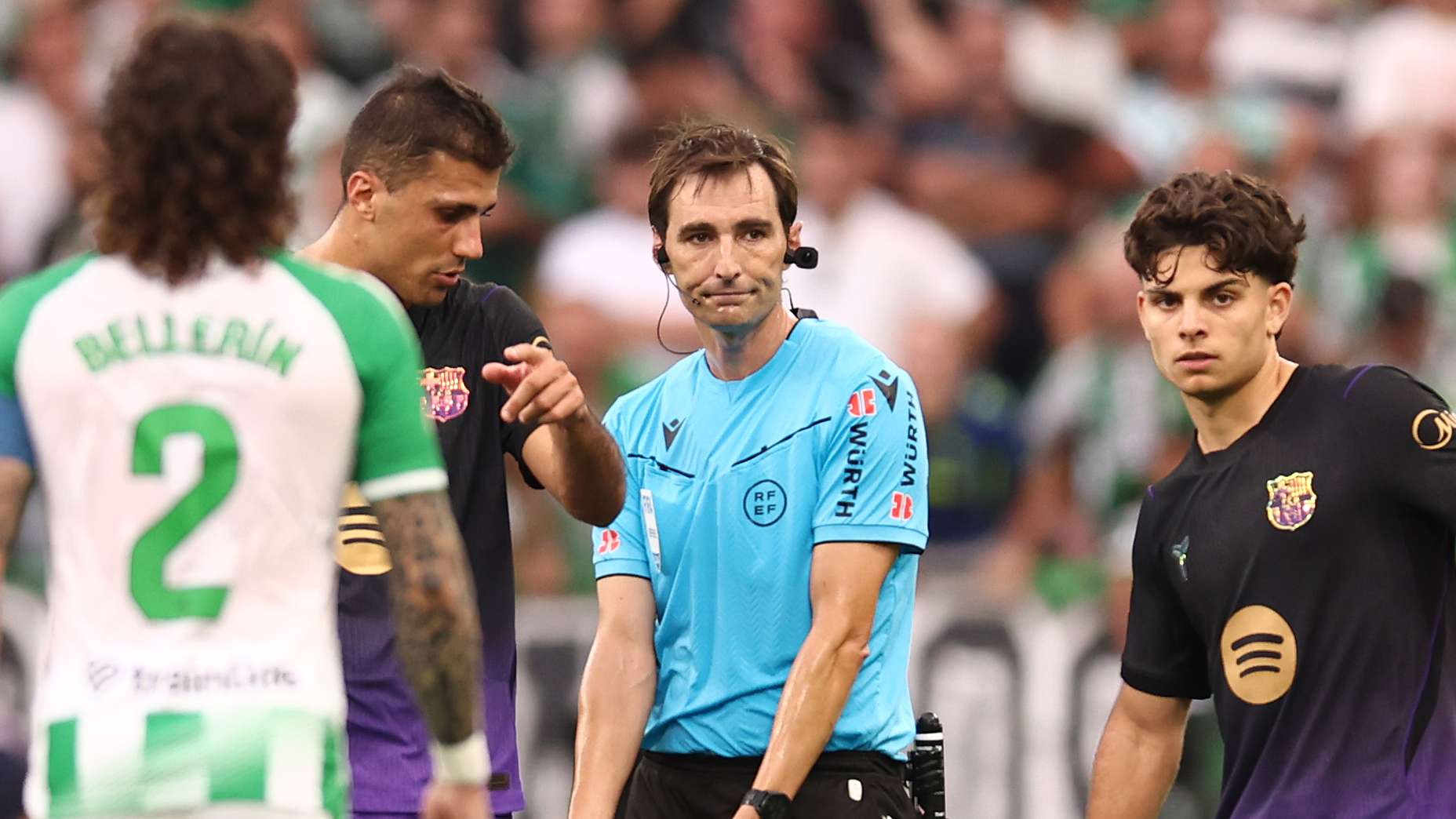
Speaking before Barcelona’s away match against Real Betis, which the Catalan side won 5–2, Laporta praised Tebas’s experience and ability to handle pressure. He also accused Real Madrid of repeatedly attacking Spanish football institutions, including LaLiga and the refereeing system.
“I am pleased to have Javier Tebas as president of LaLiga,” Laporta said, describing the league chief as someone with the experience required to manage difficult disputes. He added that Tebas understood how to respond to what he called attacks from Madrid against the competition.
Laporta accuses Madrid of attacking football institutions
Laporta’s comments went beyond a straightforward vote of confidence in Tebas. He suggested Real Madrid was dissatisfied with almost every major body in Spanish football, saying the club appeared to want to “destroy everything,” including LaLiga and the Technical Referees Committee.
He also referred to the Spanish Football Federation, arguing that Real’s criticism extended across the sport’s governing structures. Laporta said Tebas had already faced numerous battles and possessed the experience to withstand what he described as an unworthy pattern of constant attacks from a LaLiga member club.
The remarks underline the rivalry between Barcelona and Real Madrid, but they also reflect a wider institutional conflict. Disagreements over refereeing are common in football, particularly when high-profile decisions affect title races or key players. However, the current dispute has grown into a broader argument about how clubs challenge league authorities and how public criticism can shape confidence in the competition.
What sparked the latest Real Madrid–Tebas confrontation?
The immediate flashpoint came after Real Madrid objected to comments Tebas made on social media platform X. The league president had compared the style of content produced by Real Madrid TV to propaganda methods associated with Nazi Germany. His remarks followed the club’s response to the latest sending-off and subsequent disciplinary punishment involving forward Vinícius Júnior.
Real Madrid called on Tebas to resign from his positions as LaLiga president and vice-president of the Royal Spanish Football Federation. In a strongly worded statement, the club said it was unacceptable for a senior football official to make a comparison involving Nazi propaganda when discussing the club, its leadership and its television channel.
The club argued that Tebas’s clarification—that he was not referring to Nazi ideology—did not make the comparison less offensive or institutionally inappropriate. Real described the comments as morally reprehensible and said they damaged the responsibilities attached to his roles in Spanish football.
The dispute is not limited to one social media post. Real Madrid has repeatedly raised concerns about refereeing decisions and the way the club believes it is treated by officials and league institutions. Its representatives and media outlets have at times presented the club as the target of unfair treatment, while LaLiga and its leadership have rejected or challenged those claims.
Tebas says independence does not mean silence
Tebas responded to Real Madrid’s demand by pointing to the history of their disagreements. He wrote that the club’s leadership had called for his resignation many times during his 13 years in office.
He also argued that independence in his role should not be confused with silence. In his view, the league president must be able to respond when he believes Real Madrid TV is making continuous, exaggerated or offensive attacks. That position reflects a central question in the dispute: where should the line sit between a club’s right to criticise football authorities and an official’s duty to protect the credibility of the institutions they represent?
For supporters, the issue can be difficult to separate from the emotional intensity of football. Refereeing decisions are scrutinised immediately, and clips or commentary can spread rapidly online. A disputed call may become part of a much larger narrative about bias, accountability and trust—even when the available evidence does not establish a coordinated effort against a particular club.
Why the row matters for LaLiga and its supporters
The confrontation has consequences beyond the relationship between Tebas and Real Madrid. LaLiga relies on confidence from clubs, players, broadcasters and fans. When a major club publicly questions the integrity of referees or league leadership, the debate can affect how supporters view the fairness of the competition.
At the same time, strong criticism from clubs can be an important part of accountability. Teams should be able to challenge decisions and request clearer explanations, particularly when disciplinary outcomes or refereeing calls have a significant impact. The challenge for football authorities is to respond transparently without allowing every disagreement to become a prolonged institutional crisis.
Laporta’s intervention adds another layer to the story because Barcelona is both Real Madrid’s fiercest sporting rival and one of LaLiga’s most influential clubs. His support for Tebas is therefore likely to be viewed through the lens of the rivalry, even as it reflects a broader argument about the league’s authority and the tone of public debate.
What the dispute could mean for future football debates
There is no indication that the conflict will be resolved quickly. Real Madrid has maintained a confrontational stance toward Tebas, while the league president has made clear that he does not intend to stay silent when he believes the club’s media coverage crosses a line. Further statements, disciplinary decisions or contentious refereeing moments could keep the disagreement in the headlines.
For fans looking ahead to the next round of LaLiga fixtures, the football itself remains the main attraction. Yet this dispute shows how off-field arguments can influence the atmosphere around matches, shape media coverage and become part of the season’s wider narrative. Any prediction about how the conflict will develop should be cautious: the outcome may depend less on a single statement than on whether both sides choose institutional dialogue over public escalation.
For now, Laporta has made his position clear. He believes Tebas has the experience to withstand pressure and has accused Real Madrid of undermining the organisations that govern Spanish football. Real, in turn, says Tebas’s language is unacceptable and has called for his resignation. With both sides standing firm, the dispute remains one of the most significant off-field stories in Spanish football.