
Young Football Sensation Lamine Yamal Shares Insights on the Future of the Ballon d’Or and Modern Football
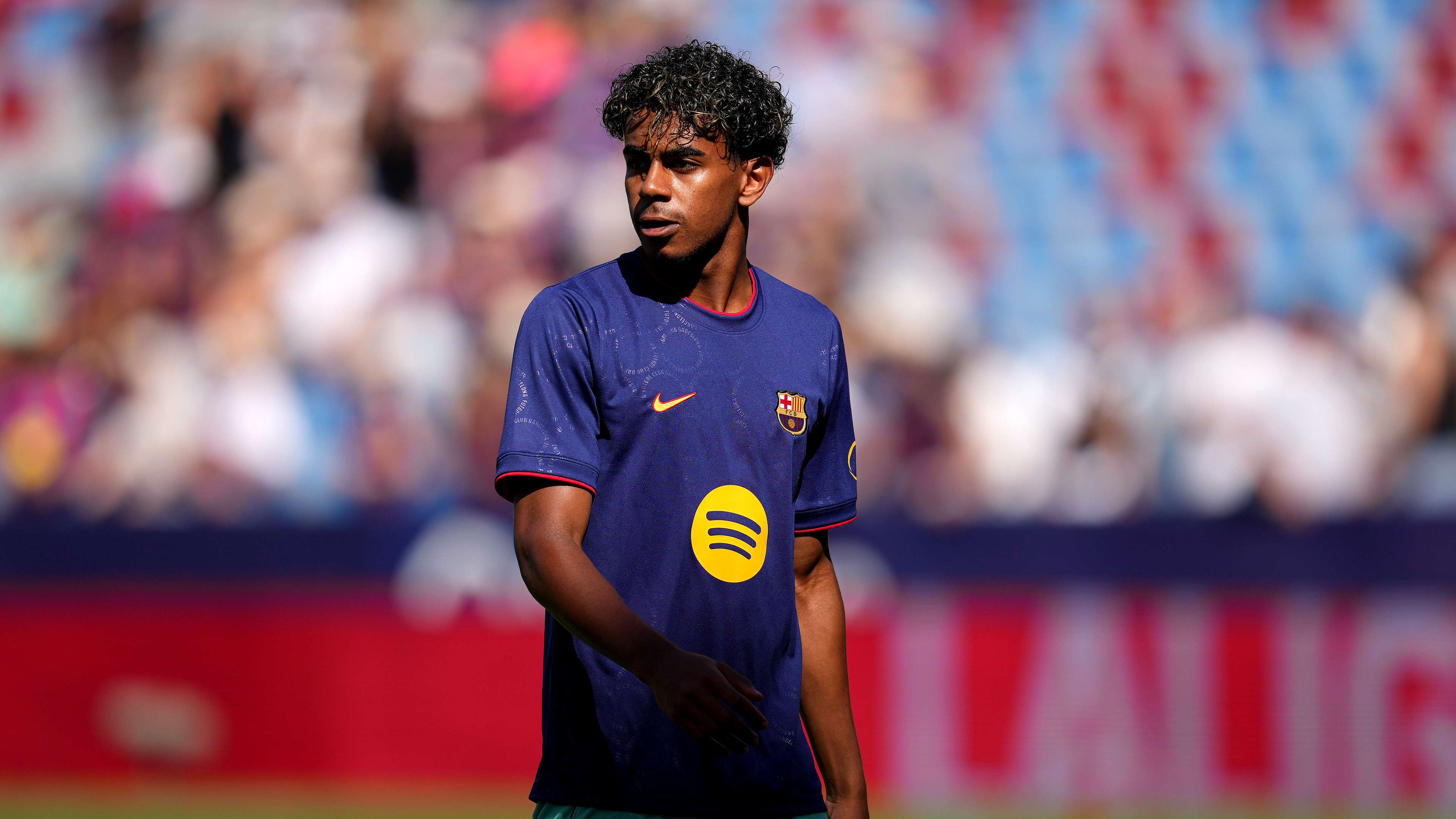
In a revealing interview on the popular football talk show “Universo Valdano” broadcasted on Movistar Plus, Barcelona’s prodigious talent Lamine Yamal offered a fresh perspective on the evolution of individual awards in football, particularly the prestigious Ballon d’Or. Coming just days after snippets of his comments circulated online, the full interview provided a detailed and candid look into his thoughts on the state of the sport, the criteria for football prediction, and the core values that define true excellence on the pitch.
Yamal’s Bold Critique of the Ballon d’Or: Rethinking Football’s Most Coveted Individual Award
One of the standout moments in the interview was Yamal’s forthright critique of how the Ballon d’Or is currently judged. Historically, the award has been seen as the ultimate recognition of a player’s individual brilliance, awarded annually to the player deemed the best in the world. During an era dominated by legendary figures like Lionel Messi and Cristiano Ronaldo, the award was often a direct reflection of their supremacy—an acknowledgment of their extraordinary talent and consistent performance over the years.
However, Yamal argues that the landscape has shifted dramatically. He told viewers that the criteria for the award have become muddled, with many now equating team success—such as winning the Champions League—with individual recognition. As reported by Mundo Deportivo, the young star emphasized:
“This award is judged completely differently now. When Messi and Cristiano were around, everyone knew they were the best in the world, and so the award was limited to the two of them.”
He further elaborated on how the modern football prediction landscape seems to prioritize achievements that are not necessarily reflective of individual brilliance. For instance, he pointed out that some analysts and fans argue that a player from Paris Saint-Germain should be considered for the Ballon d’Or simply because they secured a Champions League victory. While team trophies are significant, Yamal insists that they should not overshadow the importance of recognizing the best individual performer.
Distinguishing Team Success from Personal Excellence in Football Prediction
Yamal clarified that winning a major team trophy like the Champions League is a collective achievement—a testament to the strength and cohesion of a squad. The award for the best player, he argues, must be a separate accolade that honors individual talent, skill, and the ability to perform consistently at the highest level. He remarked:
“When you win the Champions League, they give the trophy to the team as the best group, and that is their deserved reward. But the individual award should go to the best in the world, period. Not just because someone scores 80 goals or collects multiple titles.”
This perspective resonates deeply with football prediction enthusiasts and fans who believe that the true value of the Ballon d’Or lies in celebrating the player who not only scores goals but also elevates their team through exceptional playmaking, tactical intelligence, and consistency. Yamal’s comments highlight the ongoing debate within the football community about what truly defines individual greatness.
The Essence of Being the “Best” in Football: More Than Just Goals
Interestingly, Yamal emphasizes that the best players are often those who bring joy and excitement to fans and commentators alike. He explained that his definition of the top football prediction involves watching players who stand out through their style, creativity, and influence on the game—regardless of goal tallies.
“The best is the one you enjoy watching during the match, the one who stands out as different from everyone else. When the award returns to genuinely the best player, not just the one who scores the most or wins the most titles, it will regain its true value.”
This perspective is particularly relevant in an era where statistical data dominates football analysis. Yamal advocates for a more holistic view—appreciating the artistry and intelligence behind the game rather than just the numbers.
Modern Football’s Shift and the Pressure on Young Players
Beyond his critique of awards, Yamal opened up about the realities of playing in modern football. He reflected on the differences between how he grew up loving the game and the current trends influenced heavily by digital platforms and football prediction apps.
He shared that his football education was rooted in full-match viewing, appreciating the flow of play and the subtle nuances that make football beautiful. Unlike today’s generation, which often analyzes players’ statistics immediately after matches, Yamal values the pure enjoyment of the game:
“I used to watch entire matches, not just look for how many goals or assists a player had. Football is about the entire build-up, the plays, the movement, the tactical battles—things that can’t always be measured by stats.”
He admits that sometimes he leaves the pitch frustrated, not because he didn’t score, but because he feels he didn’t enjoy the game fully or contribute meaningfully to the team’s flow. His focus remains on the quality of play and the collective effort, rather than individual statistics.
Family and Tactical Insights: The Inner World of a Rising Football Star
Yamal also shared insights into his personal life and the importance of tactical understanding on the field. He revealed that after matches, he often discusses his performance with his family, emphasizing that his frustration is rarely about goals but about the level of involvement and enjoyment in play.
“Sometimes I come home angry, and my mother asks if I am upset because I didn’t score. But I tell her, scoring is just a number. What truly bothers me is when I don’t touch the ball or don’t feel like I played well,” he explained.
On the tactical front, Yamal demonstrated his mature understanding of team dynamics. He highlighted the importance of communication with teammates during training and matches, especially regarding positioning and movement. For instance, he often discusses with players like Fermín and Eric how overlapping runs and space creation can unlock defenses:
“In training, I tell my teammates to overlap me or move into specific spaces so we can create better chances. The simplest tactical details—like timing runs into space—are often the most effective in football.”
Football Prediction and the Path Forward
Looking ahead, the young Barcelona star’s insights serve as a reminder that football prediction—whether for awards like the Ballon d’Or or match outcomes—should be rooted in a comprehensive understanding of the game. Fans and analysts alike need to consider not just statistics but also the style, influence, and consistency of players.
Yamal’s comments advocate for a return to valuing authentic talent and passion in football, encouraging fans to appreciate the artistry behind every pass, dribble, and tactical move. As the sport continues to evolve, so too should the criteria for recognizing its greatest stars.
Conclusion: A New Voice in Football’s Conversation
As one of the brightest young talents in football today, Lamine Yamal’s perspectives on the future of individual awards and the essence of football prediction are both refreshing and thought-provoking. His emphasis on quality, enjoyment, and genuine talent challenges the current trends that often prioritize statistics and team trophies over true individual brilliance.
For football fans, analysts, and prediction enthusiasts, Yamal’s insights offer a compelling call to re-evaluate what it means to be the best. Whether it’s the quest for the Ballon d’Or or the excitement of predicting match outcomes, the message is clear: the heart of football lies in the love of the game and the beauty of authentic performance.
As the sport continues to grow and evolve, young stars like Yamal are shaping a new narrative—one that celebrates skill, passion, and the true spirit of football prediction.