
Arda Güler Incident Raises Questions About VAR Ahead of El Clásico
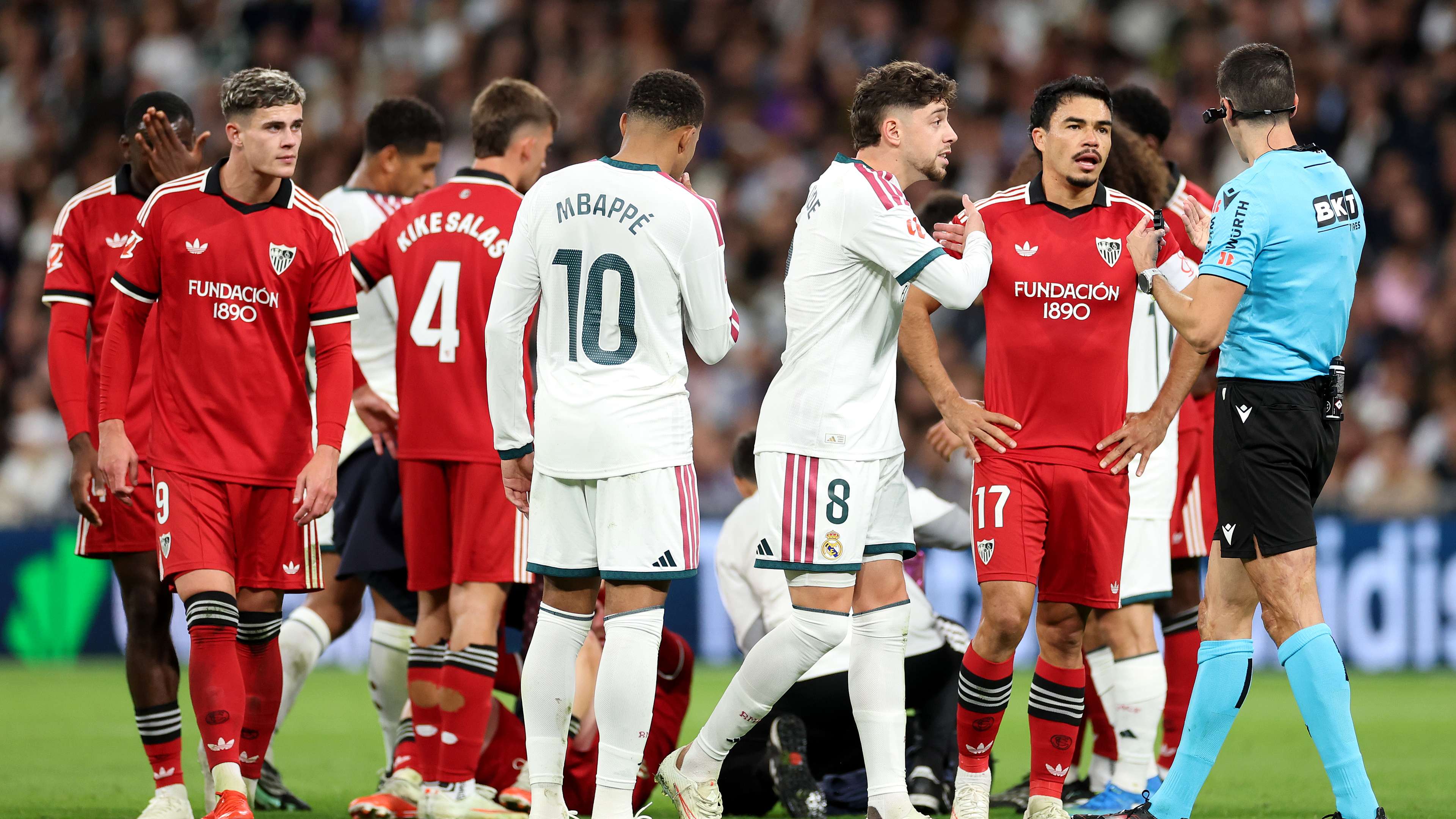
A controversial challenge involving Real Madrid midfielder Arda Güler and Sevilla player Peque has renewed debate over video assistant refereeing in Spanish football. Television coverage did not provide a clear view of the contact, leaving fans and pundits questioning whether Güler should have been sent off—and why VAR did not recommend a review.
The dispute has arrived at a sensitive moment, with Barcelona and Real Madrid preparing for their eagerly anticipated El Clásico. The timing has intensified scrutiny of refereeing decisions, LaLiga’s broadcast coverage and the officials responsible for reviewing incidents. However, according to explanations attributed to the league and the referees’ technical committee, the lack of a decisive replay was a matter of camera positioning rather than footage being deliberately withheld.
Why did VAR not intervene in the Güler incident?
VAR can only offer a meaningful review when the available footage provides clear evidence of a potential serious error. In this case, the cameras were reportedly following the ball and the developing attack when the incident occurred elsewhere on the pitch. As a result, the broadcast did not capture the challenge from a close, useful angle.
LaLiga has denied withholding any television replay. The coverage included elevated and more distant views, but those images were not detailed enough to establish exactly what happened at the point of contact. Refereeing sources reportedly said the footage could not clearly show the nature of the challenge—or, in some views, even identify the players involved with certainty.
That distinction matters. VAR is not intended to replace the referee’s judgement whenever an incident causes controversy. Its role is to intervene in defined situations when the video provides strong evidence that a clear and obvious error has been made. If the images cannot reliably confirm the contact, the technology may be unable to justify changing the on-field decision.
Limited camera angles created uncertainty
The referees’ technical committee reportedly attributed the problem to a shortage of cameras covering the central areas of the pitch. While major stadiums are equipped with numerous cameras, their number alone does not guarantee that every moment will be captured from the right position. Operators and automated systems typically follow the ball, which can leave off-ball incidents outside the most useful camera frame.
In the Güler-Peque episode, the available footage was said to show the action from too far away to settle the key questions. Without a clear view of the contact, officials could not confidently determine its force, its precise location or whether it met the threshold for a red card. The absence of decisive evidence therefore left the referee’s original call in place.
There is an important complication: the same lack of clarity could have limited VAR even if the referee had issued a red card. With no definitive image, the video team might not have had enough evidence to recommend overturning that decision either. In other words, poor coverage can restrict intervention in both directions, rather than automatically benefiting one player or team.
Why the incident matters before El Clásico
The controversy has become part of a wider conversation about officiating in Spain, with criticism directed at refereeing authorities and LaLiga president Javier Tebas. When a high-profile incident cannot be assessed clearly on television, supporters are more likely to suspect inconsistency or question whether the review process is working as intended.
The setting has added to the frustration. The incident took place at the Santiago Bernabéu, a stadium associated with extensive broadcast coverage, at a time when LaLiga is seeking to improve the quality and appeal of its television product. For viewers, a lack of usable angles in such a prominent venue can seem at odds with the expectation that modern football broadcasts should provide detailed replays of major incidents.
Still, the episode does not by itself prove that VAR was misused. It highlights a practical limitation: technology can assist officials only when the broadcast system captures the relevant action. A review room cannot create a camera angle that was never recorded, and a distant image may not be sufficient to establish the facts required for a red-card decision.
A recurring challenge for Spanish football
The Güler incident is not the first time this season that limited footage has complicated a refereeing review. A similar concern was reportedly raised during Alavés’ match against Getafe, where poor image quality and a lack of suitable angles left officials relying on distant views. In both cases, the central issue was not simply whether VAR was available, but whether the video could answer the question being asked.
That distinction is likely to shape future debate about football technology in Spain. More cameras could improve coverage, particularly in central areas and around off-ball action, but camera placement and image quality are also crucial. Broadcasters and leagues may need to consider how to capture incidents that occur away from the ball without compromising the main live coverage.
For referees, the challenge is to apply the same intervention threshold even when public pressure is intense. For supporters, the challenge is understanding why a review may not produce a definitive answer. Clearer communication about what VAR can—and cannot—see could help reduce confusion after contentious decisions.
What the incident could mean for the next big match
As El Clásico approaches, the Güler-Peque controversy is likely to keep refereeing and VAR in the spotlight. The incident is not a prediction of how the next match will be officiated, nor does it establish that a red card was definitely warranted. Instead, it offers a reminder that major football decisions can remain uncertain when the available evidence is incomplete.
For fans looking ahead to the next round of fixtures, the key takeaway is that VAR’s influence depends on both the rules and the quality of the footage. A strong review system needs clear protocols, reliable camera coverage and transparent explanations. Without all three, even a match played in one of Spain’s most closely watched stadiums can leave a major incident unresolved—and fuel fresh debate just when attention is turning to the country’s biggest rivalry.