
Sem Valk’s Costly Back-Pass Turns Fortuna Sittard–Telstar Into a Dramatic Contest
Sem Valk endured a difficult afternoon as Telstar fell behind to Fortuna Sittard in a match that quickly became one of the most talked-about moments of the football weekend. The defender was involved in the build-up to Fortuna’s opening goal, then suffered a far more painful setback when a misplaced back-pass rolled into his own net from long range.
Yet Telstar refused to let the mistake define the contest. Two goals in quick succession before half-time brought the visitors level at 2-2, giving Valk a measure of relief and turning a seemingly comfortable Fortuna advantage into a tense battle. The incident also prompted debate among analysts about whether the defender—or goalkeeper Ronald Koeman junior—was most responsible.
A routine clearance becomes a costly own goal
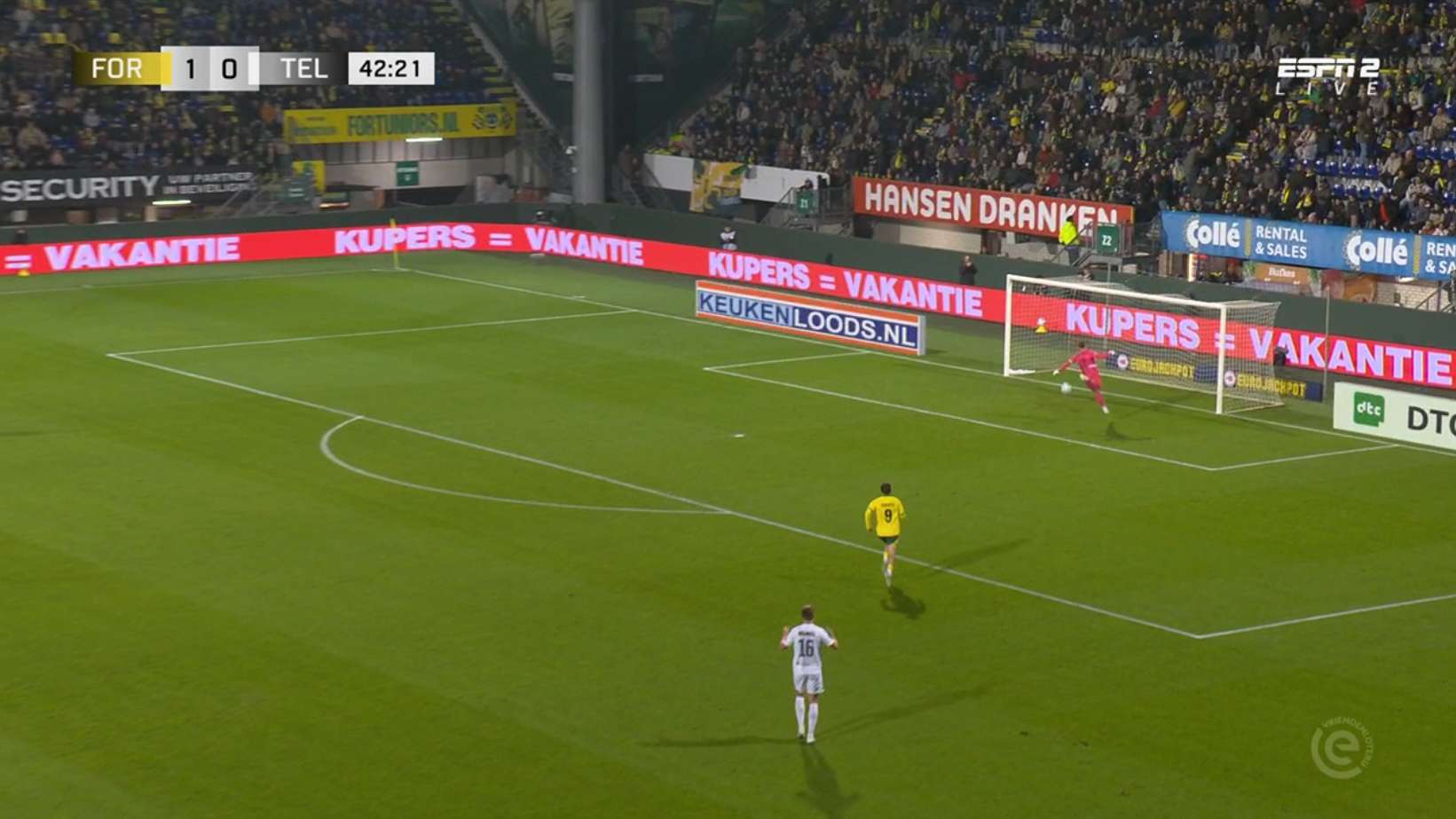
The decisive error began after Fortuna sent a long ball forward. Telstar’s defence appeared to regain control near the halfway line, creating an opportunity to reset play and move the ball safely back toward their goalkeeper. Valk attempted that simple pass, but his contact was badly mistimed.
Instead of reaching Koeman junior, the ball travelled toward Telstar’s goal. The distance made the situation particularly unusual: this was not a close-range deflection or a scramble in the penalty area, but a back-pass that travelled a long way and ended up crossing the goal line. Koeman junior tried to prevent the own goal with a desperate header, but he could not get there in time.
The score moved to 2-0, leaving Telstar with a sizeable deficit and Valk facing an uncomfortable moment in front of the crowd. The defender’s afternoon had already taken a difficult turn during the sequence that led to Fortuna’s first goal. The second incident intensified the pressure, making him the immediate focus of attention.
Why the goalkeeper’s response became part of the debate
At half-time, former footballer Anco Jansen offered a different interpretation during ESPN’s analysis. Rather than placing most of the blame on Valk, he argued that Koeman junior could have handled the situation differently.
“This sounds strange, but I blame Koeman more than Valk for this,” Jansen said. He suggested that the goalkeeper should have punched the ball away, adding that the result would then have been an indirect free-kick. Jansen also wondered aloud whether Koeman junior might not have been aware of the relevant rule.
His comments highlighted a wider point about communication between defenders and goalkeepers. A back-pass can appear harmless, but it still requires the goalkeeper to make a quick decision. If a pass is under-hit, awkwardly directed or unexpectedly dangerous, the keeper must judge whether to use their feet, move forward or clear the ball with their hands—while remaining mindful of the laws governing deliberate passes from teammates.
Jansen’s view was an opinion offered during a live broadcast, rather than a definitive ruling on the incident. Nevertheless, it shifted the discussion from Valk’s mis-hit alone to the shared responsibility that can arise when a goalkeeper and defender respond to a rapidly changing situation.
Telstar respond before the break
For Telstar, the most important development was what happened next. Rather than allowing the own goal to bring the match to an early conclusion, the team mounted a determined response and scored twice in quick succession before half-time. The comeback restored parity at 2-2 and transformed the mood around the match.
That reaction mattered beyond the scoreboard. A team that concedes through an individual mistake can lose its shape, confidence and patience, particularly when the goal increases the deficit. Telstar instead found a way to turn the pressure back on Fortuna, demonstrating the value of staying composed after a setback.
The rapid equaliser also changed the likely tactical picture for the second half. Fortuna had been in a position to manage its lead, while Telstar faced the challenge of chasing the game. Once the score was level, both sides had to reconsider their approach: Fortuna could no longer rely on its two-goal cushion, and Telstar had fresh reason to believe that a full comeback was possible.
What the incident means for Valk and Telstar
Own goals are among the most visible mistakes in football because they produce an immediate, measurable consequence. But a single error does not tell the whole story of a defender’s performance. The circumstances, the team’s reaction and a player’s response afterward all matter when assessing what happened.
For Valk, the best route forward is likely to be a return to the basics: clear communication, simple decisions under pressure and confidence in his normal passing game. Defenders are often asked to play out from the back, and a misplaced pass is an occupational risk in a sport where opponents press aggressively and the margins are small.
Telstar’s comeback may also help the squad move beyond the incident. By restoring the scoreline before the interval, the team prevented the own goal from becoming the only defining story of the match. The response offered a reminder that football outcomes are shaped by collective resilience as much as individual errors.
Match prediction and what to watch next
Any prediction about the next stage of this contest must account for the momentum swing. Fortuna Sittard showed it could take advantage of defensive uncertainty, but Telstar’s two-goal response suggested that the visitors remained dangerous and emotionally engaged. The side that manages the opening exchanges after the break—and avoids another costly lapse—could gain a significant advantage.
For supporters following the Eredivisie, the key questions are whether Fortuna can regain control of possession and whether Telstar can sustain the attacking urgency that brought it back into the match. Valk’s confidence will also be closely watched, although the team’s comeback gives him a chance to refocus rather than dwell on the mistake.
The match schedule also points to upcoming fixtures on 22 November 2026: ZWO–GAE is listed for 04:00, while SIT is listed for 23:45. As always, fixture information and kick-off times should be checked against the competition’s latest official schedule before making travel or viewing plans.
What began as a disastrous moment for Valk became a broader conversation about goalkeeper decision-making, defensive communication and the unpredictable nature of football. Telstar’s quick response ensured the match remained open, while Jansen’s analysis added another layer to the debate. The final outcome would depend not only on the own goal, but on which team could turn the renewed pressure into a decisive advantage.