
Controversial Refereeing Sparks Debate in Netherlands-Germany UEFA Nations League Clash
The recent UEFA Nations League A fixture between the Netherlands and Germany has ignited a firestorm of controversy, with the performance of the match’s referee, Alejandro Hernández Hernández, becoming the focal point of criticism across football communities. As the game unfolded, many fans, pundits, and former players voiced concerns about the fairness and consistency of the officiating, which they believe significantly influenced the outcome.
Unpacking the Key Moments: A Game of High Stakes and Controversial Decisions
The match, held on September 28th, saw the Netherlands hosting Germany in a highly anticipated encounter. The Dutch side, eager to make their mark in the UEFA Nations League, hoped to secure a victory on home soil. However, their ambitions were dashed by a series of contentious decisions that overshadowed the on-field action.
The first major incident occurred in the 12th minute when Virgil van Dijk believed he had scored a legitimate goal for the Netherlands. The towering defender headed the ball past goalkeeper Marc ter Stegen from a well-placed corner kick. The stadium erupted in celebration, with Dutch fans and players alike convinced they had taken the early lead in a crucial match.
However, the celebration was short-lived. The referee, after a lengthy VAR review, disallowed the goal. Officials judged that Brian Brobbey had impeded Ter Stegen in the six-yard box, an incident that sparked widespread debate about the fairness of the decision. Many viewers felt that the contact was minimal and that the ruling was overly harsh, especially considering the context of such a crucial moment in the game.
The Role of VAR and Its Controversies
Video Assistant Referee (VAR) technology has revolutionized football officiating, aiming to reduce errors and ensure fair play. Yet, its application remains a topic of intense debate, especially when decisions appear subjective or inconsistent. In this match, VAR’s intervention to disallow van Dijk’s goal became a lightning rod for criticism.
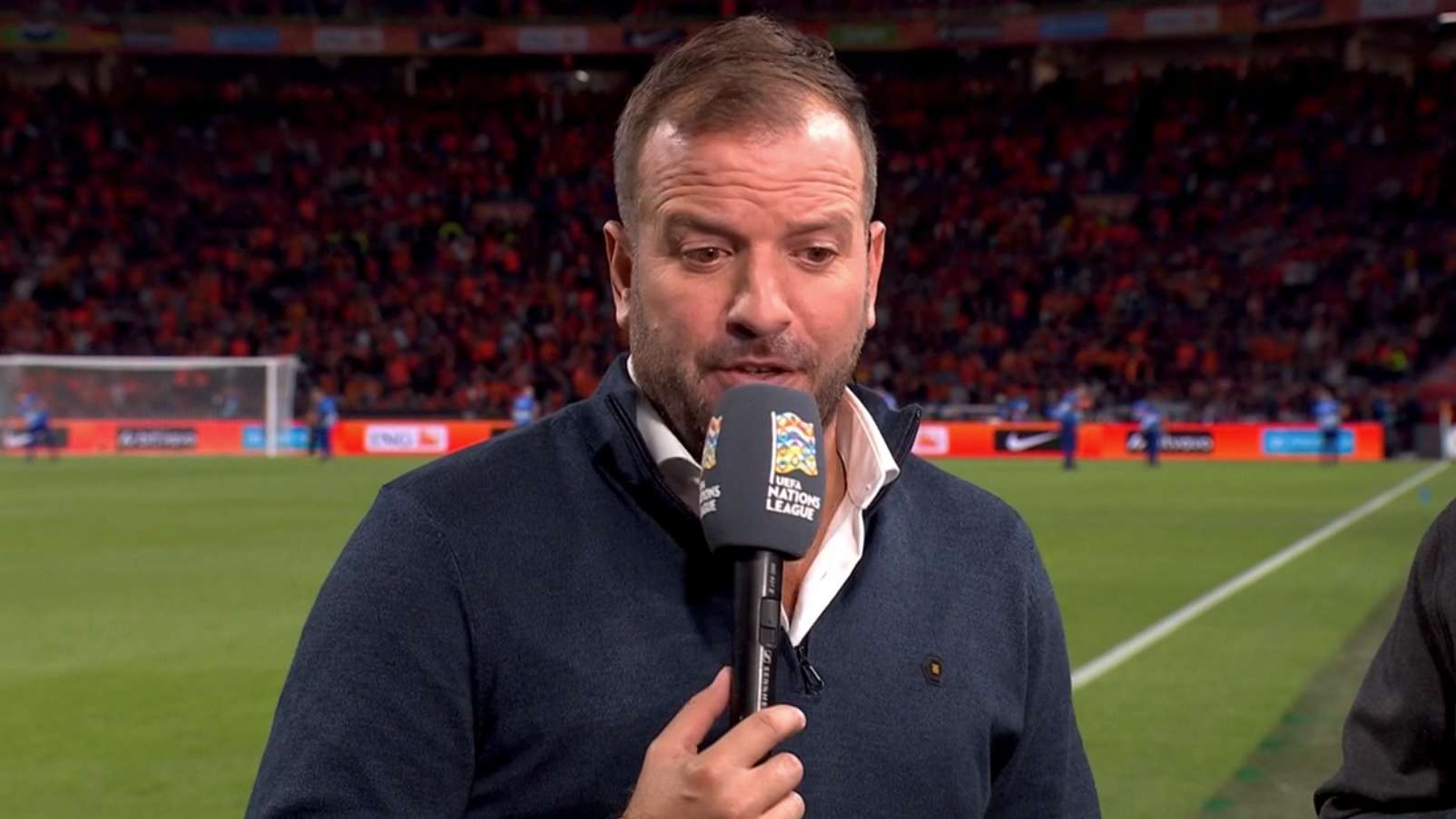
Former Dutch international Rafael van der Vaart expressed his disbelief and frustration over the decision. He described the ruling as “ridiculous” and questioned the logic behind it. “This is a disgrace, I haven’t got a clue what it’s about. This is unbelievable. He hardly does anything. You are allowed to touch each other, it’s not as if the goalkeeper can just do whatever he wants,” van der Vaart remarked during an interview with NOS, emphasizing his view that the ruling lacked clarity and fairness.
Van der Vaart further criticized the quality of goalkeeping from Ter Stegen, suggesting that the goalkeeper’s performance was not exemplary and that the disallowed goal was unjustified. “It is simply very poor goalkeeping, he is poor anyway,” he added, implying that the decision may have been influenced by subjective judgment rather than concrete evidence.
Expert Opinions and Diverging Perspectives
Ronald de Boer, another respected figure in Dutch football, echoed van der Vaart’s sentiments. He argued that the decision to disallow the goal was unwarranted, asserting that Ter Stegen’s arm was felt, and Brobbey’s positioning was not excessively aggressive. “He just makes himself a little bit bigger with his backside out. But not wildly at all. Completely undeserved,” de Boer stated, highlighting the ambiguity in the officials’ interpretation.
The controversy extends beyond individual opinions, raising broader questions about the consistency of refereeing standards and the reliance on VAR in high-stakes matches. Many experts believe that such contentious decisions can influence the momentum of a game, impacting team morale and strategic planning.
Implications for Football Prediction and Future Matches
As football enthusiasts analyze the match’s pivotal moments, the debate over refereeing accuracy inevitably affects predictions for upcoming fixtures. For fans and bettors alike, understanding how officiating decisions can sway match outcomes is crucial for making informed predictions.
The Netherlands now faces the challenge of regrouping after a contentious start, while Germany capitalizes on the advantage with a 1-0 lead at halftime. The second half will undoubtedly be closely watched to see if the Dutch team can overturn the decision and find their rhythm despite the controversial refereeing.
Looking Ahead: The Role of Technology and Fair Play in Football
This incident underscores an ongoing debate within football circles about the role of technology and the importance of maintaining fairness. While VAR has been introduced to minimize human error, its application remains imperfect, often leading to heated debates over subjective calls.
Football authorities continue to refine VAR protocols, aiming to strike a balance between technological assistance and respecting the flow of the game. The incident involving Hernández Hernández serves as a reminder of the need for transparent, consistent officiating standards to uphold the integrity of the sport.
Upcoming Fixtures and Predictions
Looking ahead, fans are eager to see how the Netherlands responds in their next UEFA Nations League matches. The prediction landscape suggests a cautious approach, with many experts advising that the Dutch team will need to demonstrate resilience and tactical adaptability to overcome the setback.
Meanwhile, Germany has gained momentum and may leverage their advantage in the second half to push for a more commanding victory. Football analysts predict a tense, competitive second half, with potential for further controversial moments depending on how the referees manage the game.
Conclusion: A Controversial Chapter in Modern Football
The Netherlands-Germany match exemplifies how refereeing decisions, especially in the age of VAR, continue to shape the narrative of football matches. While technology aims to bring fairness, human judgment and interpretation remain central, sometimes leading to disagreements and debates about the sport’s integrity.
For fans, pundits, and bettors, understanding the nuances of officiating and its impact on football predictions is more vital than ever. As the sport evolves, calls for transparent, consistent refereeing standards grow louder, ensuring that football remains a fair and thrilling spectacle for all.
Stay tuned for the upcoming UEFA Nations League fixtures, where the drama on the pitch continues—always with the promise of unpredictable moments and the ongoing quest for justice in football.