
FIFA Reopens Review of Controversial Peace Prize After Trump’s First Award
FIFA is reconsidering the future of its Peace Prize, just a year after the award was introduced and presented to U.S. President Donald Trump. The organization has referred the question to a social responsibility committee, which will assess how the prize was created, whether its original criteria were followed and whether it should be awarded again.
The review places the initiative under fresh scrutiny as FIFA prepares for the 2026 World Cup. Although the award was designed to recognize people who make exceptional contributions to peace, its launch and first recipient prompted questions about the process behind the decision. FIFA has not ruled out continuing the prize, but its future is now uncertain.
FIFA sends the prize’s future to a committee
At a FIFA Council meeting in Zurich on Thursday, members agreed that the Football Social Responsibility Committee should examine the Peace Prize and determine whether its criteria have been met. The decision follows criticism over the way the award was introduced and presented.
According to talkSPORT, former Inter Milan and Argentina defender Javier Zanetti will chair the 22-member committee. Its task is not simply to decide who might receive the prize next. Members are also expected to consider whether FIFA should keep the award at all, how nominations and selections should be handled, and what standards should apply if it continues.
A final decision is expected next December, when the Social Responsibility Committee is due to meet during the next FIFA Council gathering in Doha. Until then, FIFA’s annual prize remains under review rather than confirmed as a permanent feature of the organization’s awards calendar.
Questions over how the first award was approved
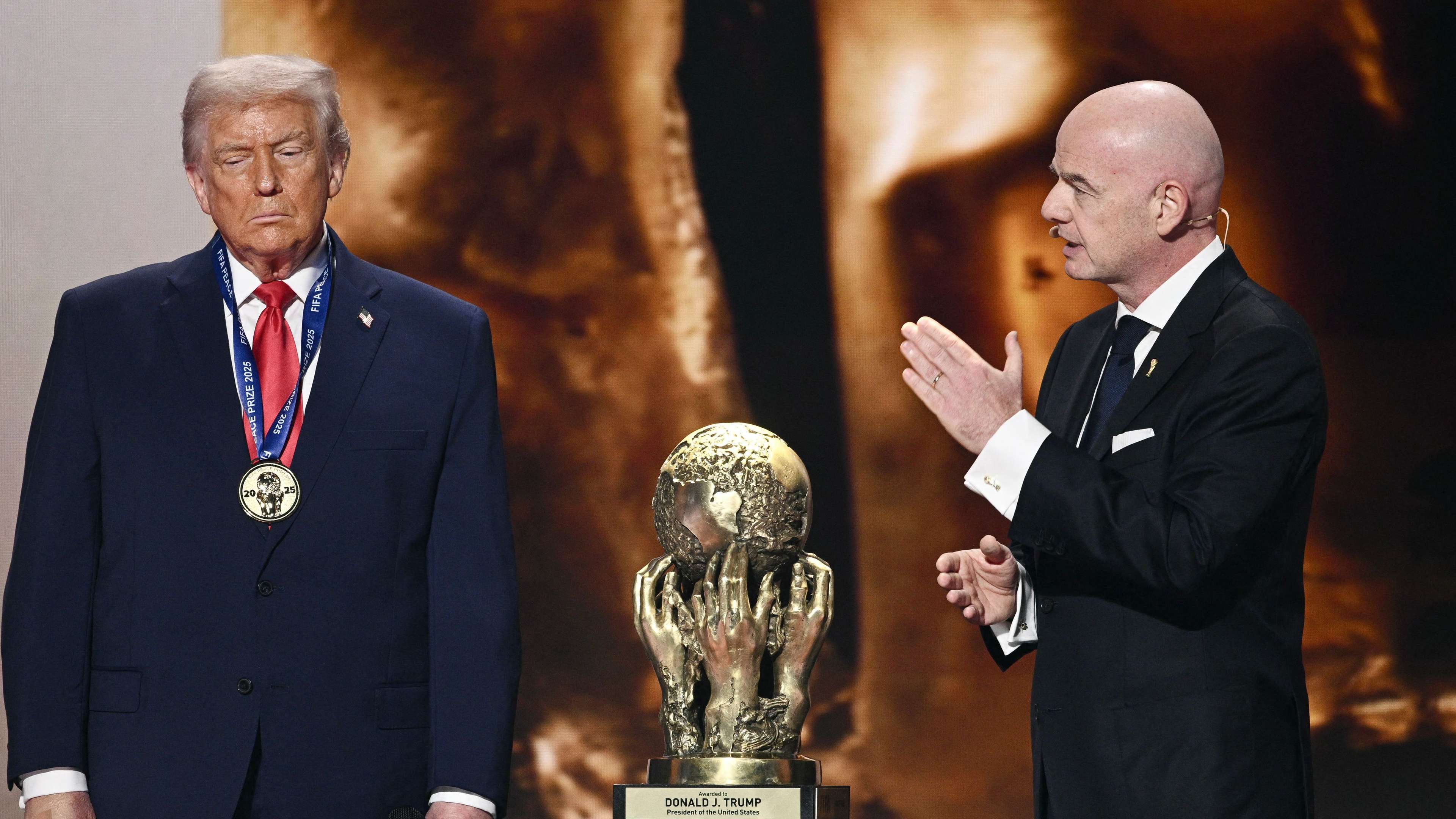
Trump received the inaugural Peace Prize during the World Cup draw in Washington last December. FIFA president Gianni Infantino presented the award ahead of the 2026 tournament, but the decision was reportedly made without formal approval from the FIFA Council, the organization’s highest decision-making body.
That process has become central to the review. FIFA vice-president Debbie Hewitt, who also chairs the English Football Association, said the committee would examine whether the prize should have been launched in the first place, how the decision to present it was reached and whether it should return.
Hewitt described the referral as an opportunity to address the points of contention surrounding the initiative. Her comments suggest FIFA’s review will consider both the award’s purpose and its governance. For an organization with a global audience, the way a high-profile honor is created and awarded can affect its credibility as much as the stated goals behind it.
What FIFA’s Peace Prize was meant to recognize
When FIFA announced the award, it said the prize would honor people who had taken “extraordinary and exceptional steps for peace.” The organization also framed it as a way to celebrate efforts that bring people together across the world.
Under that description, recipients would be recognized for sustained commitment and meaningful actions that promote peace, rather than for a single statement or moment. However, the review gives FIFA a chance to clarify what counts as an exceptional contribution and how such achievements should be assessed.
Clear criteria could help distinguish the prize from other international honors and make future decisions easier to explain. FIFA may need to establish a transparent nomination process, define the evidence required to support a selection and explain how committee members will manage potential conflicts of interest. These details could be important if the award is to command respect among football supporters and the wider public.
Could politicians be excluded from future consideration?
One possibility raised in reports is that politicians could be barred from receiving the prize if FIFA decides to preserve it. No such restriction has been confirmed, and the committee has yet to publish its conclusions. Still, the question reflects a broader debate about whether the award should recognize political leaders, humanitarian figures or people working directly in communities affected by conflict.
Excluding politicians might help FIFA present the prize as separate from government and electoral politics. On the other hand, political leaders can influence peace negotiations and international relations, so a blanket restriction could also narrow the award’s scope. The committee will need to weigh those considerations against the prize’s stated aim of recognizing actions that contribute to peace.
For now, FIFA appears to be keeping its options open. The award has not been formally cancelled, but neither has the organization confirmed that it will be presented annually. The outcome will depend on whether the committee believes the prize can be made more transparent, credible and consistent with FIFA’s wider social responsibility work.
Why the decision matters ahead of the 2026 World Cup
The review comes at a prominent moment for FIFA. The 2026 World Cup, hosted by the United States, Canada and Mexico, will attract worldwide attention, placing the organization’s public initiatives under close observation. Any decision about the Peace Prize is therefore likely to be judged not only by its supporters but also by football fans who want to understand how FIFA uses its influence beyond the pitch.
For supporters following the story, the key prediction is that FIFA will wait for the committee’s findings before making a final call. The prize could return with clearer rules, be redesigned to focus on a narrower set of contributions, or be discontinued if FIFA concludes that its purpose and selection process cannot be adequately defined.
Whatever the outcome, the review may set a wider precedent for how FIFA handles new awards and public-facing initiatives. A transparent process could strengthen confidence in future decisions; a poorly explained one could invite further criticism. FIFA’s next steps will show whether the Peace Prize can become a credible symbol of its commitment to unity—or whether the organization decides that the award should not continue.