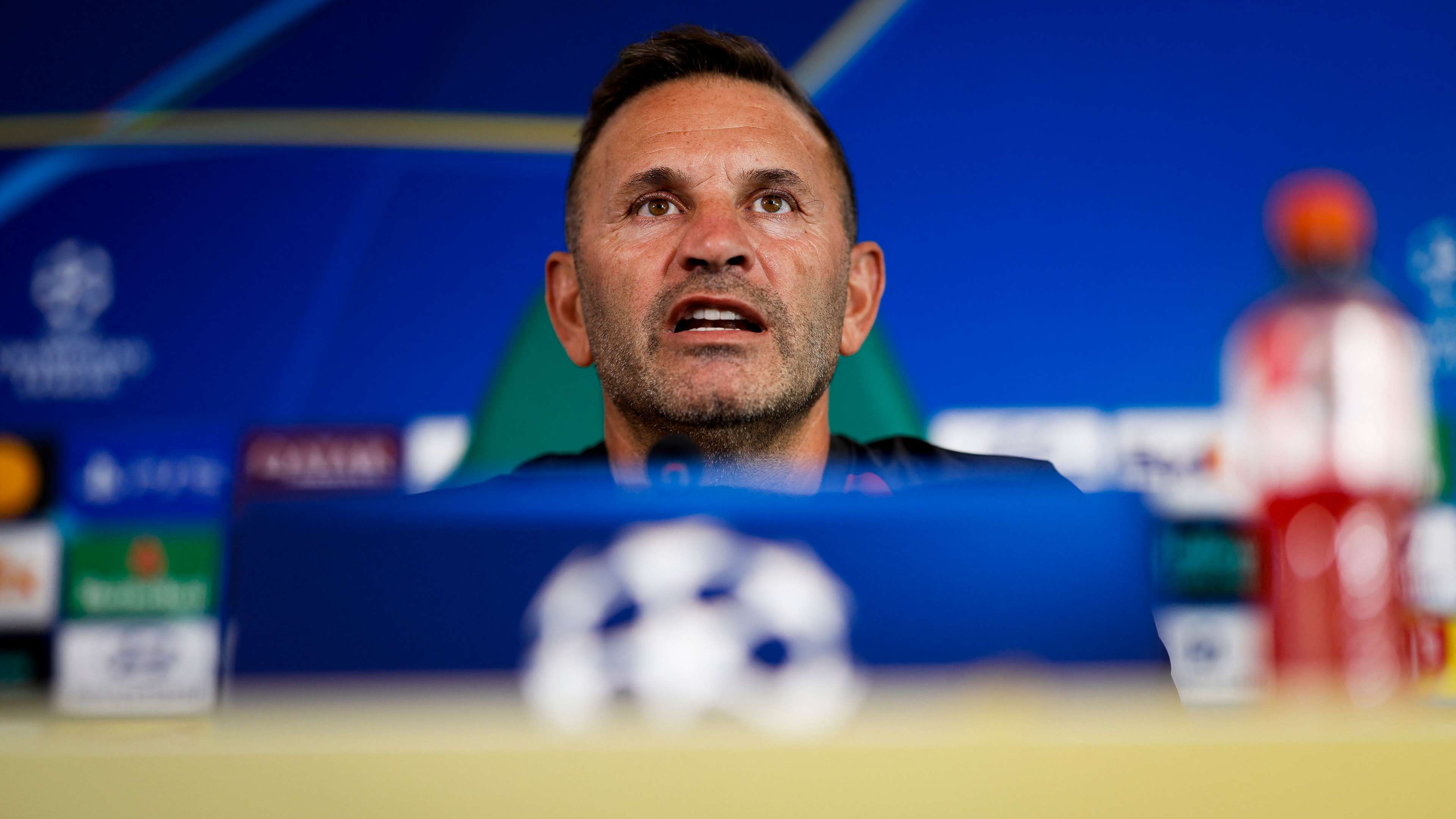
Frenkie de Jong at centre-back? Barcelona consider a new role as Flick weighs his options
Frenkie de Jong could be approaching an unexpected change in his Barcelona career, with head coach Hansi Flick exploring whether the Netherlands international can contribute at centre-back. The idea offers a possible answer to more than one challenge: Barcelona’s crowded midfield, the need for defensive flexibility and questions about how best to manage De Jong’s recovery from a knee problem.
Spanish journalist Santi Ovalle reported on Cadena SER that De Jong trained in central defence after returning to group sessions. That does not necessarily mean Barcelona have decided to move him permanently. Rather, it suggests Flick is testing a useful option as he assesses the player’s fitness and the squad’s needs. For supporters following Barcelona football, the experiment could become one of the more intriguing selection stories of the coming weeks.
Why Flick is considering De Jong in defence
Flick has already indicated that De Jong could be considered for the role. Before Barcelona’s match against Getafe, the coach said the team had several centre-back options and named the Dutchman among them. His comments suggest the possibility is not simply a last-minute training-ground experiment, even if the coach has yet to confirm how often he intends to use it.
De Jong’s qualities could translate to the position in certain situations. He is comfortable receiving the ball under pressure, has the composure to play forward and can help a team progress possession from the back. Those attributes are valuable to a Barcelona side that often asks its defenders to do more than clear danger: they must also help start attacks and find midfielders between the lines.
A centre-back role could also give Flick another way to balance his line-up when injuries, suspensions or demanding fixtures limit his choices. De Jong’s experience in midfield may help him read passing lanes and anticipate pressure, while his technical ability could be particularly useful against opponents who defend deep and leave Barcelona needing to build patiently.
Knee concerns add another dimension
The potential switch has attracted attention partly because of reports about De Jong’s knee. Ovalle said that some medical opinions have raised the possibility of surgery, with concerns that the joint could remain unstable without further treatment. These reports do not confirm that an operation has been scheduled or that Barcelona have made a final medical decision. The club and player will need to assess his condition carefully before determining the safest route back to regular competition.
Midfield places heavy demands on a player’s movement. De Jong’s role often involves accelerating into space, stopping suddenly, turning under pressure and changing direction to escape opponents. Each action requires stability and control through the knee. Centre-back is not a low-intensity position—defenders still have to sprint, challenge, jump and react quickly—but it may involve a different pattern of movement, depending on the team’s tactics and the match situation.
That distinction could make the role worth exploring, but it should not be treated as a medical solution in itself. Any change in position would still need to fit the advice of Barcelona’s medical staff and De Jong’s own recovery. Protecting his long-term fitness is likely to matter more than finding a short-term tactical adjustment.
Midfield competition could influence his role
Fitness is only one part of the story. Barcelona have several options in midfield, including Marc Bernal, while established players remain central to Flick’s plans. De Jong’s return therefore arrives in a position where competition for minutes is increasing. Flick has not presented him as a direct replacement for Pedri, and the coach may see greater value in using the Dutchman where the squad has a different need.
That does not mean De Jong has lost importance or that Barcelona are ready to move him on. A versatile player can still earn a significant role, particularly across a long season when fixtures arrive quickly and tactical demands change. If De Jong can perform effectively in defence, he may give Flick additional flexibility without ruling out future appearances in midfield.
The key question is whether the experiment remains occasional or becomes a regular part of Barcelona’s plans. The answer will depend on De Jong’s fitness, the form of the available midfielders and the performance of the club’s centre-backs. His first appearances after returning could provide important clues, but one selection alone would not prove that a permanent conversion is underway.
Real Betis could be a step towards his return
Flick has suggested that De Jong may be available for Barcelona’s meeting with Real Betis, while making clear that the player needs time to regain match fitness. The coach said De Jong was feeling good in training and was not experiencing pain, but stressed that the club would not rush his return.
That cautious approach is significant. Being able to train without discomfort is an encouraging sign, but competitive football brings a different level of physical intensity. Barcelona will need to judge whether De Jong can handle the pace of a match and whether he is ready to complete a meaningful number of minutes. A gradual return could allow the coaching staff to monitor his response before increasing his workload.
De Jong is also understood to be aiming to reach full fitness ahead of the Clasico against Real Madrid. That would be a major target, but his involvement will depend on his progress rather than the importance of the fixture alone. Barcelona’s prediction for his return timeline should therefore remain cautious until the club confirms his availability and he has resumed full training without setbacks.
Could the position change affect De Jong’s future?
Using De Jong at centre-back inevitably raises questions about his long-term place at Barcelona. He has spent most of his career as a midfielder and has been an important figure in that role. If he feels the defensive assignment limits his influence or does not match his strengths, it could become part of his thinking about his future. However, there is currently no confirmation that Barcelona are using the experiment to prepare for a departure or facilitate a transfer.
For now, the most straightforward explanation is that Flick is keeping his options open. The coach is evaluating a versatile player while managing a competitive squad and monitoring a sensitive recovery. The coming matches should show whether centre-back is a temporary solution, a tactical alternative for selected opponents or a more substantial change.
De Jong’s return to full fitness will ultimately determine the direction of the story. If he performs well in defence, Flick may gain a valuable new option; if not, the Dutchman can continue to compete for his familiar midfield role. Either way, Barcelona’s approach will be shaped by the balance between footballing needs and the priority of protecting one of the squad’s most technically gifted players.