
Ronaldo’s Al-Nassr Goal Sparks Debate After Deflection Against Al-Faisaly
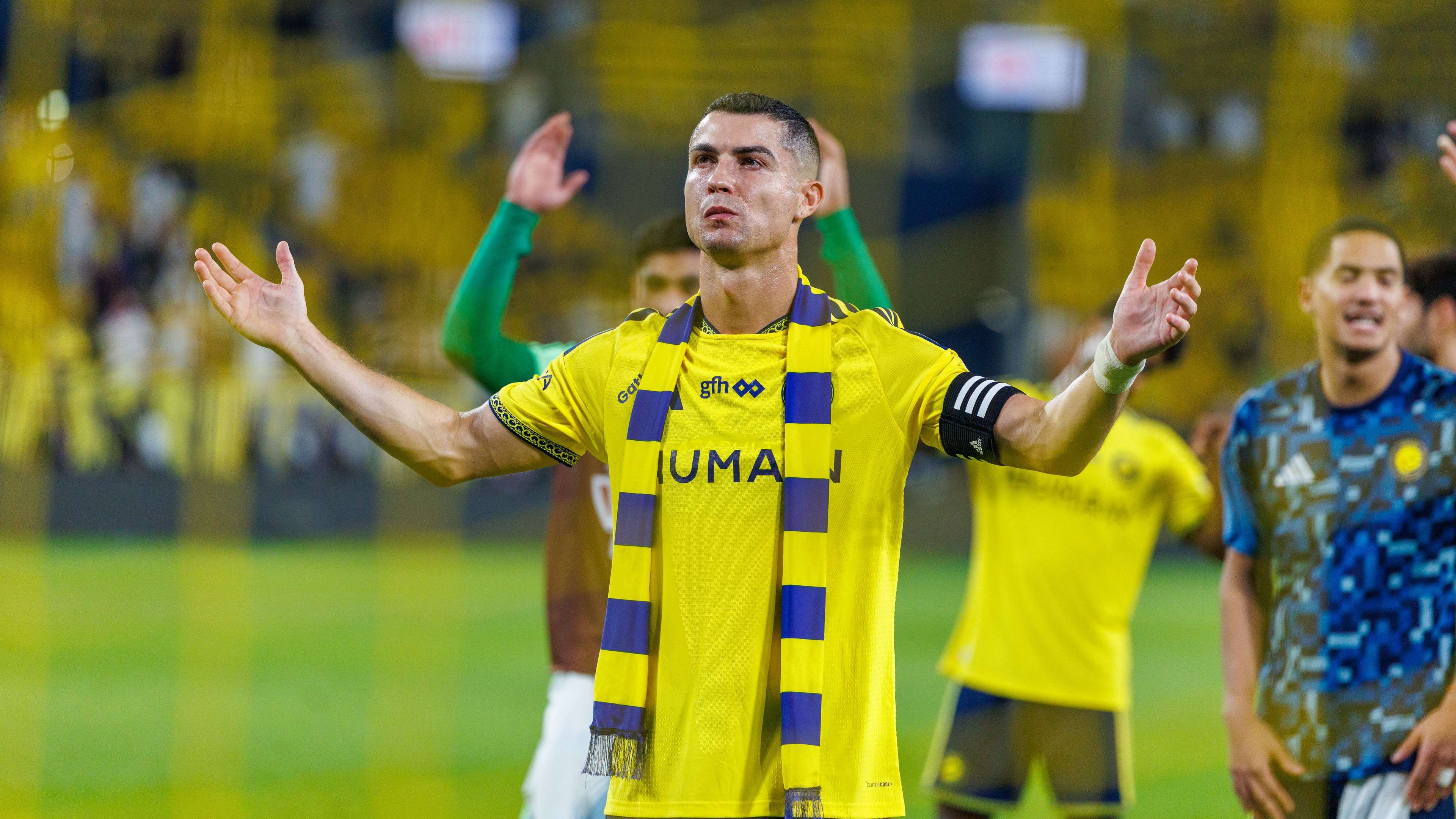
Al-Nassr’s 3-1 victory over Al-Faisaly in the Saudi Roshn Pro League delivered an important result in the race near the top of the table, but one goal quickly became the match’s biggest talking point. Cristiano Ronaldo was credited with Al-Nassr’s second goal, yet former Saudi football stars questioned whether the decisive touch came from the Portuguese forward or Al-Faisaly defender André Girotto.
The controversy followed a 49th-minute set piece that appeared, at first, to be a familiar Ronaldo moment. João Félix sent a free-kick into the penalty area, where Ronaldo rose to meet the delivery with a header. The ball then struck Girotto before crossing the line, leaving viewers to debate whether the defender’s contact merely changed its path or turned the attempt into an own goal.
How the disputed goal unfolded
Ronaldo’s header was directed toward goal, but Girotto was positioned in its path. Replays showed the ball making contact with the Brazilian defender and changing direction on its way past the goalkeeper. That final deflection became central to the discussion: if the ball was already heading inside the post before it hit Girotto, the goal could reasonably remain Ronaldo’s. If the touch redirected an effort that was otherwise going wide or was unlikely to score, the defender might be considered responsible.
Such decisions are not always straightforward. Goal attribution generally depends on the competition’s official scoring criteria and the match officials’ assessment of the original attempt. A deflection does not automatically erase the attacker’s credit. The key question is whether the shot or header was already on target and likely to enter the goal before the opponent intervened.
Former Saudi stars question the official decision
Speaking on the television programme Nadeena, former Al-Hilal captain Sami Al-Jaber said the available video and slow-motion angles suggested Girotto may have been the player who scored. In his view, the ball’s altered trajectory after the defender’s touch was significant enough to raise doubts over the official ruling.
Al-Jaber was not alone. Former Saudi internationals Mohammed Noor and Hussein Abdulghani also questioned whether Ronaldo should receive the goal. Their discussion focused less on the result—which remained a convincing Al-Nassr win—and more on the precise path of the ball before it crossed the line.
The debate illustrates how a single replay can produce competing interpretations. Slow motion can reveal contact that is easy to miss in real time, but it can also make a minor touch appear more decisive than it was. The angle of the original header, the defender’s position and the ball’s direction before and after impact all matter when deciding who deserves the credit.
A familiar Ronaldo comparison with the 2022 World Cup
Mohammed Noor drew a comparison with Portugal’s controversial goal against Uruguay at the 2022 FIFA World Cup. Ronaldo initially appeared to make contact with Bruno Fernandes’ cross, but the goal was ultimately awarded to Fernandes. The incident became widely discussed because Ronaldo seemed convinced he had headed the ball, while official assessments concluded that Fernandes should receive the goal.
“This resembles his goal in the 2022 World Cup, at the time the goal was credited to Bruno Fernandes,” Noor said, pointing to the difficulty of separating a player’s impression from the evidence available to officials.
The comparison added another layer to the Al-Faisaly discussion. Ronaldo has built a career around being in the right place at the right moment, but goal records depend on official attribution, not reputation or celebration. A player may influence an attack without receiving the final statistical credit, just as a defender’s touch can complicate the scorer’s identity.
The referee’s decision stands
Despite the criticism from former players, the referee credited the goal to Ronaldo. The decision meant the Portugal captain added another strike to his remarkable career tally, which the match report placed at 982 goals. No change to the official attribution was reported following the controversy.
For Al-Nassr, the ruling mattered less than the three points, but it ensured the goal would remain part of the post-match conversation. The club’s 3-1 win kept its pursuit of the Saudi Pro League leaders on track, while Ronaldo’s credited strike reinforced his continuing influence in the team’s attack.
The match also highlighted the value of set pieces in close contests. Félix’s delivery created the danger, Ronaldo’s movement gave him the chance to attack the ball, and Girotto’s attempted intervention produced the moment that divided opinion. Even when the final score appears clear, small details can shape the story around a game.
What the controversy means for the title race
For supporters following the league, the incident is a reminder that football statistics can carry as much discussion as the action itself. Goals affect individual records, award races and historical comparisons, while disputed decisions can quickly gain attention when a global star is involved. In this case, the debate did not alter Al-Nassr’s result, but it renewed scrutiny of how goals are assigned after deflections.
Any prediction about Al-Nassr’s title prospects will ultimately depend on more than one disputed goal. Consistency, defensive reliability and the ability to turn chances into points across the season will be decisive. Still, Ronaldo’s presence gives the side a proven finisher capable of changing matches, while Félix’s set-piece delivery offers another route to goal.
Whether fans believe Ronaldo’s header was already on target or Girotto’s touch made the decisive difference, the official record currently credits the Portuguese star. Al-Nassr left with a valuable victory, and the goal became another example of how one split-second deflection can turn a routine match moment into a wider football debate.