
Bayern Munich Turns to a Classic Solution: Rest and Recovery for Luis Diaz
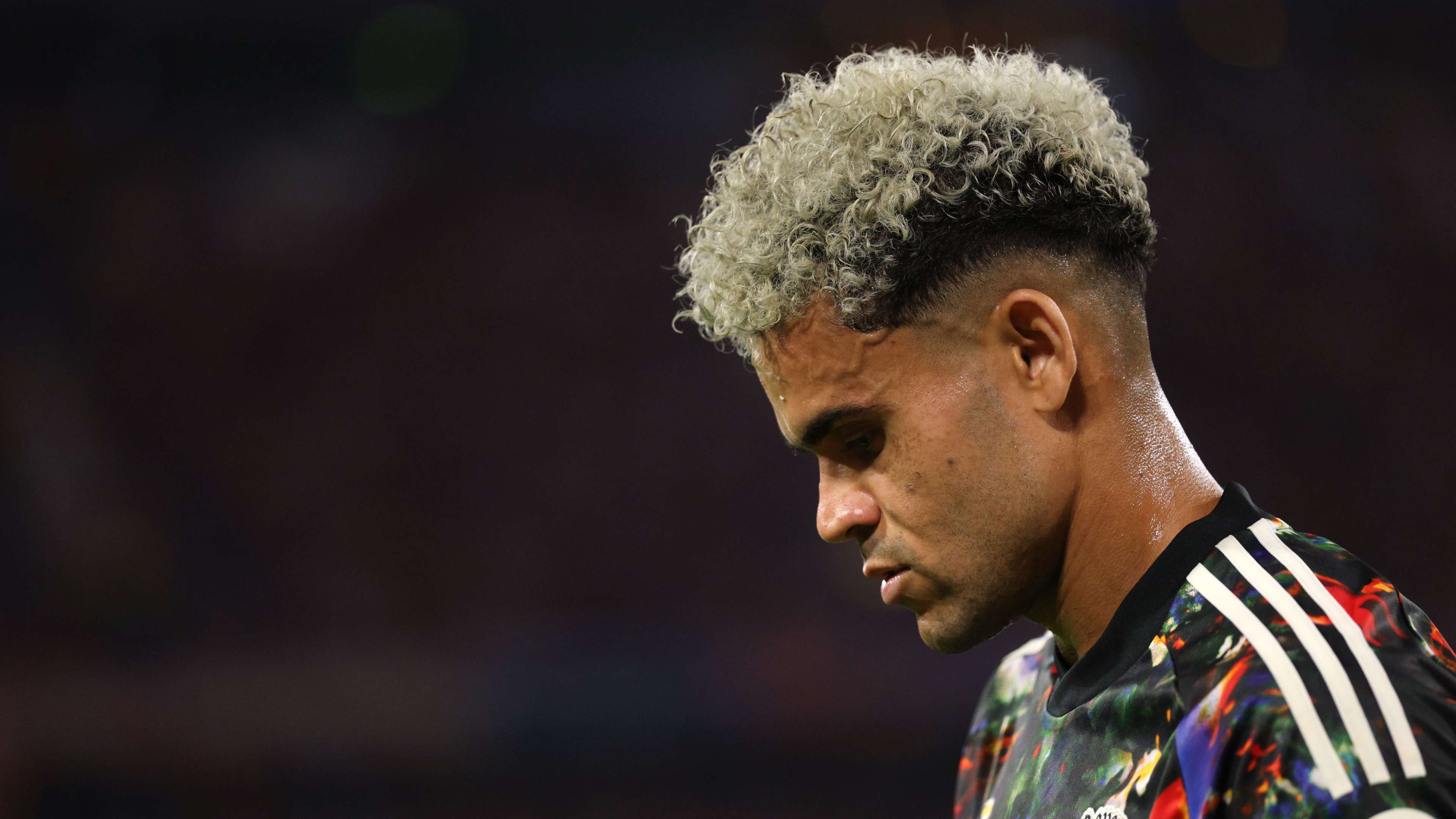
In the high-stakes world of professional football, even the most talented players can hit rough patches. Bayern Munich, one of Europe’s most successful and storied clubs, has recently faced such a challenge with Colombian winger Luis Diaz. Despite the team’s emphatic 7-0 victory over Union Berlin—a match filled with celebration and standout performances—Diaz’s goal drought persisted, prompting the Bavarian giants to revisit a familiar strategy: giving a star player a well-deserved break to reignite his goalscoring instinct.
The Celebratory Atmosphere Post-7-0 Win: A Team United in Triumph
The recent Bundesliga clash against Union Berlin was a spectacle of football excellence. Bayern’s attacking line shone brightly, with Harry Kane netting his milestone 100th goal for the club, Michael Olise achieving his first hat-trick in Bayern colors, and Ismael Saibari scoring his debut goal. Serge Gnabry also made his return after injury, adding depth and dynamism to the squad. The dressing room was alive with celebration, camaraderie, and a sense of collective achievement.
Harry Kane, the team’s prolific striker, was the last to leave the dressing room, sharing insights about the team’s unity and the coach’s motivational speech. The players reflected on a dominant performance that underscored Bayern’s offensive strength this season. Yet, amidst these jubilant moments, Luis Diaz remained somewhat on the sidelines—his goal drought casting a shadow over his otherwise promising start at Bayern.
Understanding Luis Diaz’s Goalscoring Struggles
Diaz’s last goal for Bayern Munich dates back to the season’s opening match against Stuttgart, where he scored his fifth goal of the game. Since that early success, the Colombian winger has struggled to find the back of the net. His recent performances have been marred by missed chances, including several golden opportunities against Schalke, Osnabruck, and Bodo/Glimt, which have raised concerns among fans and analysts alike.
In particular, Diaz’s failure to capitalize on scoring opportunities has become a focal point. For example, during the recent encounter with Union Berlin, he scored a goal that was controversially ruled offside, despite the move being initiated after a remarkable team attack. This pattern of near-misses and missed chances has led to questions about his confidence and finishing ability.
Statistical Insights: Why the Struggles Persist
Data from recent matches paints a clearer picture of Diaz’s ongoing difficulties. While expected goals (xG) metrics suggest he should have scored around 3.1 goals in the first four Bundesliga rounds, he has only managed to score once. Conversely, Harry Kane has scored three goals from an xG of 2.17, and Michael Olise has exceeded expectations with four goals from an xG of 2.65. Notably, Ismael Saibari, who stepped in for Diaz against Union Berlin, scored once and provided three assists in just 178 minutes of league action, hinting at the potential that the young midfielder offers when given opportunities.
Such disparities between expected goals and actual goals highlight Diaz’s current inefficiency in front of goal. His recent failure to convert chances has been compounded by psychological pressure, which many experts believe can be alleviated through rest and mental reset.
Diaz’s Own Perspective: Trusting the Process
Despite frustrations, Diaz remains optimistic. He has publicly expressed confidence that he can regain his scoring touch, emphasizing the importance of mental calm and confidence in front of goal. He believes that with focused work on his finishing skills and a positive mental attitude, goals will soon follow.
The Club’s Approach: Rest as a Strategic Tool
In response to Diaz’s struggles, Bayern Munich’s management has opted for a restorative break during the international break period. Colombia’s national team coach, Nestor Lorenzo, decided not to call Diaz up, a decision that was made after thorough consultation with the player and Bayern’s coaching staff.
Bayern’s sporting director, Max Eberl, welcomed this approach, emphasizing that Diaz has been heavily involved in matches recently. Eberl stated, “A short break will benefit him physically and mentally. Rest is an essential part of a player’s development, especially when dealing with a goal drought.” He reassured fans that Diaz’s fitness remains intact and that he will return to training with renewed energy and focus.
Strategic Implications: Will Rest Be Enough?
Rest and recovery are tried-and-true tactics in football, often used to help players overcome slumps. Bayern Munich’s decision echoes this philosophy, aiming to help Diaz recover his attacking instinct and confidence. The question remains: will this short hiatus be enough to rejuvenate his goalscoring prowess?
Historically, Diaz has responded positively to similar breaks. Back in December 2025, he was sidelined briefly but returned stronger and more decisive, contributing significantly in the latter half of the season. This pattern suggests that with adequate rest, Diaz could regain the form that made him a key asset for Bayern and a feared attacker in football prediction models.
Team Dynamics and Future Plans: Who Will Step Up?
With Arijon Ibrahimovic loaned out to Augsburg before the transfer window closed, Bayern faces the challenge of filling Diaz’s role on the wing. The club’s coach, Vincent Kompany, has several options, including Serge Gnabry and Ismael Saibari, who has already demonstrated his attacking prowess. The team’s versatility means that multiple players can step into offensive roles, but the emphasis remains on Diaz to rediscover his goalscoring rhythm.
Moreover, Bayern’s strategy could involve rotating players to prevent fatigue and maintain high performance levels throughout the season. The use of alternative attacking options will be crucial, especially in high-stakes matches where prediction models weigh heavily on team form and individual performances.
What’s Next for Bayern Munich and Luis Diaz?
In the coming weeks, fans and analysts alike will be closely monitoring Diaz’s recovery process. The club’s success in restoring his confidence could significantly influence their overall performance and title ambitions. The football prediction landscape suggests that if Diaz can regain his sharpness early in the season, Bayern’s attacking potency will be bolstered, making them even more formidable contenders in both domestic and European competitions.
Ultimately, Bayern’s old but effective solution—rest, mental focus, and strategic rotation—may prove to be the key to unlocking Diaz’s goalscoring potential once again. As the season unfolds, football enthusiasts will be eager to see whether this approach pays dividends and how it influences Bayern’s chances of securing more trophies.
Conclusion: A Test of Resilience and Strategy
In football prediction and analysis, resilience often trumps momentary dips in form. Bayern Munich’s decision to rest Luis Diaz reflects a deep understanding of player management and the importance of mental recovery. With the right support and strategic planning, Diaz has the opportunity to return to his best, contributing vital goals for Bayern and enhancing their chances of success in the fiercely competitive football landscape.
As fans and pundits debate and discuss, one thing is clear: the journey to regaining top form is a nuanced process that combines physical recovery, mental resilience, and tactical adjustments. Bayern Munich’s approach could serve as a blueprint for other clubs facing similar challenges, emphasizing that sometimes, the old solutions—rest, patience, and strategic planning—are the most effective in the beautiful game.
Stay tuned to the “Kooora” forums for in-depth discussions, predictions, and updates on Bayern Munich’s season and Luis Diaz’s quest to find his scoring touch.