
Real Madrid’s Refereeing Claims Add Tension Ahead of El Clásico
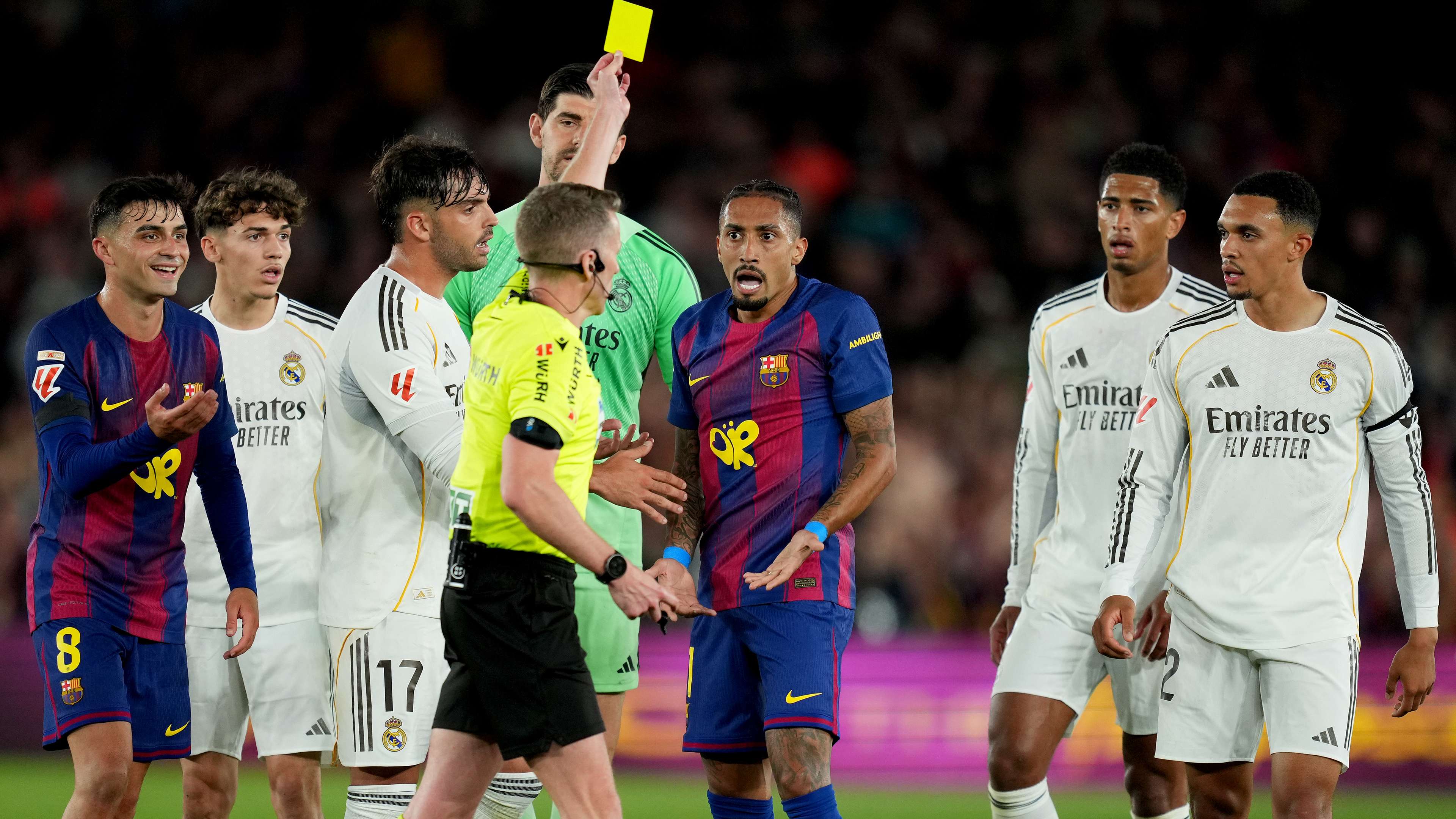
The build-up to El Clásico has taken a contentious turn after Real Madrid’s official television channel criticised refereeing decisions involving Barcelona. With the rivals preparing to meet at Spotify Camp Nou, the broadcast has revived familiar arguments about consistency, VAR and whether both clubs receive equal treatment from match officials.
The timing has drawn particular attention. The refereeing team for the upcoming fixture had not yet been announced when the channel aired an extended report examining disputed moments from previous Clásicos and matches involving the two sides against other opponents. By placing those incidents in the spotlight days before one of football’s most closely watched games, the programme has added another layer of pressure to an already intense occasion.
Madrid channel alleges unequal treatment
According to Mundo Deportivo, the report presented Real Madrid as the club most frequently disadvantaged by refereeing decisions and suggested Barcelona had benefited from more favourable treatment. The channel’s central claim was direct: “The conclusion is clear, the referees’ treatment of Barcelona differs from their treatment of Real Madrid, and our club always ends up being the party most harmed.”
It also criticised what it described as the standard of officiating in Barcelona’s matches, arguing that the Catalan club had received favourable decisions both in Clásicos and in games played in the weeks leading up to the showdown. The report did not limit its complaints to individual calls. It also questioned whether players from the two teams are treated differently by referees during matches.
In particularly pointed language, the channel said a player receives “exceptional treatment” if he represents Barcelona and alluded to what it called “refereeing on demand” in favour of the club’s players. These are serious allegations, but they remain the broadcaster’s interpretation of disputed incidents rather than an independent finding about officiating.
VAR also comes under fire
Video assistant refereeing was another major target. Real Madrid’s channel argued that concerns extend beyond decisions made by the referee on the pitch, repeatedly referring to “video technology on demand” in Barcelona’s favour. The criticism reflects a wider debate in modern football: even when VAR is intended to reduce clear errors, reviews can generate fresh disagreement over which incidents merit intervention and how consistently the rules are applied.
That debate is especially visible in El Clásico, where a single penalty, red card or disallowed goal can dominate the post-match conversation. Replays may provide more angles, but they do not always settle arguments about contact, intent or whether an incident meets the threshold for a review. In a high-stakes fixture, the way decisions are explained can matter almost as much as the calls themselves.
Why the timing matters before El Clásico
Public criticism of officials before a major match can influence the atmosphere surrounding the game. Players and coaches may be asked about the claims, supporters may scrutinise every whistle more closely, and the appointed referees could face heightened attention from the opening minutes. That does not mean the broadcast will affect decisions, but it helps explain why pre-match comments about officiating can become part of the story.
El Clásico already carries enormous sporting and cultural significance. Real Madrid and Barcelona are competing for more than local bragging rights: results can shape the LaLiga title race, affect confidence and influence momentum for the weeks ahead. When the contest is finely balanced, a controversial decision can quickly become a defining talking point, even if the match itself is decided by tactics, finishing or defensive mistakes.
For supporters, the most useful way to assess claims of unequal treatment is to look at specific incidents and apply the same standards to both teams. A collection of controversial moments can make a compelling television segment, but context matters: the match situation, the wording of the rules and the consistency of comparable decisions all need to be considered. Isolated clips, without that context, rarely provide a complete picture.
What to watch for on match day
The referee’s approach to physical challenges and dissent will be closely observed, particularly given the attention the report has generated. Early decisions could set the tone for how aggressively the teams press, contest possession and defend in one-on-one situations. The use of VAR will also be monitored, although any review should be judged according to the established protocol rather than assumptions about which club might benefit.
Ultimately, the result is likely to depend on the teams’ performances. Barcelona will look to use home advantage and impose their style, while Real Madrid will aim to turn the occasion into a test of composure, transitions and clinical attacking. Both sides have the quality to punish mistakes, making concentration and decision-making crucial throughout the match.
El Clásico prediction: football, pressure and fine margins
There is no reliable way to predict how refereeing decisions will shape the contest, and the pre-match accusations do not determine what will happen on the pitch. A sensible football prediction should instead account for the rivalry’s intensity, the quality of both squads and the possibility that small details—such as a set piece, a defensive lapse or a moment of individual brilliance—could decide the game.
Real Madrid’s broadcast has ensured that officiating will be a major talking point before kick-off, while Barcelona will have the opportunity to answer on the field. If the match is played without a decisive controversy, the focus may quickly return to tactics and performance. If a disputed call does occur, however, the claims aired beforehand are likely to amplify the reaction.
For now, the key question is not whether one club has secured preferential treatment, but whether the officials can apply the rules consistently in a fixture under extraordinary scrutiny. With the referee appointment still to come at the time of the report, the spotlight is already firmly on the match officials—and on the players who will ultimately decide this latest chapter of El Clásico.