
Mystery Challenger Could Complicate Gianni Infantino’s FIFA Re-Election Bid
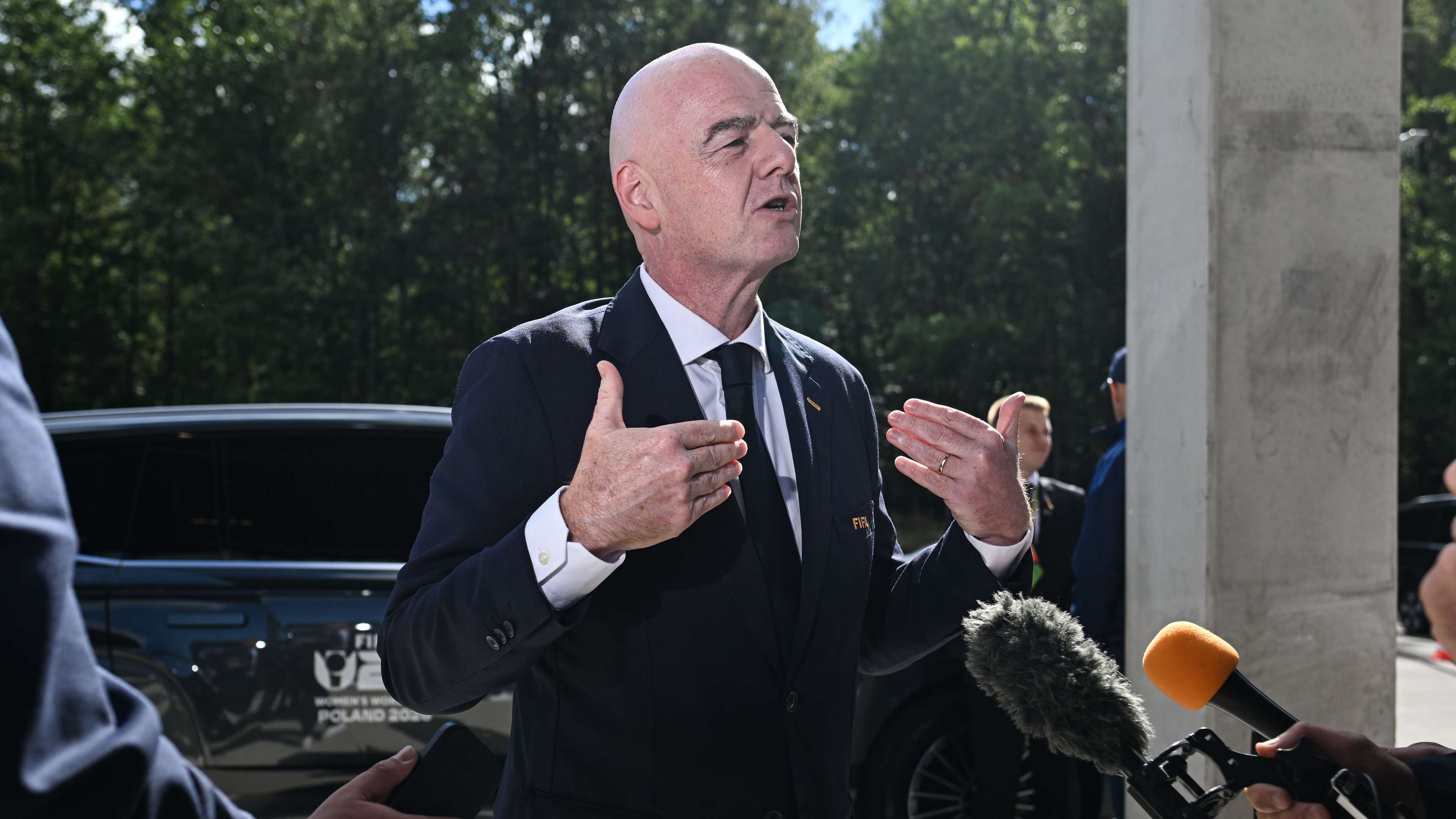
Gianni Infantino’s campaign for another term as FIFA president may face an unexpected obstacle: a potential rival whose identity is being kept secret. According to The Telegraph Sport, football figures in Europe are quietly discussing a last-minute challenge, with the nomination deadline set for 18 November ahead of the election in March 2027.
The reported effort is intended to identify a credible, unifying candidate capable of drawing support from national associations and football leaders dissatisfied with Infantino’s leadership. Those involved have so far declined to name their preferred contender. One source reportedly said the stakes were “far too high” to reveal the person’s identity before the campaign takes shape.
The speculation comes at a sensitive moment for FIFA. Infantino has appeared politically secure for much of his current term, but recent controversies have prompted questions about whether his support remains as firm as it once seemed. The emerging prediction of a competitive election, however uncertain, marks a striking change from expectations that he might secure re-election without opposition.
From near-consensus to growing uncertainty
Before the latest disputes, around 200 of FIFA’s 211 member associations had reportedly backed Infantino’s re-election unopposed. That level of support suggested that a rival would struggle to gather the votes needed to make the contest meaningful. But the political atmosphere shifted after criticism grew over a proposed plan involving the sale of stakes in World Cup-related assets to investors.
The proposal reportedly provoked concern among football stakeholders, adding to wider debate about FIFA’s commercial priorities and the influence of private capital in the sport. The controversy has not, by itself, determined the outcome of the next election, but it appears to have encouraged critics to consider whether a credible alternative could be assembled.
Infantino has responded by working to reinforce his support base, including through engagement with African football leaders and national associations. In FIFA elections, backing from member associations is decisive, making regional alliances and personal relationships central to any campaign. A challenger would need more than a high-profile name: they would need a broad coalition, a clear platform and the ability to persuade voters that change is achievable.
Several prominent figures have ruled themselves out
The search for an opponent has been complicated by the withdrawal or non-availability of several figures once discussed as possible contenders. Victor Montagliani, president of CONCACAF, the confederation representing North and Central America and the Caribbean, is reportedly focused on seeking re-election within his own organisation rather than challenging Infantino.
Other names mentioned in political discussions have also distanced themselves from a FIFA presidential race. Paris Saint-Germain president Nasser Al-Khelaifi and Lise Klaveness, president of the Norwegian Football Federation and a prominent critic of Infantino, are among those reported not to be standing. Their decisions narrow the field, but they do not rule out the possibility that a less expected candidate could emerge.
Potential names circulating in football circles include Asian Football Confederation president Sheikh Salman bin Ibrahim Al Khalifa, Jordanian royal Prince Ali bin Al Hussein, former Arsenal manager Arsène Wenger, and Michele Kang, the owner of several clubs in women’s football. Portugal and Real Madrid legend Luís Figo has also attracted attention after publicly calling for Infantino to resign last August.
None of those names has been confirmed as the mystery candidate. The distinction matters: being discussed as a possibility is not the same as formally entering the race, and a successful nomination would require both political support and compliance with FIFA’s election rules.
UEFA tensions and questions over transparency
Another challenge for Infantino is the strained relationship between FIFA and UEFA, European football’s governing body. UEFA is reportedly seeking access to evidence and documents connected to legal proceedings in Switzerland involving the FIFA president. The dispute could deepen divisions within international football and become a prominent issue during the election campaign.
Transparency is also likely to feature in any challenge to the incumbent. Infantino previously presented himself as a reformer following the corruption crisis associated with his predecessor, Sepp Blatter. He served on a reform committee that established requirements for FIFA to disclose salaries, bonuses and compensation paid to senior officials.
Against that background, allegations that Infantino failed to properly declare a second salary worth £1.3 million have attracted particular scrutiny. The claims remain allegations, and their significance will depend on the relevant evidence and any formal findings. Nevertheless, critics may use the issue to question whether FIFA’s standards of accountability are being applied consistently at the top of the organisation.
What a surprise candidacy could mean for FIFA
For now, the central question is whether the reported European effort can turn private discussions into a formal campaign. A mystery candidate could unsettle Infantino’s team, but secrecy alone does not guarantee momentum. The contender would need to persuade football associations across different regions that they offer a credible alternative—and avoid being portrayed as a candidate backed by only one bloc.
The election could therefore become a test of more than individual popularity. It may also reflect competing views about FIFA’s governance, commercial strategy, financial transparency and relationship with regional confederations. Supporters of Infantino can point to his established network and experience in office. His critics, meanwhile, are likely to argue that the recent controversies make a fresh leadership approach necessary.
With the nomination deadline approaching, the prediction of an open contest remains uncertain. Infantino still has significant political support and has moved to strengthen key alliances, while several potential rivals have ruled themselves out. Yet the reported search for a new candidate suggests that some influential figures believe the election is not settled. Whether a challenger can unite those critics—and convert dissatisfaction into votes—may determine the next chapter in FIFA’s leadership battle.