
Real Madrid’s 4-1 Win Over Sevilla Fails to Silence Refereeing Controversy
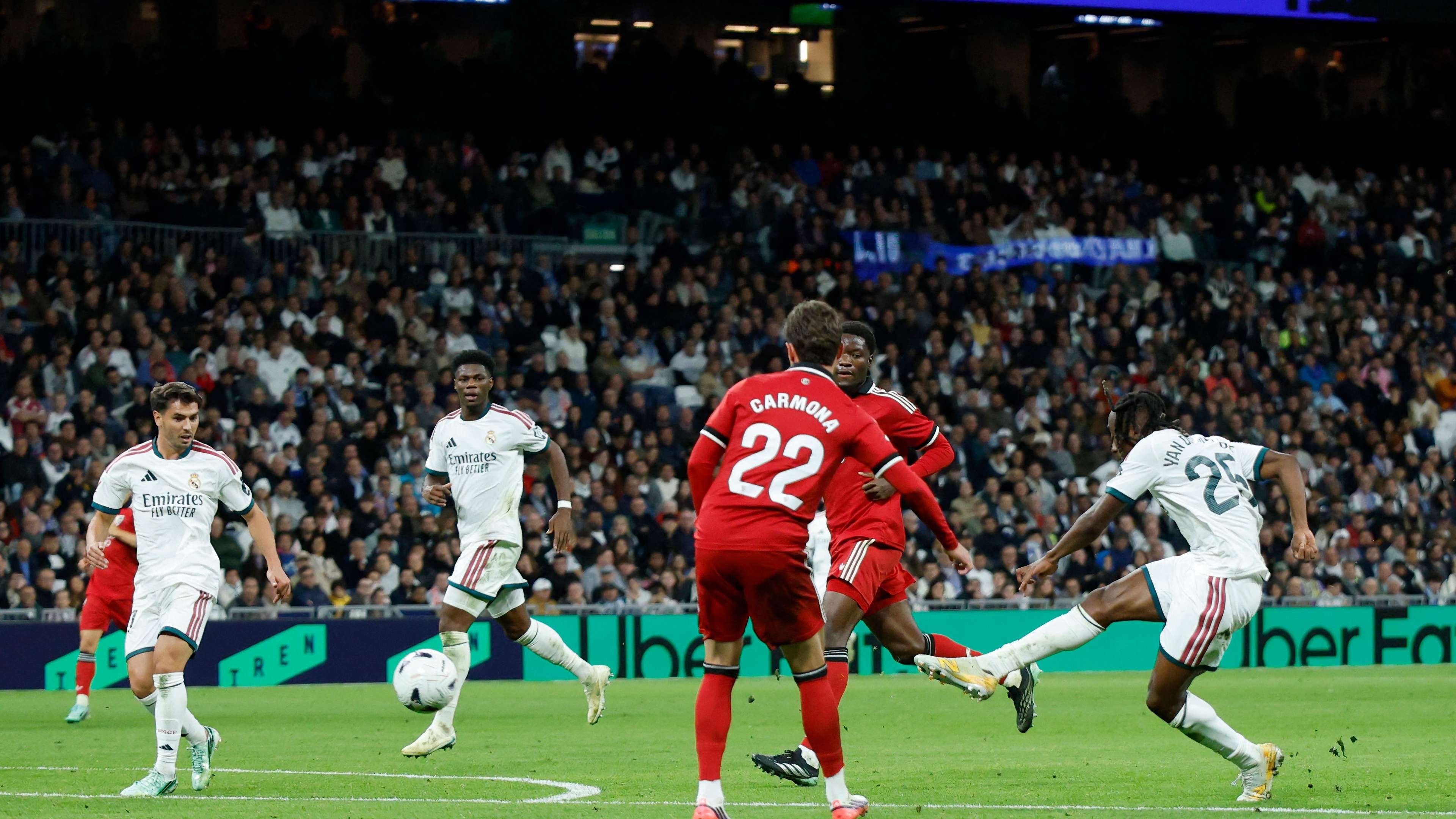
Real Madrid’s convincing 4-1 victory over Sevilla should have been a comfortable prelude to next week’s highly anticipated Clasico. Instead, the result has triggered a fresh debate over refereeing in Spanish football, with Catalan media questioning why Arda Güler remained on the pitch after a disputed first-half incident.
The controversy unfolded in the 23rd minute at the Santiago Bernabéu, while the score was still 0-0. Güler caught Sevilla player Peque with his elbow during a challenge. Sevilla’s players protested, but the Turkish midfielder was not sent off, and the match continued without a VAR review that changed the referee’s decision. Real Madrid went on to score four goals, yet the result did little to settle the argument.
Sevilla question the decision not to dismiss Güler
Sevilla were angered by the incident and by the way it was handled. Coach Luis García Plaza argued after the match that the challenge warranted a red card, saying the game should have continued with Real Madrid down to ten men. From Sevilla’s perspective, the decision may have had a significant effect on the contest, even though Madrid ultimately won by a wide margin.
Whether the contact met the threshold for a sending-off is now central to the discussion. In football, referees must judge the force, intent and point of contact in a split second. VAR can review potential red-card incidents, but it is generally expected to intervene only when there has been a clear and obvious error. Critics have therefore focused not only on the referee’s original call, but also on why the video officials did not recommend a review.
Catalan newspapers intensify the criticism
The reaction was particularly sharp in Catalonia. Sport accused Real Madrid of being “in league with the referees,” pointing to the Güler incident as an example of what it sees as favourable treatment for the Spanish giants. The newspaper also raised a broader issue: Real Madrid have frequently criticised referees and the institutions responsible for officiating, yet, according to the paper, the club can still benefit from contentious decisions in high-profile matches.
Mundo Deportivo described the Bernabéu episode as a “scandal” and drew comparisons with José Mourinho’s combative approach to referees during his earlier period in charge of Real Madrid. The reference reflects the intensity of the current debate, though it does not establish that the decision was influenced by pressure or by the club’s public statements.
Meanwhile, El Esportiu focused on VAR’s role, asking why the technology did not step in to examine the challenge. The question has become familiar across European football: supporters often expect VAR to provide a definitive answer, but the system is designed to correct only certain types of serious mistakes. When a review is not shown or explained, uncertainty can quickly grow.
Claims about pressure on officials draw a response
Santi Nolla, editor-in-chief of Mundo Deportivo, suggested that Real Madrid’s ongoing criticism of refereeing could affect decisions during matches. That is a serious allegation, and one that highlights how quickly debate over an individual call can broaden into arguments about institutional trust and the influence of powerful clubs.
José Mourinho pushed back against claims that Real Madrid received favourable treatment against Sevilla, demanding concrete evidence to support them. He said he had asked television channels and pundits to show the footage behind their accusations, but argued that he had not seen proof of refereeing errors benefiting Madrid in the match.
The disagreement points to a wider problem for football coverage: the same replay can be interpreted differently depending on the angle, the speed and the viewer’s understanding of the rules. Slow-motion footage can make contact appear more forceful, while a wider view may offer more context about how a challenge developed. Clearer explanations from match officials could help audiences understand why a decision was made, even when they disagree with it.
Clasico tension rises as the fixture approaches
The timing of the controversy adds to the pressure. Real Madrid and Barcelona are due to meet in the Clasico next week, a fixture that already carries enormous sporting and cultural significance. Recent arguments over refereeing, alongside the continuing debate surrounding the Negreira case, have made the atmosphere around the match especially charged.
That context means the Güler incident is likely to remain part of the conversation in the build-up to kick-off. Every major decision in the Clasico will be examined closely, and any controversial call could quickly become a talking point for supporters, pundits and club representatives. For the officials, managing the game calmly and applying the rules consistently will be essential.
Still, a single disputed decision does not determine the full story of Real Madrid’s win. Madrid were clinical in attack and secured a three-goal margin, while Sevilla will feel that the key moment deserved a different outcome. Both points can be true: the result was emphatic, and the officiating remains open to scrutiny.
What the controversy means for football fans
For fans following the latest football news, the debate is also a reminder that VAR has not removed controversy from the game. Instead, it has changed the questions supporters ask: Was the original call correct? Was the incident serious enough for a review? And should officials provide more detail when a decision becomes contentious?
As the Clasico draws closer, predictions about the match will inevitably focus on form, tactics and the players available. But the latest dispute ensures that refereeing will be part of the discussion too. Real Madrid’s 4-1 victory over Sevilla delivered a striking scoreline; it did not deliver a consensus on the most talked-about moment of the night.