
Ramesh Powar Appointed to India Men’s Selection Committee as Pragyan Ojha Takes Charge
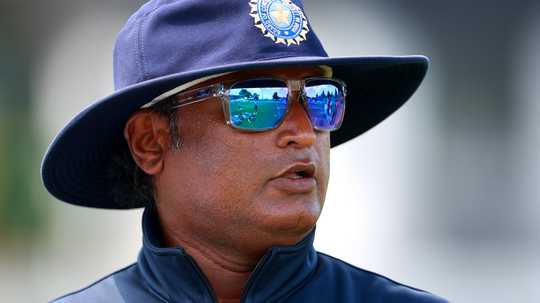
Ramesh Powar has been formally appointed to the Board of Control for Cricket in India’s (BCCI) men’s selection committee, joining a panel that will be chaired by former India spinner Pragyan Ojha. The appointment marks a new phase for the group responsible for shaping the national team’s future, from identifying emerging talent to making key calls ahead of major international tournaments.
Powar’s selection follows a process overseen by the BCCI’s Cricket Advisory Committee (CAC), which includes Ashok Malhotra and Jatin Paranjape. The committee met at the BCCI headquarters in Mumbai to assess applicants and conduct interviews. Powar was unanimously selected after the candidates were evaluated, according to reports.
Ojha to chair the selection panel
Ojha will lead the committee based on seniority, determined by the number of Test matches played for India. The former left-arm spinner had already been heading the panel on an interim basis, and his appointment as chair gives the committee a confirmed leader as it moves into its next phase of work.
Selection committees play a significant role in Indian cricket, balancing current performance with long-term planning. Their decisions influence squad composition, player development and the depth available across formats. For supporters following team announcements, the committee’s choices can also shape discussion around form, experience and the best combination for upcoming series.
Powar replaces Ajit Agarkar, who is leaving the chairmanship after a tenure that included several notable achievements for Indian cricket. The BCCI publicly acknowledged Agarkar’s “commitment, conviction and contribution,” highlighting the results recorded during his time in the role.
Powar brings international and coaching experience
Powar represented India between 2004 and 2007, playing two Test matches and 31 One-Day Internationals. A left-arm spinner, he experienced the demands of international cricket first-hand before moving into coaching and administration. His playing career gives him an understanding of the pressures faced by athletes, while his work after retirement has broadened his perspective on team preparation and player development.
One of Powar’s most prominent coaching roles was as head coach of the India women’s team. That experience exposed him to the challenges of building a competitive national side, managing a changing player pool and preparing teams for high-stakes international contests. His background in both playing and coaching may prove useful as the committee considers talent across India’s domestic cricket system.
The appointment also reflects the value of cricket knowledge that extends beyond international statistics. A selector must assess more than a player’s recent scorecard: consistency, adaptability, fitness, temperament and suitability for a team’s plans can all influence decisions. Powar’s coaching experience may help him bring those factors into discussions about the men’s squad.
Several candidates interviewed for the role
The selection process attracted applicants with varied backgrounds in Indian cricket. Cricbuzz reported that Baroda’s Connor Williams and Jacob Martin, along with Mumbai’s Wasim Jaffer and Salil Ankola, were interviewed for the position. The interviews took place on October 15, with the CAC conducting the screening before reaching its unanimous decision.
Jaffer’s extensive domestic career and experience in coaching, as well as the backgrounds of the other candidates, gave the advisory panel a range of profiles to consider. Ultimately, Powar’s record and experience were judged to be the right fit for the vacancy left by Agarkar.
A committee tasked with shaping India’s next chapter
Powar and Ojha will work alongside Shiv Sundar Das, RP Singh and Ajay Ratra, who are the other members of the selection committee. The group brings together former international players with experience across different roles and eras of the game. Its responsibilities include monitoring performances, assessing the national player pool and selecting squads for India’s international commitments.
The committee inherits a record of success during Agarkar’s tenure. The BCCI noted that India secured three ICC titles, two Asia Cup victories and two gold medals at the Asian Games while he was chairman. Those achievements provide a strong benchmark, although selection work is often judged as much by the quality of planning and the development of future options as by trophies alone.
For the new panel, a central challenge will be maintaining a competitive team while ensuring that promising players receive opportunities at the right time. India’s domestic competitions provide a broad talent base, but selectors must identify which performers can translate strong form into international success. That requires careful observation across formats and a clear understanding of the team’s needs.
What Powar’s appointment could mean for Indian cricket
Powar’s formal entry into the committee adds a selector with experience on both sides of the boundary: as an international player and as a national-team coach. His appointment does not, by itself, signal a change in selection policy, but it strengthens the panel’s collective experience as it prepares for future decisions.
As fans and analysts assess squad announcements, cricket prediction discussions are likely to focus on how the committee balances established performers with emerging talent. Such predictions can be informed by recent form, domestic results and team requirements, but final selections will depend on the panel’s broader assessment of each player’s role and readiness.
With Ojha confirmed as chair and Powar joining the group, the selection committee now has its full leadership structure in place. Its next task will be to turn experience and evaluation into consistent choices—supporting India’s immediate ambitions while building a strong foundation for the years ahead.