
PSG Supporters’ Political Banner Sparks Disciplinary Questions After Le Mans Match
A political banner displayed by Paris Saint-Germain supporters during the club’s match against Le Mans has raised questions about whether PSG could face disciplinary action. The incident at the Parc des Princes prompted a security response and a brief protest in the stands, but no official investigation or punishment has been announced.
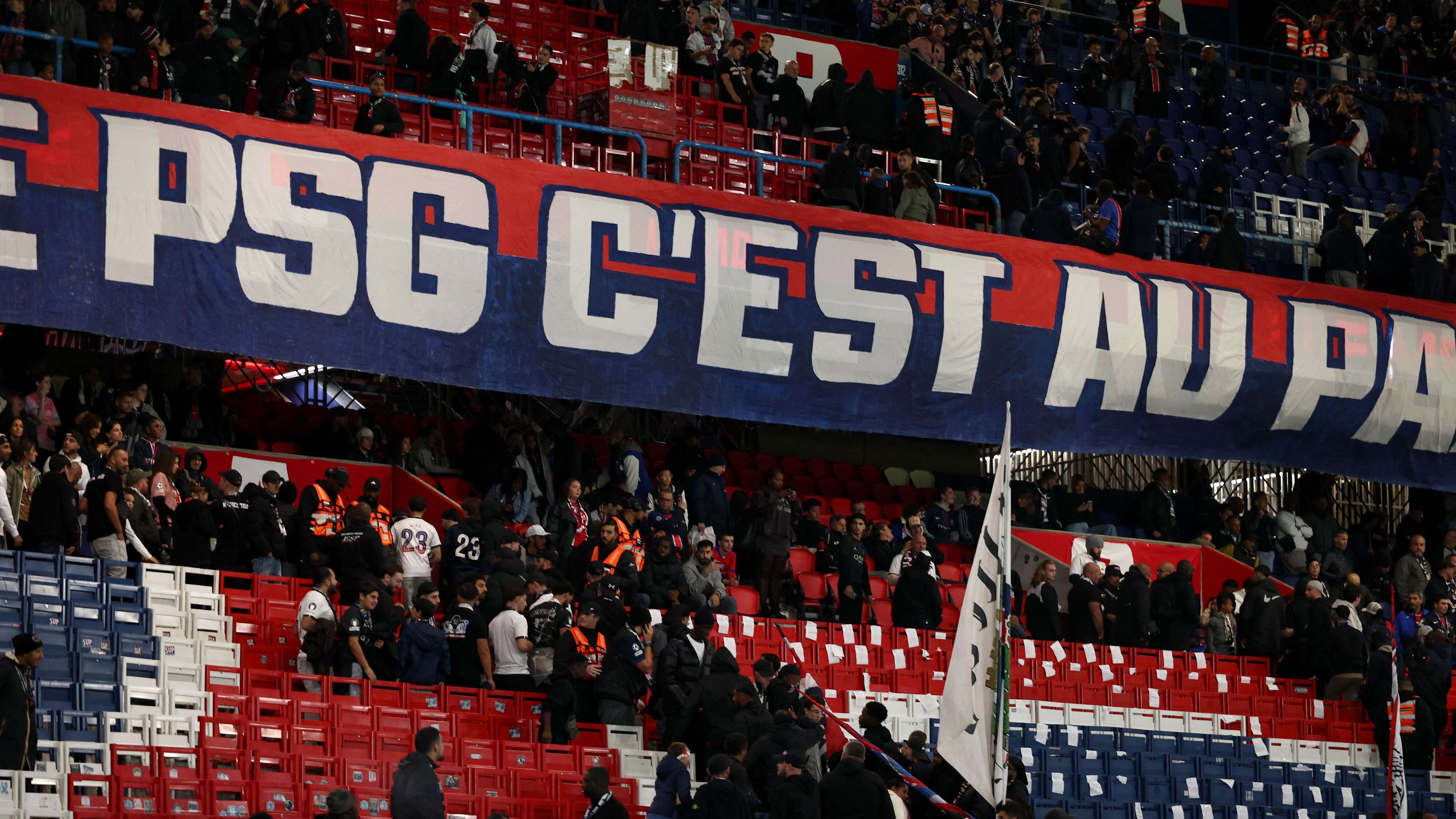
The banner was unfurled by the Collectif Ultras Paris in the Auteuil stand. It read: “Your militias repress, our youth resist”—a message linked to student protests and allegations of police violence. Security staff moved quickly to remove it, after which some supporters left the stand and chanted in protest before returning after half-time.
What Happened at the Parc des Princes?
The display interrupted the usual rhythm of a football match, shifting attention from the action on the pitch to the rules governing supporter activity. Once the banner appeared, security personnel intervened to take it down. Some fans then temporarily walked out of the Auteuil section, chanting slogans including “Freedom for the Ultras.”
The supporters returned to their seats after the first half. The episode was therefore limited in duration, but it drew attention to the tension that can arise when fan groups use a stadium as a platform for political expression. For supporters, banners and chants can communicate solidarity or opposition. For clubs and match organisers, however, displays may also be assessed against stadium rules and safety obligations.
Why Could the Banner Lead to a Review?
Parc des Princes regulations prohibit banners considered political, ideological or philosophical in nature. That rule may provide grounds for officials to examine the incident, although its existence does not automatically mean that PSG will be sanctioned. Any disciplinary decision would depend on the relevant authorities’ assessment of the banner, the circumstances in which it was displayed and the club’s response.
Investigators could consider how quickly security intervened, whether the message remained visible for a significant period and whether the situation created a safety concern. The removal of the banner and the temporary nature of the walkout may also be relevant. Disciplinary bodies typically review the full sequence of events rather than relying only on the wording of a display.
That distinction matters for fans following the story: a controversial banner can trigger scrutiny without guaranteeing a fine or a stadium closure. The authorities would need to determine whether a breach occurred and, if so, what response would be proportionate.
Possible Sanctions—and Why a Penalty Is Not Certain
Potential punishments for incidents involving prohibited displays can range from a financial fine to the partial closure of a stand. More serious measures may be considered in cases involving repeated breaches or significant disruption, but the available information does not establish that such an outcome is being pursued against PSG.
The security intervention could weigh in the club’s favour if officials conclude that staff acted promptly and took reasonable steps to enforce stadium rules. On the other hand, disciplinary bodies may still assess whether the banner was allowed to remain in view and whether the club had adequate procedures in place. These are questions for the relevant authorities, not conclusions that can be drawn from the incident alone.
French outlet Foot Mercato has reported that there has been no official word on an investigation or sanction. Until the club or disciplinary authorities provide an update, claims that PSG is certain to be punished remain speculative. The next stage, if there is one, would likely involve a review of match reports and security records before any decision is made.
What the Incident Means for PSG and Its Supporters
The episode highlights the complicated relationship between supporter groups, club regulations and political expression at football grounds. Ultras are often central to a stadium’s atmosphere, contributing chants, flags and coordinated displays. Their actions can also put clubs in the position of balancing the identity of their fan culture with rules designed to keep match venues orderly and compliant.
For PSG, the immediate issue is whether the response on the night is considered sufficient. A swift removal and a peaceful return to the stands may help limit the consequences, though only an official review can determine how the event is treated. For supporters, the walkout demonstrated that the banner’s removal itself could become part of the protest, extending the message beyond the words displayed.
Looking Ahead: Match Schedule and Football Prediction Context
PSG’s attention will soon turn back to its football calendar. The fixture information associated with the incident lists a Champions League match against Manchester City on 15 October 2026 at 03:00. The listing provides a date and time, but it does not establish a result or offer a reliable football prediction. Any forecast for that match would need to take account of factors such as team form, injuries, suspensions, tactics and the venue.
For now, the banner controversy remains an off-field story rather than a confirmed disciplinary case. PSG may face questions about how stadium rules were enforced, but no sanction has been announced. Until further details emerge, the most accurate assessment is that the incident could be reviewed, while the outcome—and whether there will be one at all—remains uncertain.