
La Liga Plans 40-Camera Clásico Broadcast After Güler Footage Controversy
La Liga is preparing an unusually extensive broadcast operation for the next Clásico, with up to 40 cameras set to cover Barcelona’s meeting with Real Madrid at Camp Nou. The plan follows renewed scrutiny of television coverage after footage of an alleged elbow by Madrid midfielder Arda Güler during a match against Sevilla was reportedly not captured among the 26 cameras used at the Santiago Bernabéu.
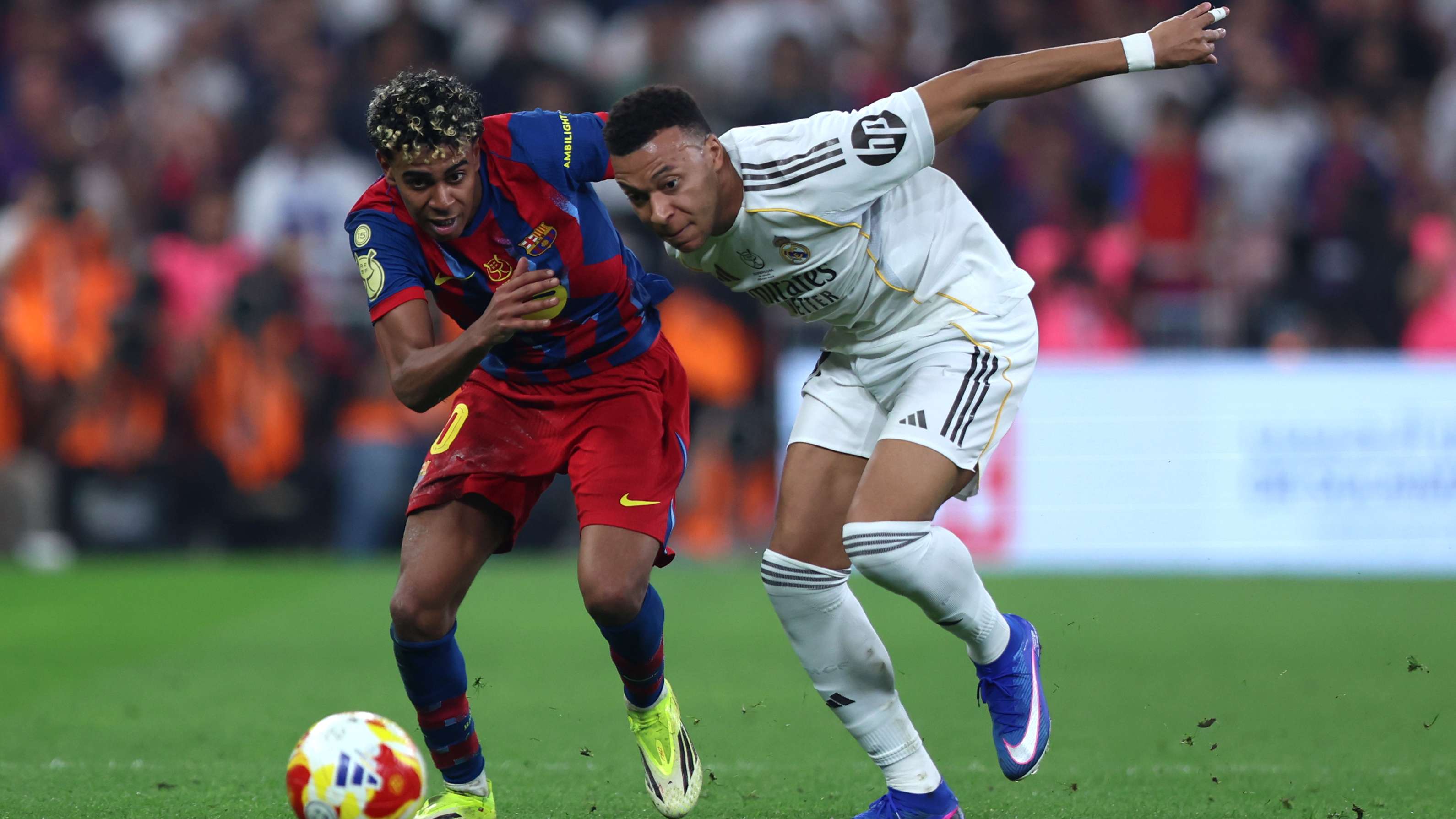
The expanded setup is intended to provide a more comprehensive record of the action, including close coverage of the game’s biggest stars. Among the players expected to receive dedicated tracking are Barcelona forward Lamine Yamal and Real Madrid striker Kylian Mbappé. With the match scheduled less than a day before the Ballon d’Or ceremony, the broadcast will also place added attention on two of football’s most prominent figures.
Why the Clásico Will Have More Cameras
According to reporting by Mundo Deportivo, 26 cameras were used for Real Madrid’s recent game against Sevilla. That figure reportedly became a point of discussion after viewers questioned why available footage did not clearly show the incident involving Güler. The episode has intensified debate about how camera placement affects the ability of broadcasters and video assistant referees to review contentious moments.
La Liga’s standard broadcast requirements already distinguish between different categories of matches. Fixtures involving Barcelona or Real Madrid generally fall into Category A, which calls for at least 22 cameras in the stadium. The Clásico, along with the Madrid derby, receives the highest designation: Category A+.
For those high-profile fixtures, the camera count can rise to between 35 and 40. The equipment is positioned around the ground to capture a wide range of angles, from tactical views of the full pitch to close-ups of individual duels. A detailed camera plan is also shared in advance with the refereeing committee and VAR team, helping them understand which angles may be available during reviews.
Ultra-HD Coverage and Individual Player Tracking
The planned Clásico coverage is expected to go beyond simply adding more cameras. La Liga’s broadcast package will reportedly include ultra-long-range and cinematic cameras, while the match is set to be produced in 4K. Higher-resolution images can make it easier for viewers to follow the movement of players and the ball, although a clear picture alone does not guarantee that every incident will be captured from the ideal angle.
A notable feature will be an ultra-high-definition player-tracking system. Rather than relying only on cameras following the ball, dedicated cameras will focus on selected players throughout the match. For this fixture, the spotlight is expected to fall on Yamal and Mbappé, whose individual performances could shape the contest as much as the broader tactical battle.
That approach may offer viewers a closer look at the details that can be missed in a conventional broadcast: a forward’s movement before a pass, a defender’s positioning during a transition, or the way a player creates space away from the ball. For analysts and supporters, these sequences can add useful context to the final score and help explain how key chances developed.
More Visibility, but Not a Guarantee of Perfect VAR Decisions
The increase from 26 cameras to as many as 40 is a significant response to concerns about coverage, but it is important to separate broadcast production from refereeing technology. More cameras can provide additional footage for review, yet the usefulness of that footage still depends on camera placement, image quality, timing and whether an angle clearly shows the incident in question.
VAR decisions also rely on established protocols. The system is designed to review specific categories of major incidents, rather than to re-referee every physical challenge or disputed moment. Additional footage may help officials reach a more informed decision, but it does not remove the need for interpretation or eliminate controversy from a high-pressure match.
In that sense, the camera plan carries both practical and symbolic importance. It aims to improve the visual record of the game while signalling that La Liga is taking questions about transparency seriously. When a match attracts a global audience, even a brief incident can become a major talking point if the available replay is inconclusive.
A Clásico With Extra Attention on Yamal and Mbappé
The timing of the game adds another layer of interest. With the Ballon d’Or ceremony due less than 24 hours later, coverage of Yamal and Mbappé is likely to attract attention beyond the usual audience for a Barcelona–Real Madrid fixture. Both players are among the most closely watched names in world football, and their performances will be examined for signs of influence, composure and decisive quality.
Individual tracking could also make the broadcast more engaging for viewers interested in tactical analysis. Yamal’s movement and one-on-one ability can stretch defensive lines, while Mbappé’s pace and positioning pose a constant threat in transition. Seeing their off-ball activity more clearly may help fans understand how each team attempts to create openings and limit the opponent’s most dangerous options.
Clásico Prediction: Expect Intensity, Not Certainty
Any Clásico prediction should account for more than star power. Form, injuries, tactical choices and the atmosphere at Camp Nou can all influence the outcome. Barcelona may look to use possession and width to bring Yamal into dangerous areas, while Real Madrid could seek opportunities to attack quickly and exploit space behind the defence for Mbappé.
The expanded camera network will not determine who wins, but it should give broadcasters more ways to document how the match unfolds. For supporters, the promise is a richer viewing experience and a clearer record of key moments. For La Liga, the challenge will be ensuring that the additional technology supports confidence in the coverage without creating unrealistic expectations that every disputed decision can be settled beyond doubt.
After the questions raised by the Güler incident, the message behind the 40-camera plan is straightforward: the league wants the Clásico captured from more angles, in greater detail and with fewer blind spots. Whether that leads to fewer controversies remains to be seen, but Sunday’s meeting is set to receive one of the most comprehensive broadcasts in Spanish football.