
IPL in January? Ness Wadia backs a calendar shift as debate gathers pace
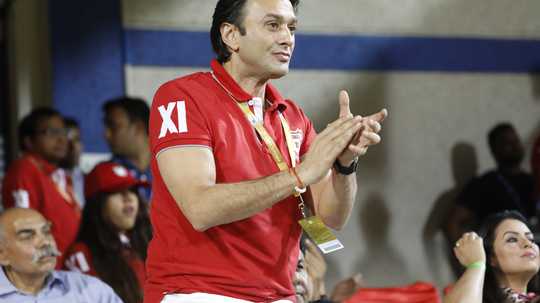
The prospect of moving the Indian Premier League to a January start is gaining support among influential figures in franchise cricket. Punjab Kings co-owner Ness Wadia has endorsed the idea in principle, adding his voice to a discussion that could reshape the league’s place in the global cricket calendar.
Speaking to Cricbuzz while discussing the trade involving Hardik Pandya and Arshdeep Singh, Wadia said an earlier season could be worth considering—particularly if the IPL expands its schedule. The league is expected to explore a format featuring as many as 94 matches, increasing the demands on players, venues and broadcasters.
“We would love to,” Wadia said of a January window. He noted that changing weather patterns have made the traditional April-May period increasingly challenging, with matches exposed to both rain and intense heat. In his view, cooler conditions could make January a more attractive option for players and spectators alike.
Wadia also stressed that the proposal cannot be assessed in isolation. Any shift would need to account for India’s domestic competitions, international fixtures and the schedules of other cricket-playing nations. His support, therefore, is for examining the idea carefully rather than committing to a date before the practical details are understood.
Why January is being considered for the IPL
The IPL’s current late-spring window has become a familiar feature of the cricket calendar, but it brings logistical and playing-condition challenges. High temperatures can make long days at the ground difficult for players, officials and fans, while rain can disrupt fixtures in some regions. A January tournament could offer more moderate conditions in many Indian cities, potentially improving the match-day experience.
Weather is only one part of the argument. An expanded season would require more matches, and a longer tournament could place additional strain on players who also represent their countries and compete in domestic leagues. A different window might help organisers distribute fixtures more effectively, though it could also create fresh clashes with international tours and other competitions.
That balance is central to the debate. A calendar change could benefit the IPL, but it would need cooperation among the Board of Control for Cricket in India, franchise owners, broadcasters, players’ associations and cricket boards around the world. Any plan would also have to consider venue availability, travel distances, recovery time and the demands of national teams.
Juhi Chawla says the IPL can shape the cricket calendar
Kolkata Knight Riders co-owner Juhi Chawla has also publicly backed the possibility of moving the tournament. In a post on X, she argued that the IPL has grown beyond simply fitting into the existing cricket schedule and should now have a greater role in influencing how that schedule is arranged.
Chawla questioned why the world’s biggest franchise cricket competition should continue to be played during some of the hottest months of the year when another window might offer better conditions. She described January as a potential alternative, pointing to the prospect of improved playing environments and a more comfortable experience for crowds.
Her comments reflect a broader view among supporters of a calendar review: the IPL’s scale and commercial importance may give organisers more flexibility than they had in the league’s early years. However, influence over the calendar does not remove the need to coordinate with international cricket. The most workable solution would have to protect the tournament’s appeal while allowing players to meet their commitments to national sides.
Lalit Modi’s proposal calls for a detailed scheduling review
Former IPL chairman Lalit Modi first brought the January-window proposal into the current conversation through social media posts. In a recent interview with Cricbuzz, he clarified that his broader suggestion is to identify the most suitable period between October and the end of April, with January serving as a concrete starting point for discussion.
Modi said he was not advocating seven uninterrupted months of IPL cricket. Instead, he called for organisers to examine actual fixtures, venues, travel requirements and player availability before deciding how a season could be structured. That distinction matters: the proposal is better understood as a call to review the calendar than as a demand for a months-long tournament.
A full assessment would need to map out international series, domestic tournaments and the availability of leading players. It would also have to account for the different conditions across India, as January weather can vary considerably between regions. A carefully designed schedule might use venue rotation and travel planning to reduce disruption, but those choices would require detailed coordination.
What a calendar change could mean for fans and teams
For supporters, a January IPL could mean more comfortable evenings at the ground and fewer matches affected by extreme heat. Cooler conditions may also help players maintain intensity during a packed season. Still, the viewing experience would depend on practical details such as match timings, school and work schedules, ticket access and the availability of star players.
For franchises, a new window could affect player recruitment, preparation and squad depth. Teams would need to plan around international duties and potential absences, while coaches would face the challenge of managing workloads across a longer or differently timed campaign. If the league moves toward 94 matches, those questions become even more important.
There is also a commercial dimension. A new season window could create opportunities for broadcasters and sponsors, but it would need to preserve the tournament’s established audience habits. Any change would be judged not only by weather and fixture logistics but also by whether it delivers compelling cricket and keeps fans engaged throughout the competition.
No final decision, but the discussion is growing
Wadia’s comments, Chawla’s public support and Modi’s renewed advocacy have brought the January IPL idea into sharper focus. Yet support for exploring a change is not the same as an approved plan. The next step would be a comprehensive review of the domestic and international calendar, alongside an assessment of venues, player workloads and commercial requirements.
For now, a January start remains a proposal rather than a confirmed prediction for the league’s future. But the debate highlights how the IPL’s growth is prompting fresh questions about when and how the tournament should be played. If organisers can find a window that improves conditions without creating unacceptable conflicts, the calendar could evolve alongside the competition itself.