

Nahid Rana Cleared for Bangladesh’s ODI Series Against South Africa
Bangladesh fast bowler Nahid Rana is closing in on a return to international cricket after a prolonged injury layoff, with medical specialists in Australia clearing him to play in the upcoming one-day international series against South Africa. The assessment offers a timely boost for Bangladesh as the team prepares for a demanding white-ball schedule following the current Test series.
Rana was unavailable for the Tests after suffering a labrum tear, an injury that required careful rehabilitation rather than a rushed return. He has now completed his recovery programme in Australia and returned to Bangladesh, where he met with Bangladesh Cricket Board (BCB) physicians and provided an update on his fitness. According to a source cited by Cricbuzz, the Australian medical report cleared him for ODI cricket, and he is currently bowling at full strength.
Medical clearance brings comeback into view
The clearance is an important step, but it does not necessarily guarantee Rana’s immediate selection. The BCB medical team has set out a monitoring plan that runs until November 24, giving staff time to assess his condition and response to bowling before the team management makes a final decision. That process will help Bangladesh balance the value of having a quick bowler available with the need to protect him from another setback.
Rana also met BCB doctors on Thursday, November 19, to discuss his physical condition and the findings from his Australian assessment. His ability to bowl at full intensity is an encouraging sign, particularly for a fast bowler whose role depends on repeated high-effort spells. The remaining checks are likely to focus not only on how he feels during training, but also on whether his shoulder can tolerate the workload expected in a three-match ODI series.
A difficult run of injuries
The labrum tear is the latest in a series of injuries that have interrupted Rana’s progress. His problems began during Bangladesh’s tour of Zimbabwe in July, when he sustained a grade-two side strain. That injury kept him out of the subsequent tour of Australia, the Asian Games and Bangladesh’s one-off Test against Afghanistan.
His rehabilitation then became more complicated when he suffered a glute injury, forcing him to miss a tri-series in the United Arab Emirates featuring Afghanistan and Zimbabwe. A further setback followed with the labrum tear, which ruled him out of the two-match Test series against West Indies as well as the ongoing Tests against South Africa.
For a young pace bowler, repeated interruptions can make it difficult to build rhythm, match fitness and confidence. A return to the international setup would therefore be significant beyond the immediate selection question. It would give Rana a chance to resume his development, provided the medical and coaching staff manage his workload carefully.
Bangladesh taking a cautious approach
BCB chief selector Habibul Bashar has previously indicated that the board does not want to rush Rana back before he is ready. That cautious stance reflects the importance of preserving a fast bowler who could become a key part of Bangladesh’s pace attack. With several recent injuries behind him, a gradual return may be more beneficial than asking him to carry a heavy workload straight away.
The plan to assess him through November 24 gives the selectors and team management a defined window to review his progress. They can consider his bowling intensity, recovery between sessions and overall fitness before deciding whether he is ready for competitive cricket. Even after medical clearance, the final call will depend on how he responds to training and whether the coaching staff believe he can contribute without unnecessary risk.
What Rana could offer in the ODI series
If selected, Rana would add pace and an additional attacking option to Bangladesh’s bowling resources. Fast bowlers can be especially valuable in one-day cricket, where teams need to take wickets during the middle overs while also containing opposition batters at the start and end of an innings. Rana’s availability could give the captain more flexibility when planning match-ups and managing the workload of the wider attack.
However, his role would likely depend on his readiness and the conditions. Bangladesh may choose to introduce him carefully, rather than immediately expecting him to bowl a full quota in every match. A controlled return could allow the team to evaluate his match sharpness while limiting the physical demands placed on his shoulder.
For supporters following cricket prediction discussions ahead of the South Africa ODIs, Rana’s fitness is an important variable. His inclusion could strengthen Bangladesh’s pace options, but his recent injury history means it would be unwise to assume that he will be selected or used at maximum intensity. Team announcements, training updates and the November 24 assessment should provide clearer indications of his likely involvement.
ODIs and T20Is follow the Test series
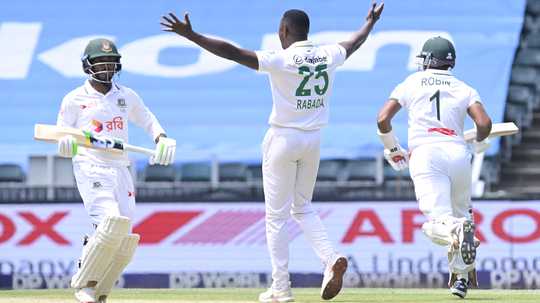
Bangladesh are scheduled to play three ODIs and three T20Is against South Africa after the Test series concludes. The packed programme gives Rana a potential route back into international cricket, though the team may take a series-by-series approach depending on his recovery and workload. A successful return in the ODIs could also place him in consideration for the T20 matches, but any decision will depend on how he handles the demands of competitive bowling.
For now, the Australian medical clearance is a positive development rather than a final confirmation of selection. Rana has completed a major stage of rehabilitation and is reportedly bowling at full strength, while the BCB continues to monitor his condition. If he passes the remaining checks, Bangladesh could welcome back a promising pace option for the South Africa ODI series—an encouraging prospect for the team, but one that will need to be managed with patience.