
India’s Treesa Jolly and Gayatri Gopichand Exit Japan Masters After Round-of-16 Defeat
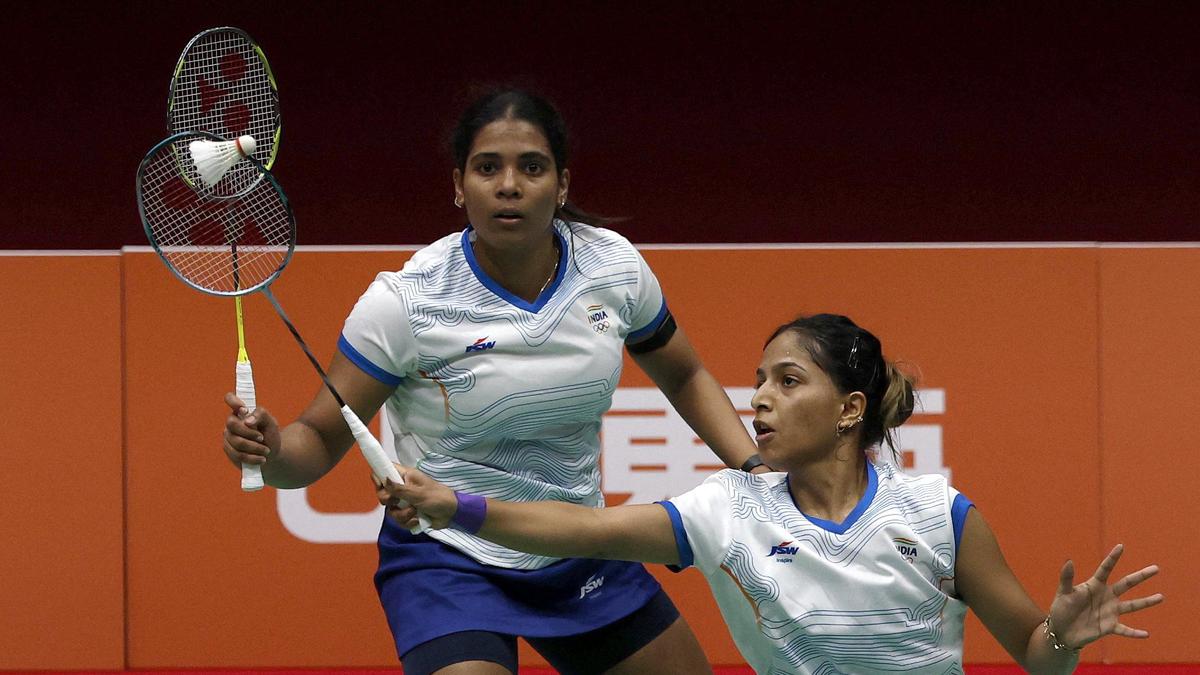
India’s Treesa Jolly and Gayatri Gopichand were eliminated from the Japan Masters Super 500 badminton tournament on Thursday, falling to home favourites Rin Iwanaga and Kie Nakanishi in the women’s doubles round of 16. The Indian pair went down 21-14, 21-14 in a 37-minute match, ending a campaign that had begun with a confident first-round victory.
World Championships bronze medallists Treesa and Gayatri had advanced to the pre-quarterfinals after defeating Japan’s Hinata Suzuki and Nao Yamakita 21-17, 21-14 in 42 minutes. Their next test, however, was considerably tougher: Iwanaga and Nakanishi were playing on home soil and entered the contest as the tournament’s third seeds.
Japanese third seeds take control in the opening game
The first game proved difficult for the Indian duo, as Iwanaga and Nakanishi dictated the pace with sharp attacking play and reliable defence. The Japanese pair built momentum through a run of six consecutive points, creating a gap that Treesa and Gayatri could not close. Although the Indians continued to compete, the hosts maintained their advantage to take the game 21-14.
That stretch was a turning point in the opener. In doubles badminton, a short scoring run can quickly change the pressure on both sides: the team ahead can play with greater freedom, while the trailing pair is forced to take risks to recover. Iwanaga and Nakanishi made the most of their opportunity, keeping the rallies under control and limiting the Indians’ chances to build sustained pressure.
Treesa and Gayatri fight back before Japan close out the match
The second game offered a more encouraging start for India. Treesa and Gayatri opened with greater urgency and claimed four points in a row to move ahead 5-1. Their early lead suggested they had found a way to disrupt the Japanese pair’s rhythm, and the contest developed into a much closer exchange.
The Indians stayed within reach through the middle stages, with neither team able to establish a decisive advantage. The score was level at 14-14, leaving the match finely balanced. But Iwanaga and Nakanishi raised their level at the crucial moment, stringing together seven consecutive points to seal the game 21-14 and book their place in the quarterfinals.
For Treesa and Gayatri, the second-game response was a positive sign, even though it did not alter the result. Their ability to recover from the opening-game setback and stay level deep into the next game showed resilience. Against a seeded home pair, however, the final run proved decisive, underlining how important it is to convert promising positions into points at the closing stages of a match.
Hariharan Amsakarunan and M. R. Arjun also bow out
India’s campaign in the men’s doubles draw also ended in the round of 16, with Hariharan Amsakarunan and M. R. Arjun losing to Japan’s Takuro Hoki and Yugo Kobayashi. The world No. 10 Japanese pair recorded a 21-14, 21-14 victory in 34 minutes, extending its head-to-head lead over the Indians to 2-0.
Hariharan and Arjun faced another former world champion pairing after their previous match against Malaysia’s Aaron Chia and Soh Wooi Yik. The Malaysians were forced to retire, allowing the Indian duo to progress, but the next challenge was a demanding one. Hoki and Kobayashi brought experience, speed and strong coordination to the court, and they maintained control across both games.
The scoreline was identical in each game, with the Japanese pair pulling clear at key points rather than allowing the Indians to build a sustained comeback. For Hariharan and Arjun, the match offered a valuable test against an established international combination, but they were unable to overturn the hosts’ advantage.
What the results mean for India’s Japan Masters campaign
The exits of both Indian pairs mean that Treesa and Gayatri, along with Hariharan and Arjun, will leave the Japan Masters without a quarterfinal appearance. The results also highlight the depth of the competition at a Super 500 event, where players often face experienced opponents and home support can add another layer of pressure.
Treesa and Gayatri arrived with the credentials of World Championships bronze medallists and showed their quality in the opening round. Their performance against Iwanaga and Nakanishi was more uneven, particularly during the decisive scoring runs, but the close second game offered evidence of their ability to challenge high-ranked opponents. For the Indian pair, the next step will be to sustain that level of intensity for longer and make key points count when a game reaches a tight score.
Japan’s doubles players, meanwhile, continued to benefit from familiar surroundings and strong local backing. Iwanaga and Nakanishi’s composure at 14-14 was especially important, while Hoki and Kobayashi relied on their experience to keep the men’s match on their terms. The results made Thursday a difficult day for India at the Japan Masters, but the tournament remains another opportunity for its players to measure themselves against leading international competition and build towards future badminton events.