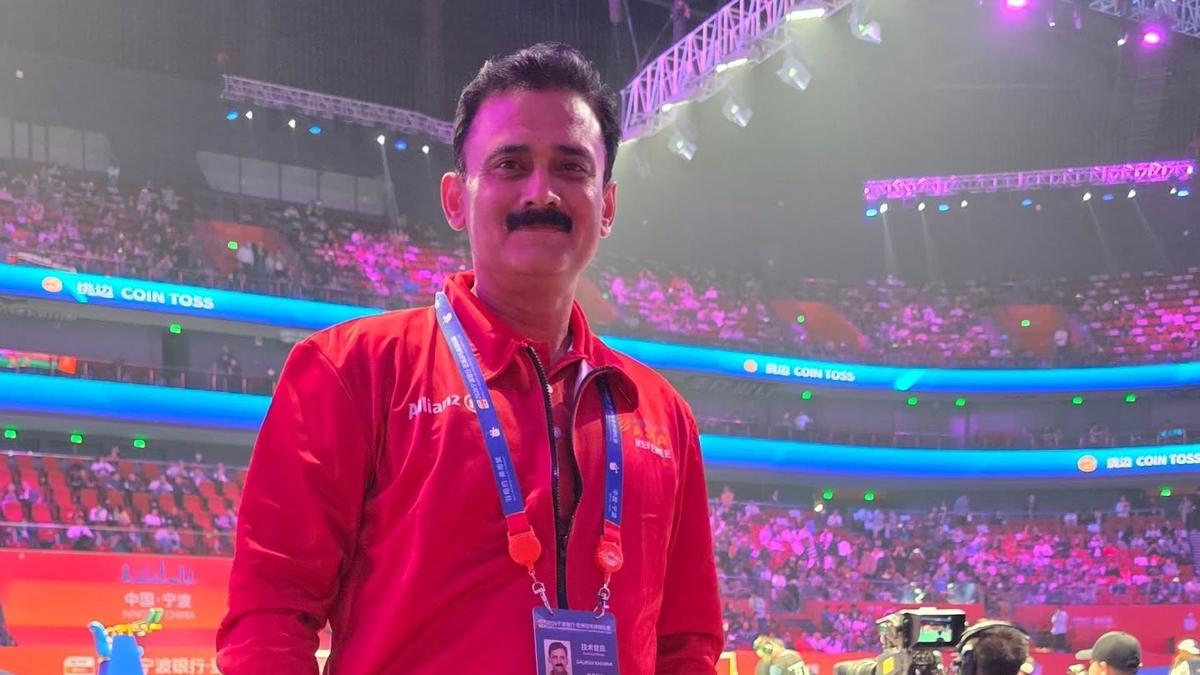

Gaurav Khanna Rejects Claims His Asian Para Games Post Pressured Badminton Players
India para badminton coach Gaurav Khanna has denied allegations that a social media post about the country’s medal prospects undermined athletes at the Asian Para Games. He described the criticism as a “misleading public narrative” and said it was intended to discredit him after he raised concerns about selection decisions.
The dispute has put the spotlight on two sensitive issues in Indian para badminton: the effect of public predictions on athletes preparing for major finals, and the process used to select competitors for international events. Khanna says the attention given to his briefly visible post is distracting from what he considers documented irregularities in the team selection process. Athletes and officials, meanwhile, have questioned whether publishing medal expectations by name was appropriate so close to competition.
What Khanna’s Medal Prediction Said
The controversy centres on a social media post Khanna published shortly before the finals. In it, he forecast that India would finish the Games with 16 medals: two gold, six silver and eight bronze. India ultimately won 16 para badminton medals, comprising three gold, five silver and eight bronze.
The total was lower than India’s 21-medal haul at the 2022 Asian Para Games, where the team collected four gold, four silver and 13 bronze medals. The comparison has added weight to the debate, though the final tally alone does not establish why the team’s medal count changed between editions. Factors such as the draw, individual match outcomes and the strength of each field can all affect results.
Several players reportedly said the post created additional psychological pressure and sought an inquiry by the Sports Authority of India (SAI) and the Ministry of Youth Affairs and Sports (MYAS). India para badminton chairman K. Prabhakar Rao also criticised the post and said he would take the matter to the Badminton Association of India (BAI) for appropriate action.
Khanna Questions the Timing of the Allegations
In a statement to PTI, Khanna argued that the public criticism began several days after the finals, rather than immediately after the post appeared. He said the post was visible only briefly and was deleted within two or three minutes.
Khanna said it appeared at around 9 p.m. Indian Standard Time on October 22, 2026, which he said was approximately 12:30 a.m. in Japan the following day. He questioned how players could have seen the post during such a short window and suggested that the timing of the complaints raised questions about their purpose.
His comments were directed in part at six-time world champion Pramod Bhagat, who described the post as “extremely unprofessional and ethically wrong.” Khanna had predicted that Bhagat would win silver. The player went on to finish second in the men’s SL3 final after losing to Nitesh Kumar.
Khanna asked whether Bhagat had seen the post before his final and, if so, when. He also questioned whether an athlete preparing for a major match should have been browsing social media late at night. His remarks sharpened the disagreement, turning the debate from the post’s impact into a public exchange over the conduct and motives of those involved.
Selection Concerns at the Heart of Khanna’s Defence
Khanna says the controversy is diverting attention from his concerns about who was selected to represent India. He questioned why several players he described as among Asia’s top six in their respective events—Chirag Baretha, Ammu Mohan, Shashank Kumar and Manisha Patel—were left out of the squad.
He also asked what action had been taken on written representations from players who believed they deserved selection. Khanna alleged that technical aspects of the selection decisions were not properly explained to SAI and MYAS, and said the omissions cost India at least four potential medal opportunities. Those claims have not been independently established in the statements cited, and the selection process remains a central point of dispute.
Khanna, who now runs a badminton academy in Lucknow, said he believes he is being targeted for raising the issue with higher authorities after the Games concluded. He also criticised SAI and MYAS for relying on what he called narratives and perceptions presented by the administration involved in the selection process.
A Wider Debate About Pressure and Accountability
The row highlights the competing responsibilities that surround elite para badminton. Coaches and administrators are expected to assess performance and communicate expectations, but public medal forecasts can be difficult for athletes to ignore—especially when they identify likely winners and runners-up before a final. At the same time, concerns about selection deserve a transparent process in which athletes can understand the criteria and seek answers through formal channels.
Whether Khanna’s post affected any player’s preparation is a question that would require evidence, including the athletes’ accounts and a clear timeline. Likewise, his allegations about omitted players would need to be assessed against the selection criteria, rankings, event classifications and any written appeals. A careful review could help distinguish between a genuine procedural concern and disagreement over sporting judgment.
For now, the dispute remains unresolved. Rao has indicated that he intends to raise the matter with the BAI, while Khanna maintains that the criticism is being used to settle past disagreements and shift attention away from selection issues. The outcome may have implications beyond this particular Games: clear communication, consistent selection standards and responsible public commentary are all important to maintaining trust in India’s para badminton programme.