
Unforgettable Cricket Showdown in Guwahati: Analyzing the Second India-West Indies ODI and Its Record-Breaking Moments
The recent second One Day International (ODI) match between India and the West Indies in Guwahati has etched itself into cricket history as one of the most thrilling and record-breaking encounters in recent memory. Fans worldwide are still buzzing over the astonishing performances, daring predictions, and remarkable statistics that unfolded on this memorable day. This article delves into the key highlights, provides expert predictions for future matches, and explores the broader significance of this cricketing spectacle.
Record Chase: The Second Highest in ODI History
The match witnessed an extraordinary batting display from India, who successfully chased a daunting target of 406 runs set by the West Indies. This chase marks only the second time in ODI history that a team has successfully overhauled a total exceeding 400, making it a historic moment in cricket prediction circles. The only previous instance was South Africa’s legendary 435-run chase at the Wanderers in 2006—a feat that remains iconic in cricket lore.
Furthermore, this match represents the fourth occasion in all List A one-day cricket matches where a team has chased down a 400+ target. Notably, it is only the second such instance in Indian soil, following Karnataka’s remarkable 413 against Jharkhand in Ahmedabad last December. These high-scoring chases are increasingly becoming the norm, challenging traditional cricket prediction models and emphasizing the evolving nature of limited-overs cricket.
Unprecedented Aggregate Runs and High Scoring Records
The Guwahati encounter saw a staggering total of 811 runs scored across both innings, making it one of the highest aggregate runs in a single ODI. In fact, only four ODIs have surpassed the 800-run mark, with the highest being 872 runs scored during a match in Johannesburg in 2006. Other notable high-scoring matches include an 825-run total between India and Sri Lanka in Rajkot in 2009.
Such offensive displays highlight a shift in cricketing strategies and team approaches, with aggressive batting and innovative shot-making becoming the new norm. For cricket prediction enthusiasts, this trend signifies a potential increase in high-scoring matches, prompting analysts to adjust their models accordingly.
Shining Star: Shubman Gill’s Historic Innings
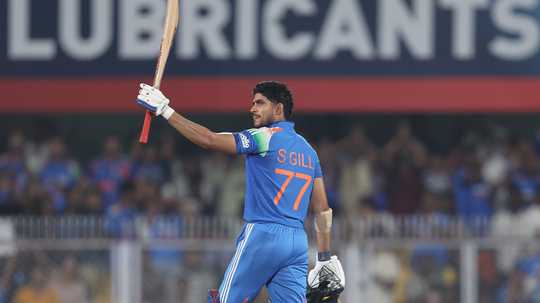
One of the standout performances was by Shubman Gill, whose breathtaking innings of 223 not out became the third-highest individual score in ODI cricket history. Only Rohit Sharma’s monumental 264 against Sri Lanka in 2014 and Martin Guptill’s unbeaten 237 against West Indies in the 2015 World Cup surpass Gill’s feat. This innings not only showcased Gill’s exceptional talent but also solidified his status as one of cricket’s rising stars.
Gill’s 223* was achieved off just 117 balls, making it the fastest double century in ODIs—surpassing his teammate Ishan Kishan’s 126-ball effort against Bangladesh earlier this year. This explosive scoring rate underscores the aggressive mindset prevalent in modern cricket and challenges traditional prediction models that often underestimated the pace of such innings.
Breaking Barriers: Double Centuries and Captaincy Milestones
In a historic dual achievement, Gill became only the second batter in cricket history to score double centuries in both Test and ODI formats, following his previous 269 in a Test match against England. This rare feat underscores his versatility and consistency across formats, raising questions about future prediction models that evaluate player performances across different cricketing arenas.
Additionally, Gill made history as the first captain to register double hundreds in both Tests and ODIs, a testament to his leadership qualities and cricketing acumen. Rohit Sharma and Virender Sehwag had previously achieved the double hundred milestone in ODIs while leading, but Gill’s achievement sets a new benchmark for aspiring cricket captains and batsmen alike.
Batting Brilliance: Multiple Centuries in a Single Match
The Guwahati ODI was unprecedented in its batting diversity, with five different players scoring three-figure totals. This marked the first instance of such an achievement in a single ODI. Previous records included four players reaching the three-figure mark in matches like Pakistan vs Australia in Lahore (1998), India vs Australia in Nagpur (2013), and Sri Lanka vs Pakistan in Hyderabad (2023). This extraordinary display of batting prowess indicates the evolving nature of cricket prediction, with analysts now factoring in the increasing likelihood of multiple century-makers in high-scoring games.
Milestones for Indian Batting Legends
Rohit Sharma’s stellar performance saw him reach 12,000 ODI runs in just 282 innings, making him the second-fastest Indian to achieve this milestone after Virat Kohli. Rohit’s ability to accumulate runs swiftly continues to impress, and his partnership with Gill—an imposing 255 runs—stands as the second-highest opening partnership for India in ODIs. It also ranks as the highest for any wicket in a run chase and the highest against West Indies in ODIs.
West Indies’ Resilient Batting Efforts
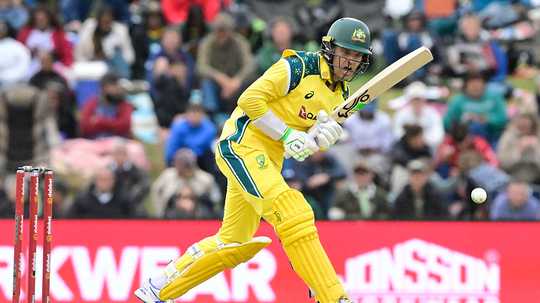
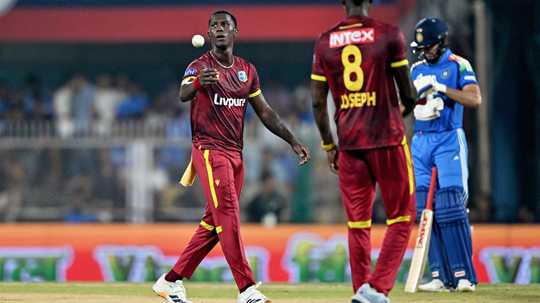
Despite the crushing defeat, West Indies showcased resilience with three batters—John Campbell, Shai Hope, and Amir Jangoo—scoring centuries in the first innings. This marked only the sixth time in ODI history that three players from the same team scored hundreds in a single match. Interestingly, West Indies became the first side in ODI history to end on the losing side despite scoring over 370 runs, emphasizing the unpredictable nature of cricket prediction and the importance of strategic bowling and fielding.
The West Indies team set their highest total in ODIs with 405/7, surpassing their previous best of 389 against England in 2019. However, their efforts were ultimately thwarted by India’s relentless batting, highlighting the importance of comprehensive team performance in cricket prediction models.
Bowling Milestones and Future Outlook
Kuldeep Yadav’s achievement of reaching 200 wickets in ODIs as a left-arm wrist spinner is a significant milestone. Taking just 6,319 balls, Kuldeep became the first in his category to reach this landmark, and the third fastest among all spinners globally. His success underscores the evolving strategies in cricket prediction, especially regarding spin bowling’s role in modern ODIs.
What Does This Mean for Cricket Prediction and Future Matches?
The Guwahati ODI has set new benchmarks for high scoring and individual brilliance, challenging traditional cricket prediction models to adapt to the changing dynamics of the game. As more players demonstrate the ability to score double centuries and multiple centuries are scored within a single match, analysts are reevaluating the probabilities of such occurrences. Additionally, the increasing frequency of high-octane chases above 400 runs suggests that future predictions should incorporate the likelihood of explosive batting performances.
Experts anticipate that the trend of high-scoring ODIs will continue, driven by aggressive batting techniques, innovative shot selection, and strategic team approaches. As cricket evolves, so too must prediction models, accounting for these new patterns and setting realistic expectations for fans and bettors alike.
Conclusion
The Guwahati ODI between India and the West Indies was more than just a game; it was a cricketing spectacle that redefined the boundaries of possibility in limited-overs cricket. From record-breaking chases and individual milestones to strategic innovations, this match will be remembered as a turning point in cricket history. For cricket fans, analysts, and prediction enthusiasts, it offers a treasure trove of insights and new benchmarks to consider in future predictions. As teams continue to push the limits, the game of cricket remains as exciting and unpredictable as ever.