
Javier Tebas Praises PSG’s Financial Progress After Years of Criticism
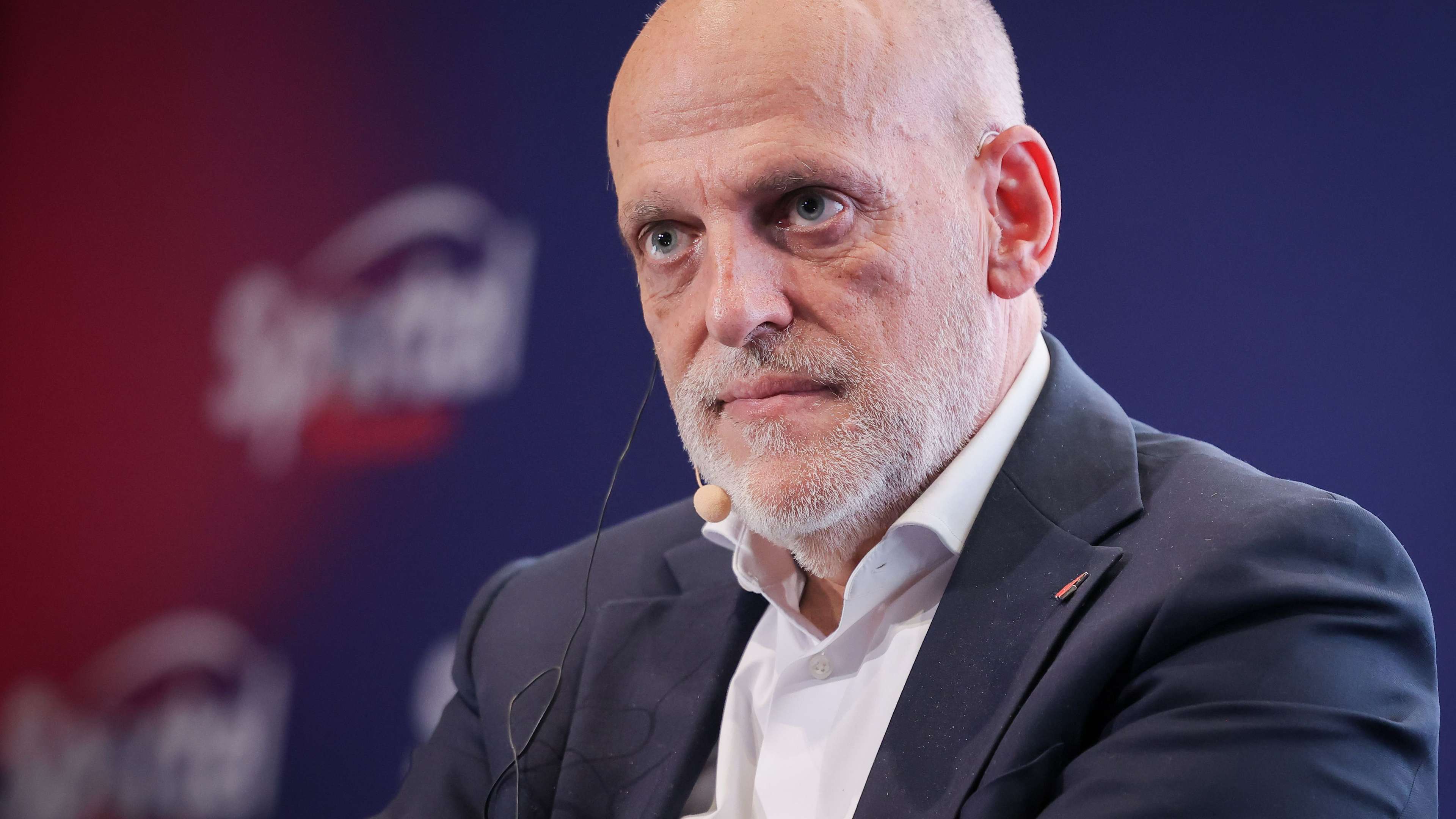
Paris Saint-Germain have received an unexpected endorsement from one of their most persistent critics. Javier Tebas, president of La Liga, has acknowledged that the French club has made significant progress in balancing its finances—a striking change in tone after years of criticism over PSG’s spending and ownership model.
Speaking to L’Équipe at Sportel, a sports-industry exhibition in Monaco, Tebas was asked about the evolution of a club he has often accused of distorting competition in European football. This time, his assessment was notably more positive. He said PSG’s revenues and expenses were now more closely aligned than they had been in the past, adding that the club was finally moving in the direction he had hoped to see.
The comments do not amount to an unconditional endorsement, but they signal an important shift in the conversation around PSG. For a club long associated with major investment, headline-making transfers and debate over financial fair play, recognition from a prominent critic suggests that its recent approach is beginning to change perceptions.
From Financial Criticism to Cautious Recognition
Tebas has repeatedly questioned PSG’s financial model, particularly during the period when the club’s spending attracted intense scrutiny across Europe. He argued that the scale of investment from the club’s Qatari ownership raised concerns about competitive balance and the application of football’s financial regulations.
His latest remarks suggest that he sees a meaningful difference between PSG’s previous financial structure and its current direction. The key point, as Tebas described it, is greater balance: a closer relationship between the money the club generates and the money it spends. That distinction matters in a sport where clubs are increasingly expected to demonstrate that their long-term costs are supported by sustainable income.
PSG’s commercial reach, global fan base and success on the pitch give the club substantial revenue potential. Yet strong income alone does not settle every concern. Clubs must also manage wages, transfer costs and other commitments carefully, especially when regulations are designed to encourage financial stability. Tebas’s comments indicate that he believes PSG has taken steps toward that broader discipline.
A change in tone, not a blank cheque
The La Liga president was careful not to suggest that all questions about PSG have disappeared. He welcomed the club’s progress but said he hoped it would continue on the same path, warning against a return to a less balanced situation. In other words, his approval is conditional: the important test will be whether the improvement lasts.
That caution reflects a wider reality in football. A club’s financial position can change quickly as transfer spending, player contracts and commercial arrangements evolve. A positive assessment at one point does not guarantee that the same verdict will apply in future seasons. For PSG, maintaining credibility may depend as much on consistent decision-making as on the financial figures themselves.
Why PSG’s financial direction matters to European football
PSG are not merely a domestic force in France. Their decisions are watched across Europe because of their resources, ambitions and influence in the transfer market. When a high-profile club adjusts its spending strategy, it can affect discussions about competition, regulation and what sustainable success should look like.
Financial rules are intended to help clubs avoid excessive losses and reduce the risk of instability. They also form part of a continuing debate about whether wealthy owners should be able to invest at a scale that rivals clubs built through decades of commercial growth. Tebas has often been a prominent voice in that debate, making his more favourable assessment of PSG particularly noteworthy.
His comments may also encourage a more nuanced view of the club. PSG’s recent story is not only about expensive signings or ambitious ownership. It is also about the challenge of building a sustainable operation while competing for major trophies and maintaining a global profile. A shift toward stronger financial balance could help the club present a different model of growth—one based on managing resources as well as attracting them.
What comes next for PSG?
The next stage will be judged through actions rather than statements. Supporters and observers will be watching how PSG handle future transfer windows, player contracts and investment in the squad. The club must continue to compete at the highest level while showing that its spending is supported by stable revenues and responsible planning.
That balance is difficult to achieve. Elite football rewards clubs that invest in talent, but the cost of assembling a competitive squad can rise rapidly. PSG’s challenge is to remain ambitious without recreating the financial imbalance that drew so much criticism in the first place. Sustained discipline could strengthen the club’s reputation and reduce the likelihood of renewed disputes over its business model.
For now, Tebas’s praise represents a notable moment in a relationship that has been strained for years. The La Liga president has not withdrawn his broader concerns about financial regulation, nor has he offered PSG unconditional approval. But he has recognised progress—and that carries weight precisely because of his history of outspoken criticism.
Football prediction: progress will be judged over time
Any football prediction about PSG’s financial future should be treated cautiously. The club appears to have moved toward a more balanced approach, but maintaining that progress will depend on decisions made season after season. If revenues continue to support expenditure and the club avoids a return to unsustainable commitments, Tebas’s positive assessment may become the start of a lasting change in perception.
If the balance deteriorates, however, the scrutiny is likely to return just as quickly. For PSG, the immediate priority is clear: keep competing, keep investing wisely and demonstrate that financial discipline is part of the club’s long-term strategy—not a temporary adjustment. Tebas’s remarks offer recognition of the progress made, while leaving the ultimate verdict to the years ahead.