
Intense UEFA Nations League Clash Turns Into Injury Crisis for Netherlands and Germany
The highly anticipated UEFA Nations League fixture between the Netherlands and Germany delivered more than just an exciting football match; it was marred by a series of serious injuries that cast a shadow over the game’s competitive spirit. As two of Europe’s football giants faced off in what was expected to be a fiercely contested encounter, the match quickly transformed into a chaotic scene filled with physical setbacks and controversial moments. This article delves into the details of the match, analyzes the implications for both teams, and explores the impact on future predictions for their upcoming fixtures.
Injuries Overshadow a Thrilling Football Encounter
The fixture, held at a packed stadium brimming with passionate fans, was expected to showcase top-tier football from two of Europe’s leading nations. However, the game took a grim turn early on as injury problems began to surface, starting even before the first whistle. Jamal Musiala, a key figure for Germany and a rising star in world football, was forced to withdraw during the warm-up due to an unforeseen muscle strain. His absence was a significant blow to the German tactical setup, highlighting how unpredictable injuries can influence football predictions and match outcomes.
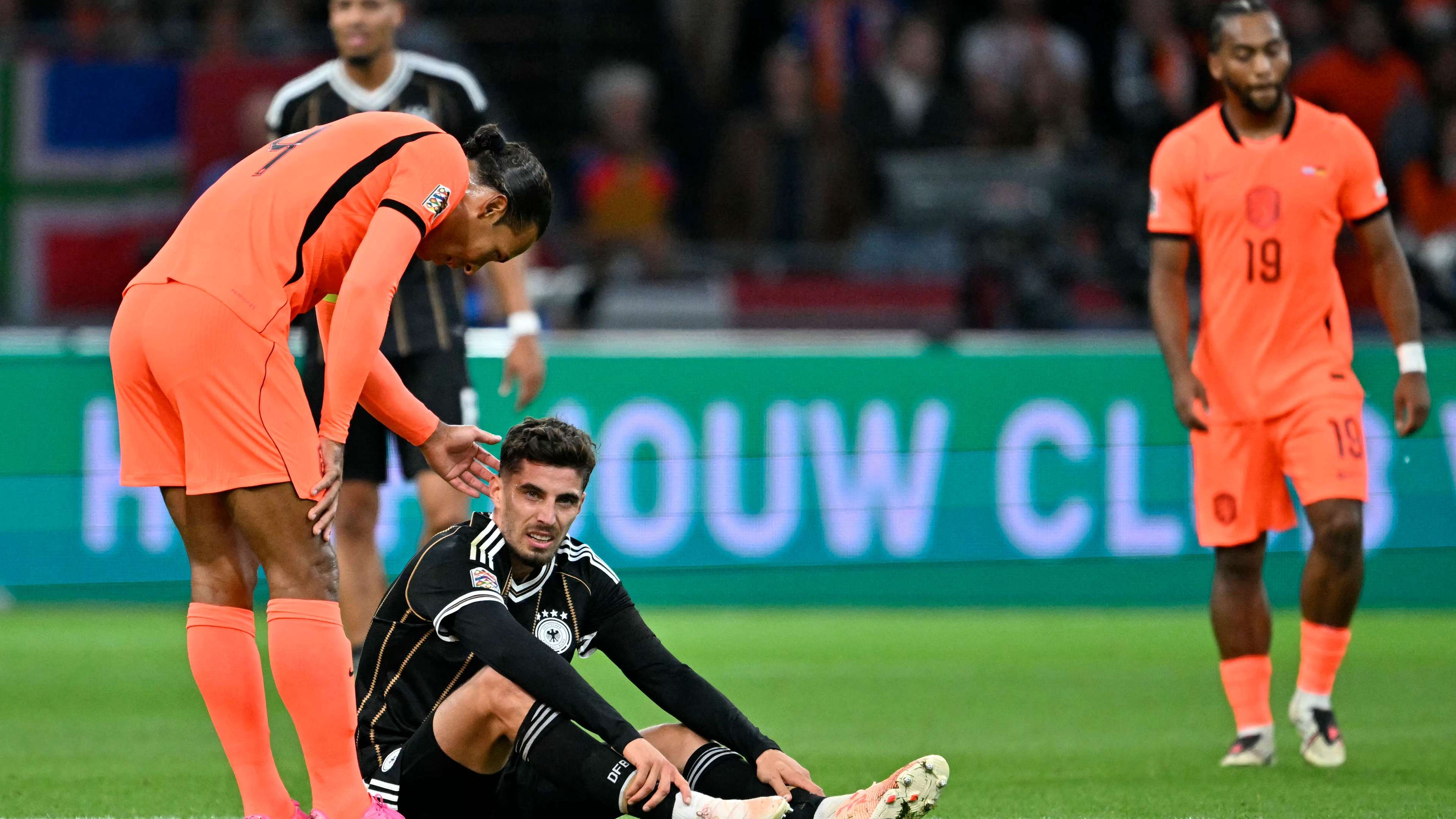
Once play commenced, the injury woes intensified. In the first half alone, two prominent Premier League stars—Germany’s Kai Havertz and the Netherlands’ Brian Brobbey—suffered serious muscle injuries, both requiring immediate medical attention. Havertz, who has been instrumental in Germany’s recent success, looked visibly distressed as he was stretchered off the pitch after a muscular issue in his thigh. Similarly, Brobbey, an emerging talent for the Dutch side, was seen clutching his hamstring and exited the field shortly after Havertz.
The Controversial Build-Up and Match Dynamics
Adding to the tension was a controversial build-up to the game, with heated exchanges and accusations surrounding team preparations and player fitness. Some pundits speculated that the intense physicality of the match, combined with inadequate recovery time, contributed to the spate of injuries. Such scenarios often influence football predictions, especially when key players are sidelined unexpectedly, altering team strategies and match expectations.
Despite the chaos and physical setbacks, the German team managed to take an early lead through a well-executed goal just before halftime. The goal was a testament to their resilience and tactical discipline amidst adversity. Germany’s ability to capitalize on the tense atmosphere has sparked discussions among football analysts about the team’s mental toughness and tactical adaptability, crucial factors that could influence predictions for their upcoming fixtures in international tournaments and club competitions.
Implications for Future Football Predictions and Team Strategies
The injury crisis experienced during this UEFA Nations League clash raises important questions for coaches, players, and fans alike. Injuries of this magnitude can significantly impact a team’s performance in upcoming fixtures, especially in tight tournament settings where squad depth is tested. For football enthusiasts and analysts making predictions about future matches, such injury reports are critical data points that can sway forecasts and betting odds.
From a strategic perspective, both Germany and the Netherlands will need to reassess their training regimens and player rotation policies to mitigate the risk of further injuries. The incident underscores the importance of player fitness management and the need for teams to develop contingency plans when key players are unavailable. Furthermore, it highlights the importance of medical staff and physiotherapy in modern football—ensuring players recover swiftly and prevent similar injuries in future games.
The Broader Context: Injuries and Their Impact on International Football
Injuries have always been a part of football’s unpredictable nature, but the frequency and severity seen in recent international fixtures have raised concerns about player workload and match scheduling. The congested calendar, intensified by club commitments and international tournaments, often leaves players vulnerable to muscle strains and other injuries. This situation adds a layer of uncertainty to football predictions, as team lineups can change unexpectedly due to fitness issues.
For fans and bettors relying on predictions, understanding the injury landscape is vital. Analyzing injury reports, player fitness levels, and recent performance form part of comprehensive football prediction strategies. The recent injury crisis in the UEFA Nations League underscores the importance of these factors and the need for more nuanced forecasting models that account for such variables.
Looking Ahead: What This Means for the Netherlands and Germany
As both teams look ahead to their forthcoming fixtures, the injury setbacks serve as a reminder of the fragility of even the most well-prepared squads. Germany, holding a narrow 1-0 lead at halftime, faces the challenge of maintaining their advantage without some of their key players. The Dutch side, meanwhile, must regroup and adapt quickly, especially considering Brobbey’s and Havertz’s uncertain recovery timelines.
For football fans eager to stay ahead of the curve, monitoring injury updates and team news will be crucial for accurate predictions. As the tournament progresses, the resilience and adaptability of these teams in managing injuries will likely influence their success and final standings. Moreover, the incident highlights the importance of strategic squad rotation and injury prevention measures—topics that are increasingly relevant in modern football analysis and prediction models.
Conclusion: A Cautionary Tale for the Beautiful Game
The UEFA Nations League match between the Netherlands and Germany was destined to be a showcase of football prowess but ultimately became a stark reminder of how injuries can dramatically alter the course of a game. As the football community reflects on this intense encounter, it serves as a cautionary tale for coaches, players, and fans alike about the unpredictable nature of the sport and the importance of injury prevention.
For those engaged in football predictions, this match exemplifies the need to incorporate injury risk assessments into forecasting models. Whether predicting outcomes for international fixtures or club competitions, understanding the health status of key players is essential for accurate and reliable predictions. Moving forward, the focus on player fitness, medical preparedness, and tactical flexibility will be more critical than ever in shaping the future landscape of international football.