
Chess World Championship Tour Pilot 2026: Semifinalists Set After Dramatic Group Stage
The group stage of the Total Chess World Championship Tour Pilot 2026 has concluded, setting up two high-profile grandmaster matchups in the semifinals. Fabiano Caruana, Alireza Firouzja, Anish Giri, and Maxime Vachier-Lagrave (MVL) finished first in their respective groups and advanced to the tournament’s title bracket.
Caruana secured his group victory with a round to spare, while Firouzja and Giri confirmed their places at the top with controlled draws. Group D provided the biggest late twist: a decisive win in the final round lifted MVL into first place, while the battle for the remaining knockout positions kept the group’s outcome uncertain until the end.
The final day also brought a change near the top of the live world rankings. Caruana lost his last group-stage game, allowing him to return to the world No. 2 position, 9.2 points behind Magnus Carlsen. Carlsen, meanwhile, remained narrowly above the 2800 rating mark after two draws—but his next results could put that status at risk.
Group Stage: Draws, Decisive Finishes, and a Late Surprise
The ninth round featured a high number of draws, with Group D the main exception. The pattern continued in the final round, but the last set of games produced significantly more drama. All three Group D games ended in wins for White, reshaping the standings and making the final qualification picture especially tense.
While several group leaders had already built enough of a cushion to approach the closing rounds calmly, the final games still mattered for players chasing better knockout positions. In a tournament where the format moves from group play to a multi-time-control elimination stage, finishing first can offer a valuable route into the championship bracket.
Group A: Firouzja’s Risk Pays Off
Firouzja finished at the top of Group A after navigating a challenging final stretch. His approach balanced practical ambition with the need to secure qualification, and the result was enough to send him into the semifinals. In a competitive chess field, a group-stage lead is not simply a reward for one strong game; it reflects the ability to score consistently across different opponents and positions.
Group B: Caruana Clinches First, Then Takes a Final-Round Loss
Caruana had already guaranteed first place in Group B before the final round, giving him the freedom to play without the pressure of needing a result to qualify. He nevertheless ended the group stage with a loss, his first defeat of the event. The setback did not change his position in the standings, but it did affect the live rating race.
Caruana’s loss helped him regain the world No. 2 spot, placing him 9.2 rating points behind Carlsen. That margin remains small enough to shift quickly, particularly with more rapid and fast-classical chess still to come in the knockout phase.
Group C: Giri Advances as Carlsen’s Winless Run Continues
Giri eased into first place in Group C, using two draws to complete his qualification campaign. Carlsen also drew twice, ending the group stage without a win in fast classical chess. One of those games included a missed opportunity for his opponent, who could have pressed for more after Carlsen had faced difficulties earlier in the encounter.
The draws kept Carlsen just above a 2800 rating, a notable milestone for any elite player. But the margin is fragile. His next assignment is in the lower placement bracket, where another draw could be enough to take him below the mark. The result may carry no bearing on the championship title, yet it adds an extra storyline to his remaining games.
Group D: MVL Takes First After Vaishali’s Upset
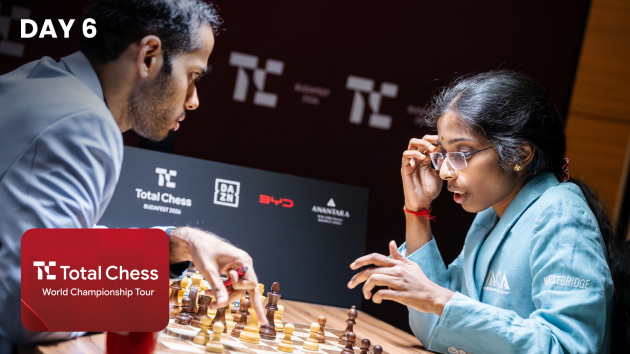
Group D delivered the day’s most unpredictable finish. A last-minute victory by MVL secured the group’s top position, while Vaishali produced a significant win against Arjun to disrupt the expected order. At one point, the standings were open enough for another player to appear capable of winning the group after defeating a leading rival.
The decisive results underlined how quickly a round-robin chess group can change. Even players who have performed strongly throughout the event may find their final position determined by one critical game, especially when several contenders remain close in the standings.
Knockout Brackets Set for Tuesday
The four group winners will contest the championship bracket, with the semifinals pairing grandmaster against grandmaster on both sides of the draw. The remaining players will compete in separate brackets for fifth, ninth, and 13th place. Carlsen is set to play in the bracket for 17th, while the lower placement matches will determine the final positions across the field.
Those matches still offer plenty of competitive interest, even when the title is no longer within reach. Players must continue to perform across a demanding schedule, and the different finishing brackets can provide opportunities to recover from a difficult group stage. As one grandmaster observed, every player remains in the competition regardless of where they finished in their group—a format that creates more games but can also test motivation.
There may also be a family storyline in the lower brackets, with the possibility of Praggnanandhaa and his sister Vaishali meeting in a final, depending on their results. Their paths through the placement matches will be closely watched by fans following both the tournament and the wider chess circuit.
Game of the Day: Carlsen and Nepomniachtchi’s Wild Draw
The standout game from the closing group-stage action was the first draw between Carlsen and Ian Nepomniachtchi. Despite the result, the game was far from quiet: both players faced demanding decisions, and the position developed into a complex battle that offered plenty for chess fans to examine.
The encounter is set to receive a detailed grandmaster analysis, making it a useful example of how a draw can still contain sharp tactical possibilities, strategic pressure, and missed chances. In elite chess, the final result does not always reveal how difficult a game was to control.
When and Where to Watch the Knockout Stage
The first day of knockout play begins on Tuesday, November 17, following Monday’s rest day. The broadcast is scheduled to start at 9 a.m. ET, 15:00 CET, and 7:30 p.m. IST. Fans can follow the tournament through Chess24’s event pages and other official broadcast channels, with live commentary from grandmasters, international masters, and a woman international master. Live games will also be available through the event’s game viewer.
About the Total Chess World Championship Tour Pilot 2026
The Total Chess World Championship Tour Pilot 2026 is being held from November 10 to 21 at the Anantara New York Palace Hotel in Budapest, Hungary. The event serves as a trial run for the planned 2027 competition, which is expected to crown the first FIDE World Combined Champion.
The format combines a round-robin group stage with a knockout phase featuring blitz, rapid, and fast classical chess. Players face blitz games at 3+2, rapid at 15+10, and fast classical games at 45+30. If a match requires a tiebreak, the event can use Armageddon, with White receiving 10 minutes and Black seven minutes, plus a one-second increment beginning on move 41.
With the group stage complete, the tournament now shifts from qualification strategy to direct elimination. The semifinalists have earned their place, but the combination of time controls means adaptability will be essential. In this chess championship, one strong performance may decide a match—and one mistake could end a title run.