
Barcelona Face an Early Test of Unity After Clásico Defeat
Barcelona’s defeat to Real Madrid has prompted more than tactical questions. In the days after the Clásico, the club has moved to reinforce its public support for Hansi Flick and his players, while reports of private discussions and a team meal have added to speculation about the mood inside the dressing room. The immediate challenge is clear: turn a painful result into a short-lived setback rather than a deeper crisis.
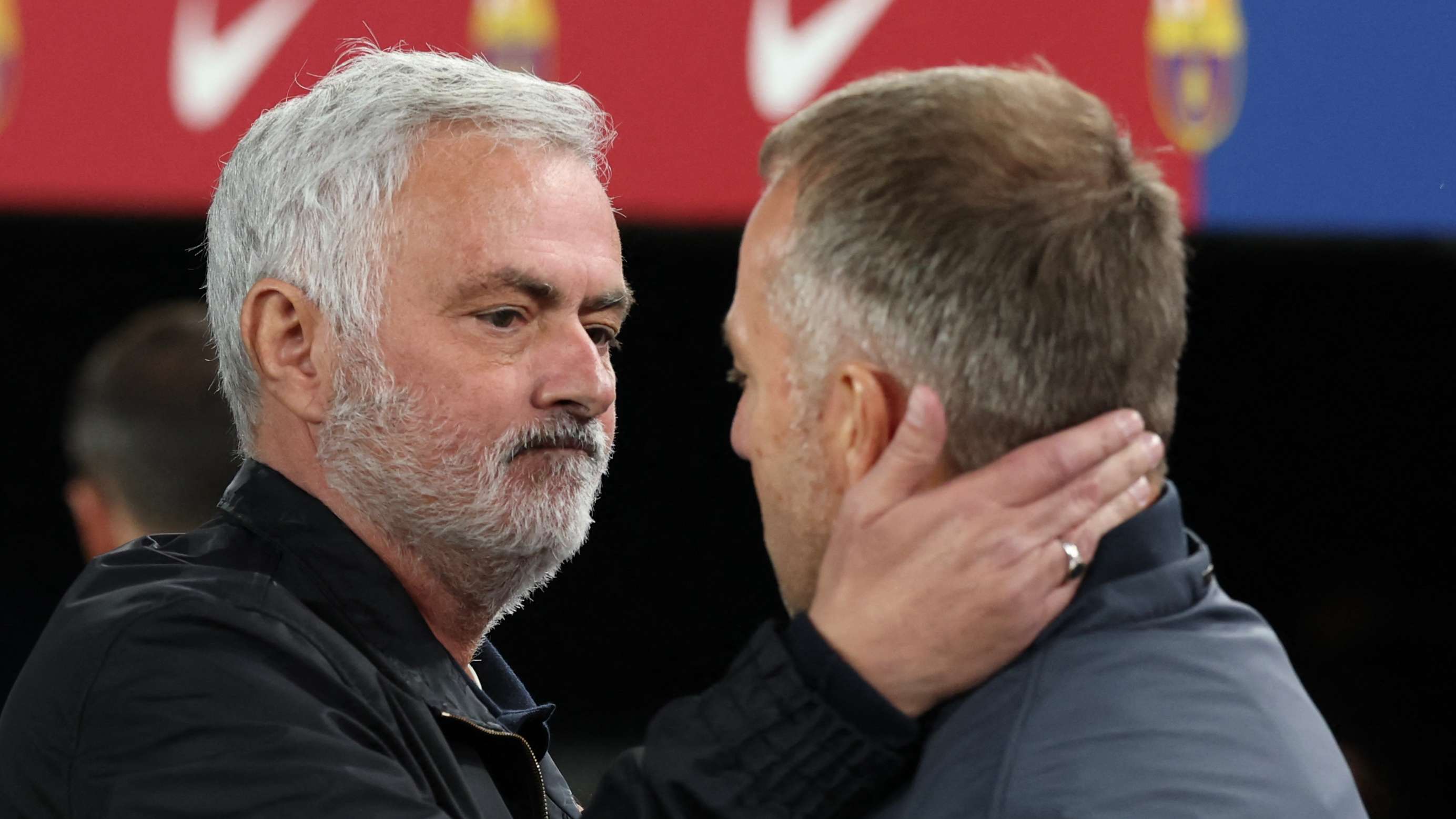
José Mourinho was not directly involved in the match, but his name has become part of the conversation around the tension it exposed. The suggestion is not necessarily that he deliberately engineered a problem at Barcelona. Rather, the Clásico may have widened a small existing crack—one that becomes more visible when results, expectations and scrutiny collide. In football, a routine defeat can quickly become a test of trust and leadership, particularly at a club where every setback is examined in detail.
Two major defeats leave their mark
According to Spanish newspaper AS, the Clásico result affected Flick on several fronts. Barcelona had linked the high-profile meeting with their fixture against Paris Saint-Germain, and the team ultimately lost both matches. That sequence intensified the disappointment and made the Madrid defeat feel like part of a wider problem rather than an isolated bad afternoon.
Barcelona also struggled to maintain their tactical balance against Real Madrid. Once the 1-2 loss was confirmed, Flick pointed to the players’ physical condition and their ability to recover between demanding games. Fatigue can be a legitimate concern during a crowded schedule, but the explanation did little to quiet questions about how the team handled the contest. Supporters and analysts are likely to ask whether Barcelona’s difficulties came from tired legs, poor game management, or a combination of both.
The result matters beyond the league table. A Clásico defeat can shape confidence, influence the atmosphere around the squad and provide rivals with evidence of where Barcelona may be vulnerable. For a team with ambitions in LaLiga and Europe, the response in the next fixtures will be as important as the loss itself.
Private conversations and public reassurance
On Wednesday, Barcelona’s players reportedly shared a team meal intended to strengthen relationships within the squad. Such gatherings are not unusual, and they do not automatically signal conflict. Still, when a collective meal follows a high-profile defeat, it naturally attracts attention. It can be a simple effort to reconnect—or an opportunity for players and staff to address concerns away from cameras and microphones.
The club’s board added another notable development on Thursday. In a media statement, it expressed “full confidence in the team and the coaching staff.” The wording was framed as support, but its timing made it especially prominent. When a club goes out of its way to reaffirm confidence shortly after a major loss, observers may wonder whether the message is intended to calm speculation as much as to praise the people involved.
That does not mean Barcelona are preparing for an immediate change. Public backing can be a normal part of a club’s response to pressure, especially when leaders want to prevent one defeat from dominating the season. But the statement also underlines how quickly the conversation has shifted from the match itself to the broader relationship between the board, the coach and the squad.
January transfer plans come back into view
Flick’s comments on Friday added another layer. The coach opened the door to the possibility of signing a new player in the January transfer window, a subject that had been largely on hold since the summer. The remark does not guarantee that Barcelona will make a move, and any deal would depend on sporting priorities and the club’s financial circumstances. Even so, it suggests that the coaching staff may be reassessing what the squad needs.
A winter signing could address a specific weakness, add depth for a congested second half of the season, or provide competition in a position where performances have been inconsistent. It could also be a response to injuries and fatigue rather than a reaction to the Clásico alone. The timing, however, ensures that the possibility will be interpreted through the lens of the recent defeats.
Yamal and concerns over discipline
Lamine Yamal has also found himself under scrutiny. Some critics questioned his decision to travel to London alone on Sunday evening, separately from the official club trip arranged for Monday morning. The criticism concerns the timing and optics of the journey, rather than establishing that the trip caused a problem on the pitch. At the same time, a Barcelona supporters’ association in the stands was temporarily closed, adding to the sense of a turbulent week around the club.
More broadly, one familiar criticism of Flick’s Barcelona has resurfaced: the team’s difficulty staying composed in high-pressure moments. The issue is not simply about individual discipline. It includes decision-making, emotional control and the ability to protect a lead or regain structure when a match becomes chaotic.
Barcelona’s previous setbacks provide useful context. Supporters will remember the Champions League semi-final second leg against Inter Milan, when the team led 3-2, as well as the Copa del Rey quarter-final second leg at Atlético Madrid. In the latter match, Barcelona had done the difficult work by moving 2-0 ahead within 25 minutes, yet the game still raised questions about how effectively the side managed a demanding situation.
Flick has recovered from crises before
The current atmosphere may feel familiar to Flick. He has already navigated difficult periods at Barcelona, including a poor spell in November 2024, a 4-0 defeat in the first leg of a Copa del Rey semi-final and a subsequent loss to Girona. In each case, the club responded with internal conversations and efforts to rebuild collective confidence.
Those precedents offer a reason for caution before declaring that the latest defeat has caused lasting damage. A team meal, a statement of support and discussion of possible recruitment can all be part of a club’s routine recovery process. The more meaningful evidence will come from the players’ performances and body language in the matches ahead.
For Barcelona, the immediate prediction is less about a dramatic break-up than about a demanding test of resilience. If Flick’s side responds with sharper organisation, better control in difficult passages and renewed energy, the Clásico may become a painful but manageable lesson. If the same problems recur, questions about discipline, squad depth and the coach’s authority are likely to grow louder.
The coming days will show whether the tension is temporary or a sign of deeper division. Mourinho may have opened only a small crack in the story surrounding Barcelona, but the team’s response will determine whether it closes quickly—or becomes one of the defining football narratives of the season.