
Champions League Goal Fest Sets New Scoring Records
The Champions League delivered a remarkable night of attacking football as the second round of league-phase fixtures produced goals, comebacks and high drama across Europe. Nine matches on Wednesday yielded 46 goals, according to Foot Mercato—a new record for goals scored on a single night in the competition, surpassing the previous benchmark by three.
For supporters who enjoy open, ambitious football, the evening offered plenty to celebrate. Every match featured at least one goal, while six of the nine contests saw five or more. The scoring surge also helped make the full Tuesday-and-Wednesday programme the most prolific second round in Champions League history, with 78 goals in total.
Nine Matches, 46 Goals and Relentless Drama
The headline statistic captures only part of the story. These were not simply high-scoring games decided by a flurry of late goals: several featured momentum swings, defensive breakdowns and attacks that kept pressing even after taking the lead. The result was a memorable European night in which few matches felt settled for long.
Liverpool’s 6-3 victory over LASK was one of the evening’s most entertaining fixtures. Both sides found the net, but Liverpool’s attacking quality ultimately made the difference. The scoreline reflected a match in which the Austrian visitors had moments of threat, while the English club made the most of its opportunities and turned the contest into a nine-goal spectacle.
Aston Villa were even more emphatic, overpowering Fenerbahce 6-0. The result gave Villa a commanding win and underlined the danger of allowing a confident opponent to build momentum. A six-goal margin is a statement in any competition, but on a busy European night it also stood out as one of the clearest demonstrations of attacking control.
Comebacks and Big-Team Showdowns
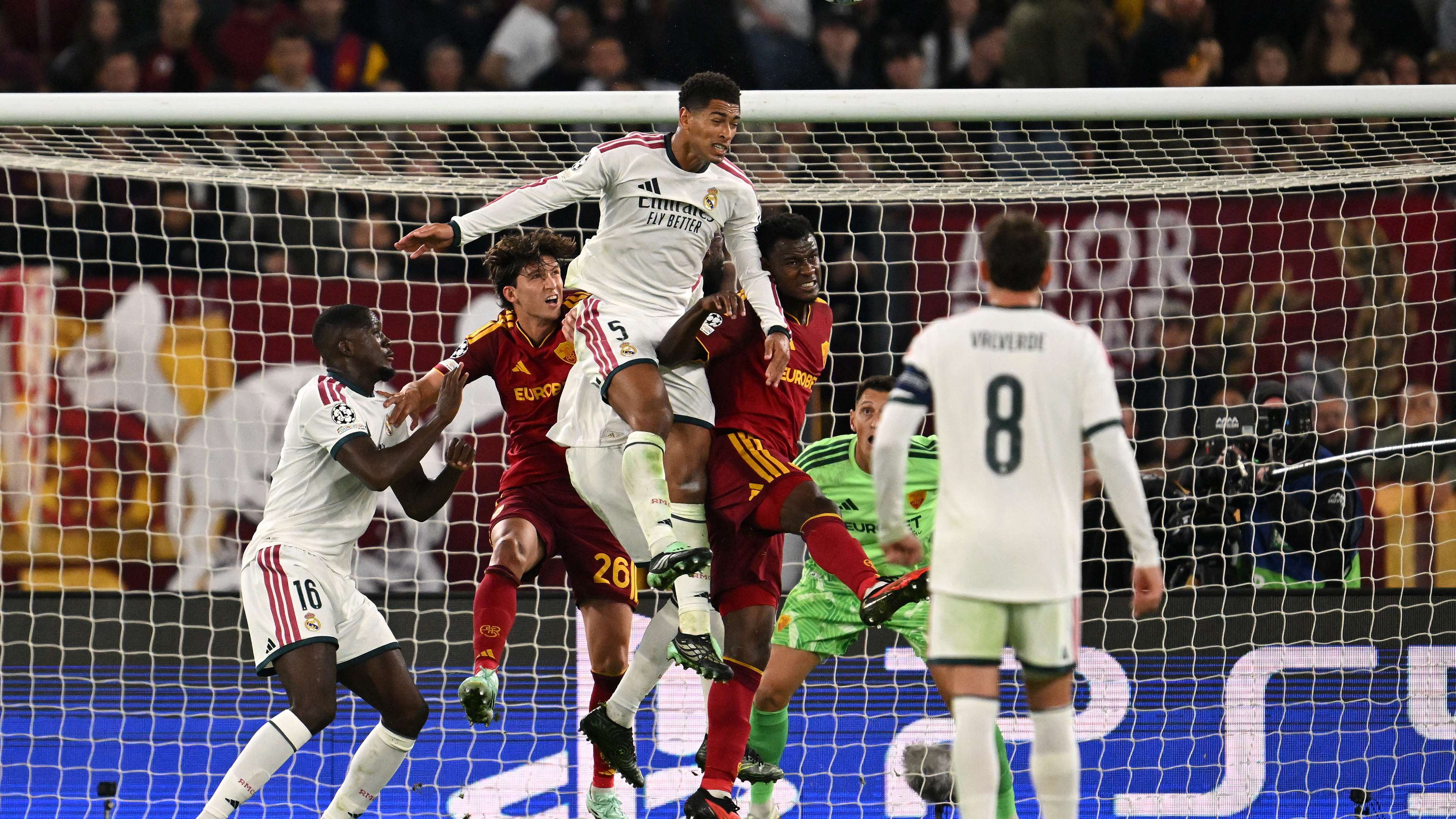
Real Madrid’s 4-3 win over Roma offered one of the night’s most striking reversals. Madrid found themselves 3-1 behind, a position that would have left many teams facing elimination from the contest. Instead, they mounted a comeback to claim all three points. The recovery highlighted a familiar quality of elite European sides: even when the match turns against them, they can remain dangerous and find ways back into the game.
That type of comeback is especially significant in a league phase, where every result contributes to a team’s wider campaign. A victory after trailing by two goals can provide more than points; it can reinforce belief and demonstrate resilience under pressure. For Roma, the defeat will be frustrating, particularly after building a strong advantage, but the performance also showed how quickly a promising position can become precarious against a top-level opponent.
Paris Saint-Germain and Manchester City also produced a compelling contest, with PSG emerging as 4-2 winners. The match swung from one side to the other before the Parisian club established its advantage. When two ambitious teams meet, the tactical battle can be as absorbing as the goals themselves: pressing, quick transitions and the willingness to commit players forward can create chances, but they can also leave space for opponents to exploit.
Why the Champions League Is Producing So Many Goals
The record-breaking totals point to a broader trend in modern football. Many leading teams now build their identity around aggressive pressing and rapid attacks. Winning the ball high up the pitch can create immediate scoring chances, while quick movement through midfield gives defences less time to reset. These tactics can make matches more exciting, but they also raise the risk of conceding when a press is bypassed.
Changes in the competition format may add another layer of urgency. In a league phase, clubs are balancing their position across a wider set of fixtures rather than focusing only on a traditional two-legged group-stage schedule. Teams may be more willing to chase a result, especially when a draw offers limited benefit compared with a win. That approach can lead to more open second halves and dramatic scorelines.
High goal counts do not necessarily mean that every match is tactically careless. Some teams deliberately accept defensive risk because their attacking strengths are more likely to decide the contest. Others are forced into a more adventurous approach after falling behind. Once a game opens up, substitutions and fatigue can further increase the space available to forwards, creating the conditions for late goals and sudden comebacks.
What the Results Could Mean for the Season
For Liverpool, Aston Villa, Real Madrid and PSG, these victories offer an encouraging early boost, though one spectacular night does not settle a European campaign. Consistency remains essential. Teams must show that they can produce results against different styles of opponent, manage difficult away fixtures and avoid turning attacking ambition into avoidable defensive mistakes.
The heavy defeats will also prompt questions for the teams on the receiving end. LASK and Fenerbahce will need to review how they handled pressure and protected their penalty areas, while Roma can take lessons from the way Madrid responded after going behind. For Manchester City, the loss to PSG is a reminder that even highly organised sides can be exposed when a match becomes fast and unpredictable.
Early Prediction: More Goals May Follow
It is too soon to predict that every round will match this extraordinary scoring pace. Records are often followed by more measured performances as clubs adjust, study their opponents and prioritise control. Still, the results suggest that fans can expect plenty of attacking intent as the league phase continues. Teams chasing qualification may have little reason to settle for cautious football, particularly when a goal difference could matter later.
The next round will test whether this goal rush was an unusual spike or part of a wider pattern. A sensible football prediction is that the biggest contenders will continue to create chances, while the most successful sides will be those that combine attacking quality with better control when they lose possession. After 78 goals across Tuesday and Wednesday, expectations are high—and the Champions League has already shown that one night can transform the story of the season.