
Mohit Ulva Earns Saurashtra Call-Up After Dramatic Under-19 Asia Cup Final
Mohit Ulva’s remarkable performance in the Under-19 Asia Cup final has quickly opened a new door in his cricket career. The 18-year-old all-rounder, who struck the winning boundary in India’s thrilling comeback against Pakistan in Oman, has been added to Saurashtra’s squad for the Syed Mushtaq Ali Trophy (SMAT), the state association has confirmed.
The Saurashtra Cricket Association (SCA) moved swiftly after Ulva’s match-winning display, asking him to travel directly to Indore and join the team. The call-up gives the young player an early opportunity to step into senior domestic cricket, where he can test his skills against experienced professionals.
Saurashtra backs a rising young cricketer
SCA president Jaydev Shah praised Ulva’s composure and determination, describing his performance as a display of grit and fighting spirit. Shah said the association had decided to add him to the SMAT squad and had instructed him to join the team in Indore.
Shah also highlighted Ulva’s background, noting that he comes from a modest family in Surendranagar, near Rajkot, and lives in Rajkot. The SCA, he said, aims to encourage promising young players, and Ulva’s contribution in the final showed that he could be a valuable addition to the side.
The opportunity arrives at a significant moment. The Syed Mushtaq Ali Trophy is India’s leading domestic T20 competition, offering emerging players a chance to perform in a fast-paced format and attract attention from selectors and professional teams. For Ulva, joining Saurashtra means moving from the under-19 stage into a senior dressing room almost immediately after one of the biggest performances of his young career.
A fearless finish under pressure
Ulva’s breakthrough came in a high-scoring final at the Oman Cricket Academy Ground, on the outskirts of Muscat. India were chasing 338 against Pakistan and appeared to be slipping out of contention when Ulva came to the crease at No. 10. The scoreboard showed 252 for eight, leaving India with a steep task and little room for error.
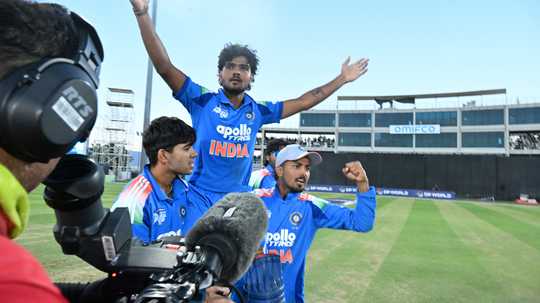
Rather than retreat into a defensive approach, Ulva attacked with remarkable confidence. He finished unbeaten on 49 from just 26 deliveries, striking at more than 188 runs per 100 balls. His innings included the decisive moment: with three runs required from the final delivery, he sent the ball over mid-off for four, sealing the win and triggering celebrations among the Indian players and supporters.
The match had an added atmosphere of drama, with local Oman Cricket officials reporting that Pakistani supporters outnumbered Indian fans at the venue. That setting made India’s late recovery—and Ulva’s calm finish—all the more memorable.
Partnerships that brought India back into the contest
Ulva’s innings was not a brief burst of boundary-hitting. He helped rebuild the chase through two important partnerships. First, he added 57 runs from 35 balls for the ninth wicket with No. 7 Manal Chauhan, giving India renewed momentum when the lower order needed to contribute. He then stayed unbeaten while putting on 30 runs from 16 deliveries with No. 11 Chigurpati Venkata.
Those stands transformed a difficult chase into a realistic target. Ulva’s ability to keep scoring while protecting the strike and working with the tail showed an understanding of the situation that went beyond his age. In a close cricket finish, the lower-order batters often have to balance aggression with careful decision-making; Ulva managed both, keeping India in range before delivering the final blow.
His performance also offered a useful reminder for anyone making a match prediction: late-order contributions can dramatically change the likely outcome of a game. India’s position at 252 for eight looked precarious, but a composed partnership and a fearless final over overturned expectations. In cricket, a strong prediction must account for depth in the batting order, not just the top-order names.
Bowling role adds to Ulva’s value
Ulva is primarily a fast bowler and also opened the bowling for India in the final. He returned figures of 0 for 57 from eight overs, an expensive spell in a match where Pakistan set a formidable total. Yet his value to the team was ultimately defined by his response with the bat, demonstrating the versatility expected of a modern all-rounder.
After the final, Ulva credited his teammates and head coach for believing in him, while also pointing to his own self-confidence. He described his approach simply: watch the ball and hit it. That uncomplicated mindset appeared to serve him well in a tense finish, when the pressure of the occasion could easily have led to hesitation.
What comes next for the 18-year-old?
If travel and team arrangements go smoothly, Ulva could be available for Saurashtra’s next SMAT fixture against Haryana on Monday, November 16. His arrival would strengthen a team already off to a positive start in Group B. Led by Jaydev Unadkat, Saurashtra opened its campaign with a five-wicket victory over Bihar, whose captain was Vaibhav Sooryavanshi.
Ulva’s call-up does not guarantee an immediate place in the playing XI, but it gives him a chance to train and compete alongside senior players. That experience can be valuable even before a debut, helping a young cricketer adjust to the pace, preparation and expectations of professional domestic cricket.
For now, the winning boundary in Oman has made Ulva one of the most talked-about emerging names in Indian cricket. His next challenge is to carry that confidence into the SMAT environment, where consistent performances matter as much as one unforgettable innings. If he can combine his fast bowling with the fearless batting he showed in the final, Saurashtra may have found a promising new all-round option—and Ulva may have taken his first major step toward a senior career.