
Manchester United’s Late Equaliser Against Aston Villa Sparks VAR Debate
Manchester United’s dramatic 4-4 draw with Aston Villa delivered a remarkable finish—and a controversial refereeing decision that is likely to remain a talking point among Premier League fans. Patrick Dorgu scored in the sixth minute of stoppage time to complete United’s late comeback, but Villa’s players immediately protested that goalkeeper Senne Lammens had fouled their Japanese keeper, Suzuki, during the build-up.
Referee Chris Kavanagh allowed the goal to stand after a VAR review, ruling that there was no reason to overturn his on-field decision. The equaliser rescued a point for United at Old Trafford, where the hosts had appeared to be heading for defeat after falling two goals behind early in the second half. It also reignited familiar questions about goalkeeper contact, the threshold for a foul and how consistently similar incidents are judged.
What Happened in the Controversial Final Attack?
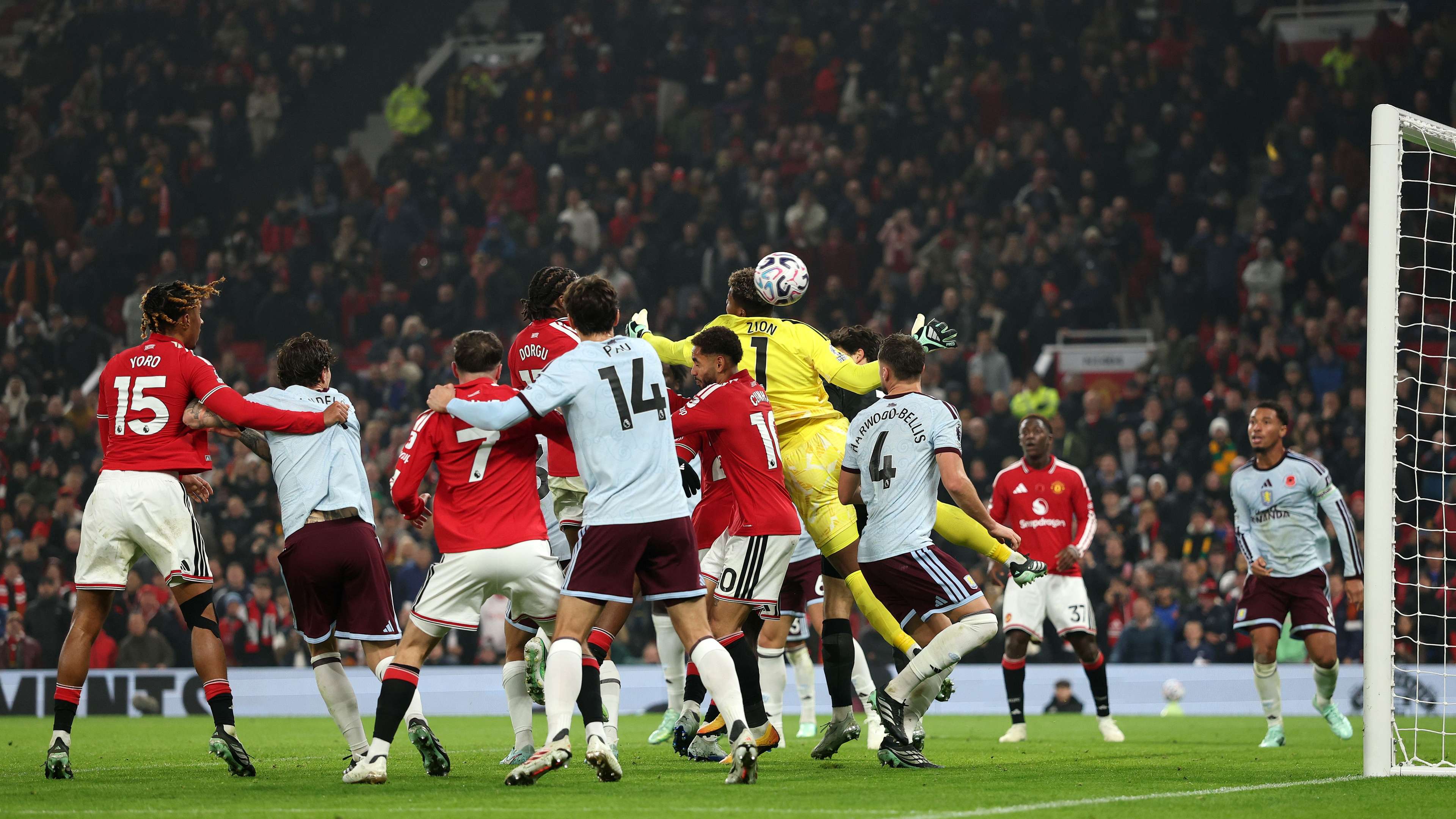
With United chasing an equaliser in the closing moments, Lammens left his goal and went forward into Aston Villa’s penalty area to join the attack. When the ball was delivered, the goalkeeper appeared to make contact with Suzuki as the Villa keeper tried to come out and clear it. The collision disrupted Suzuki’s attempt to reach the ball, which then fell into Dorgu’s path.
Dorgu reacted quickly, taking advantage of the loose ball to send it into the net. Villa players surrounded Kavanagh, arguing that Lammens had prevented Suzuki from making a clean attempt at the ball. Suzuki also made his frustration clear and was shown a yellow card after protesting the decision.
VAR checked the incident before confirming that the goal would stand. The review did not settle the debate, however. Villa’s case centred on whether Lammens’ movement had unfairly impeded the goalkeeper, while the decision ultimately reflected the officials’ assessment that the contact did not meet the standard required to disallow the goal. For supporters, the key question is not simply whether there was contact, but whether it was enough to constitute a punishable foul.
Why the Decision Is Likely to Divide Fans
Goalkeeper incidents are often among football’s most contentious calls because the position involves crowded penalty areas, competing attempts to reach the ball and limited time for officials to judge what happened. A keeper may be protected when an opponent clearly blocks or challenges them, but not every collision automatically results in a free kick. The referee must consider the nature of the contact, the players’ movements and whether the goalkeeper was genuinely prevented from playing the ball.
In this case, the fact that Lammens had travelled upfield added another layer of drama. United’s goalkeeper was not merely watching from his own box; he had become part of the final attacking move. That decision created an extra body in a crowded area and helped produce the decisive scramble. It was a bold gamble that paid off, although the resulting contact left Villa convinced the goal should have been ruled out.
Aston Villa’s Fast Start Put United Under Pressure
The late controversy was only one part of a chaotic match. Aston Villa began with extraordinary speed, scoring twice inside the opening four minutes. Alisson Edward struck in the first minute, giving the visitors an early advantage, before Nicolas Jackson added a second in the fourth. United were suddenly facing a steep climb before the game had properly settled.
Bruno Fernandes helped the hosts recover in the 16th minute, converting a penalty to bring United back into the contest. Villa remained dangerous, but United’s response changed the rhythm of the first half. Youri Tielemans scored in the 44th minute to make it 2-2, ensuring that the teams reached the break level after an opening period filled with goals and momentum swings.
Villa Regain Control After Half-Time
The visitors struck again soon after the restart. John McGinn converted a penalty in the 48th minute to put Villa back in front, and Leon Goretzka made it 4-2 five minutes later. His goal followed a defensive error by Leny Yoro, giving Villa a two-goal cushion and placing them in a strong position to take all three points.
At that stage, the match appeared to be slipping away from United. Villa had punished defensive mistakes and looked capable of protecting their lead, while the home side needed both greater urgency and greater precision. Yet United continued to push forward rather than accept the result, setting the stage for a frantic finish.
Stoppage-Time Comeback Changes the Result
United’s revival began in the 92nd minute, when Joshua Zirkzee scored to reduce the deficit to 4-3. The goal gave the home side fresh belief and put immediate pressure on Villa, who had been only minutes from securing a memorable away win. United committed more players forward, and Lammens’ decision to join the attack reflected the desperation of the situation.
Four minutes later, Dorgu completed the comeback. His equaliser transformed what had looked like a comfortable Villa victory into a 4-4 draw and sparked celebrations among the home crowd. For United, the point was earned through persistence and late attacking pressure. For Villa, it was a frustrating finish after scoring four times and leading by two goals in the second half.
What the Draw Means for Both Teams
The result offered United a valuable point, but the match also highlighted defensive concerns. Conceding four goals and needing two stoppage-time strikes to avoid defeat will invite scrutiny, particularly after the early goals and the error that allowed Goretzka to score. United showed character, but their performance also underlined how difficult it can be to recover after losing control of a match.
Villa, meanwhile, can take encouragement from their attacking display but may view the result as two points dropped. Their fast start, effective finishing and second-half response put them in a winning position. The late collapse will make the final minutes especially difficult to process, while the decision to allow Dorgu’s goal gives the club a clear point of contention.
For neutral football fans, the 4-4 scoreline delivered a memorable contest and a ready-made talking point. Any prediction about the fallout is likely to centre on the same issue: whether future refereeing decisions involving goalkeeper contact will follow a similarly high threshold. The goal has stood, the points have been shared, and the debate over Lammens’ challenge is likely to continue well beyond the final whistle.