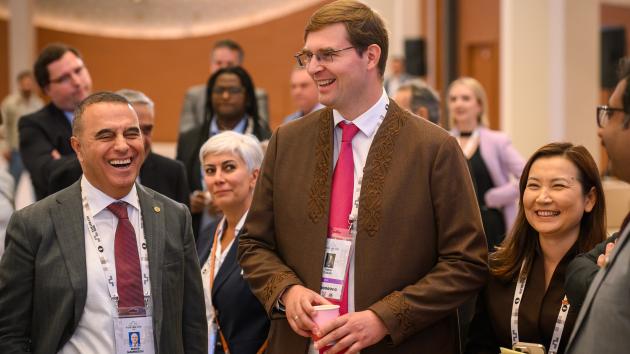


FIDE Chess Olympiad 2024: Uzbekistan Maintains Lead as Intense Battles Unfold in Penultimate Round
The 46th FIDE Chess Olympiad, one of the most prestigious team tournaments in the world of chess, has reached a critical juncture as teams battle fiercely for medals in the final stages. Hosted in the historic city of Samarkand, Uzbekistan, this biennial event features teams from across the globe competing in both the Open and Women’s sections. With only one round remaining, the tension is palpable, and the race for gold, silver, and bronze medals is heating up, promising an electrifying conclusion to this grand chess spectacle.
Standings Show Uzbekistan and India Locked in a Tight Race
After the tenth round, Uzbekistan continues to hold onto its commanding lead with 18 points, thanks to dominant victories over Armenia. Meanwhile, India remains just a point behind, with 17 points, after a convincing 3.5-0.5 triumph over Uzbekistan 2. The top contenders are closely followed by Germany, Ukraine, and Hungary, all positioned with 16 points, each securing notable wins against formidable opponents like France, China, and Spain respectively.
The current standings highlight the intense competition in the open section, with Uzbekistan and India poised for a dramatic showdown in the final round. China and Kazakhstan trail closely, both with 18 and 17 points, respectively, setting the stage for a nerve-wracking finish. The fight for the top spot is further complicated by Poland and Vietnam, each with 16 points, ensuring the last round will be a spectacle of strategic mastery and resilience.
The Battle of Titans: Key Results from Round 10
In a match packed with drama, Uzbekistan delivered a masterclass in team chess, with their top players executing precise strategies. GM Nodirbek Abdusattorov, GM Javokhir Sindarov, and GM Shamsiddin Vokhidov showcased their prowess, each securing wins that bolstered Uzbekistan’s lead. Abdusattorov’s patient defense and subtle endgame technique against Armenia’s GM Aram Hakobyan exemplified the high level of play.
The highlight game was between Sindarov and GM Hrant Melkumyan, where Sindarov sacrificed an exchange early to set up an exciting middlegame, ultimately leading to a rook and pawn endgame advantage—an encounter analyzed by grandmasters for its strategic depth. Sindarov’s daring sacrifice and calculated play epitomized the creativity and nerve that make chess a captivating sport.
Meanwhile, India’s resilience was evident as GM Nihal Sarin scored a crucial victory over Uzbekistan’s GM Suyarov. Sarin’s winning game, played with a steady, measured approach, reflected his growing maturity and sharp tactical awareness. His 47-move win under pressure kept India in close contention for the top spot, exemplifying the importance of resilience and strategic patience in chess at the highest level.
Thrilling Encounters and Unexpected Turns
The India-China match was a rollercoaster, ending in a dramatic 2-2 draw. Despite early setbacks, Indian players fought back valiantly. Vantika Agrawal, facing a tough position, blundered a pawn in an endgame but then launched a fierce comeback, ultimately securing a draw. Conversely, Savitha Shri’s resilience paid off as she turned around her position, sealing the match for India with a win in her game against WGM Liu Qingnan.
In the women’s section, Kazakhstan pulled off a stunning upset by defeating France. French IM Pauline Guichard, up a rook, blundered her rook in a tense endgame, giving Kazakhstan the victory and moving them into second place behind China. This unexpected turn underscores the unpredictable nature of chess, where a single mistake can decide the outcome of a match.
Emerging Stars and Future Prospects
The tournament has also witnessed the rise of young prodigies, exemplified by 15-year-old GM Yagiz Erdogmus of Turkiye, who became the youngest player to reach an Elo rating of 2700. Erdogmus’s confident play and mature attitude, especially in his game against 12-year-old GM Faustino Oro of Argentina, highlight a promising future for chess talent worldwide. His comments post-match reflected a focused mindset—”I’m giving my best all the time,”—emphasizing dedication and ambition.
Last Round Action: What’s at Stake?
The final round, scheduled for Sunday, September 27, promises to be a showdown of epic proportions. In the open section, Uzbekistan aims to cement its lead, while India seeks to topple the favorites and claim gold. The top-ranked teams, including Germany, Ukraine, and Hungary, are also in contention, making every game a must-watch event.
In the women’s section, China remains the frontrunner, with Kazakhstan eyeing an upset, and India striving to secure a medal. The last round will see intense battles on the top boards, with the world’s best young talents and seasoned grandmasters vying for glory under the watchful eyes of chess enthusiasts worldwide.
How to Follow the Action
Fans can watch live coverage of the final rounds on various platforms, including the official FIDE website, Chess24, and YouTube channels hosted by renowned grandmasters and commentators. The live broadcasts feature insightful analysis, expert commentary, and real-time updates, making it accessible for both casual viewers and serious chess aficionados.
Commentators like GM Evgeny Miroshnichenko and GM Robert Hess are providing in-depth analysis, helping viewers understand the complexities behind each move. The event is also available on social media platforms, where highlights and key moments are shared to keep fans engaged and informed.
The Significance of the FIDE Chess Olympiad
The Chess Olympiad is more than just a team event; it’s a celebration of global chess culture, fostering international camaraderie and competition. Every two years, national teams compete in a rigorous Swiss-system format, with each match consisting of four boards. The tournament’s format emphasizes both individual brilliance and team coordination, making it a true test of collective strength and strategic depth.
As the 2024 Olympiad in Uzbekistan enters its final phase, the stakes are higher than ever. The event not only showcases the world’s top talent but also inspires a new generation of players worldwide. The performance of young stars, the resilience of seasoned veterans, and the unpredictable twists and turns all contribute to the enduring appeal of chess as a sport of intellect, patience, and creativity.
Looking Ahead: The Road to 2026
Following the conclusion of this Olympiad, preparations are already underway for the 47th edition, scheduled to be held in 2026 in Samarkand, Uzbekistan. The success of the current event has set the stage for even more exciting competitions, fostering international collaboration and the growth of chess globally.
In conclusion, the 2024 FIDE Chess Olympiad has once again demonstrated why chess remains one of the most captivating sports in the world. With a blend of youth, experience, strategy, and sudden surprises, this tournament continues to inspire millions of fans and players across the globe. As we await the final round, all eyes are on Uzbekistan and India—whose clash could define the next chapter in chess history.