
Egypt Move to Resolve Mohamed Salah Dispute Before Crucial AFCON Qualifiers
The Egyptian Football Association is working to ease tensions between national-team captain Mohamed Salah and the Pharaohs’ coaching staff after a disagreement during the team’s September camp. With two important Africa Cup of Nations qualifying matches approaching, officials are keen to restore unity, keep Salah involved and prevent the episode from disrupting Egypt’s campaign.
Hani Abu Rida, president of the Egyptian Football Association, is expected to travel to Turkey to meet Salah, according to Egyptian journalist Ahmed Abdel Basset. The reported visit is intended to bring the captain and the coaching staff closer together and help ensure he is available for Egypt’s next training camp.
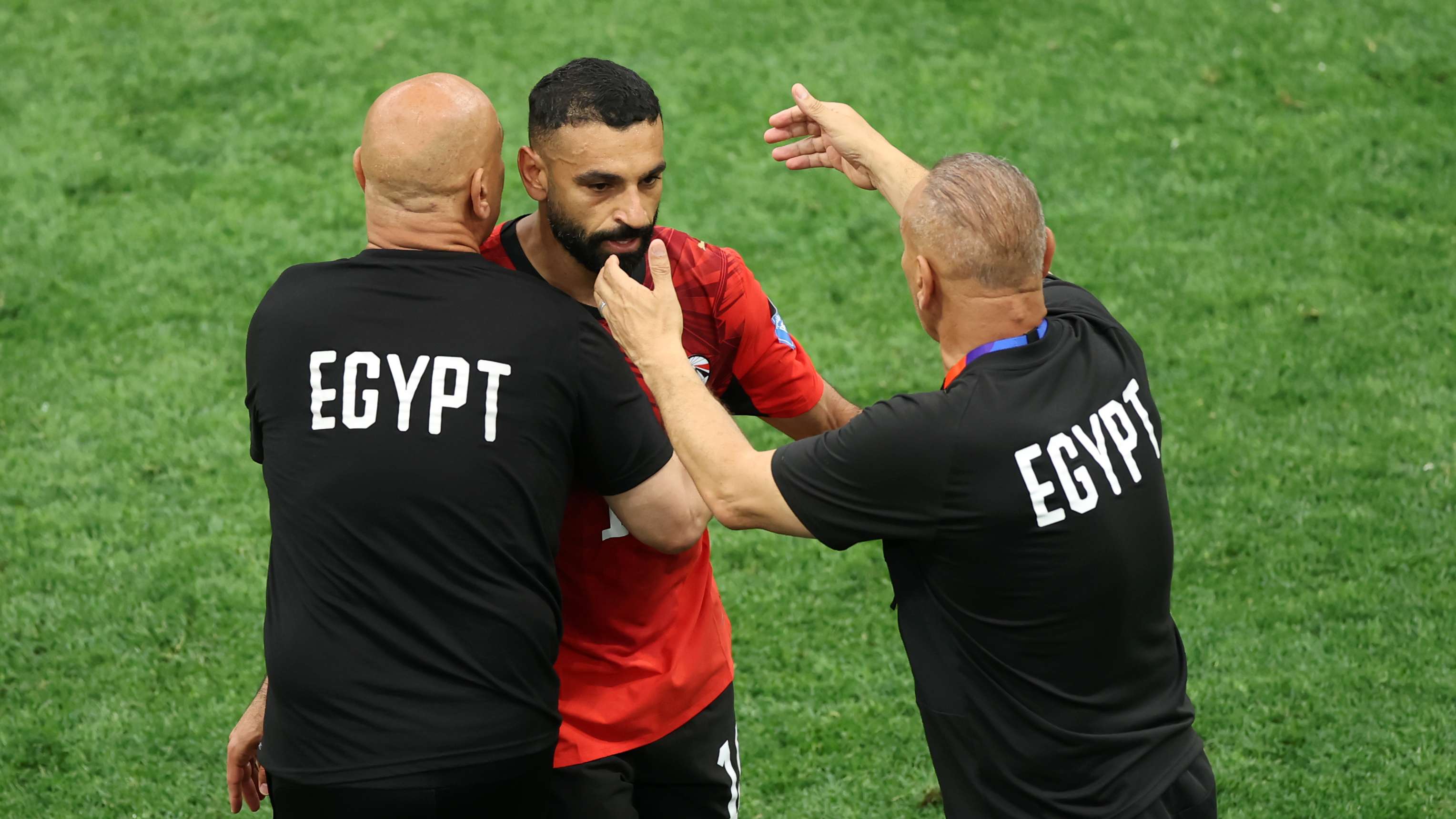
The intervention comes after Salah left the national-team camp following Egypt’s goalless draw with Angola in September 2026. The incident prompted questions about his relationship with head coach Hossam Hassan and assistant coach Ibrahim Hassan, commonly referred to as the Hassan twins. While the details of the disagreement have not been fully disclosed, the timing has placed the issue under close scrutiny.
Substitution sparked questions after Angola draw
The tension became a talking point after Hossam Hassan substituted Salah in the 60th minute of the match against Angola, which formed part of qualifying for the 2027 Africa Cup of Nations. After the game, the coach said the decision was tactical and stated that Salah was not carrying an injury.
Substitutions are a routine part of football, but a decision involving a team captain and one of the country’s most prominent players can attract particular attention—especially when it happens in a closely watched qualifying match. Salah’s departure from camp soon afterwards added to speculation about whether the change had contributed to a broader dispute.
Abdel Basset reported that Abu Rida wants to “dissolve the disputes” linked to the previous camp, bring the parties’ views closer and create the conditions for Salah to join the next gathering. The association has not, in the information provided, announced a formal outcome from the planned meeting. For now, the reported visit signals an effort to address the matter directly rather than allow uncertainty to grow.
Why keeping Salah in the plans matters
Salah remains a central figure for Egypt, both as captain and as an experienced attacking player. His role in the squad extends beyond his contribution in front of goal: he also brings leadership, international experience and a high profile that can lift attention around the team. Any prolonged absence would therefore be significant as Egypt pursue qualification.
At the same time, resolving the situation is about more than securing one player’s availability. A national team needs clear communication between its senior players and coaching staff, particularly during a demanding qualifying schedule. A public or lingering disagreement can distract from preparation, while a calm resolution would allow the squad to focus on performance and results.
The reported meeting could offer an opportunity for both sides to clarify expectations and move forward. If Salah returns for the next camp, the priority will be to ensure that the discussion remains constructive and that the team’s preparations are not overshadowed by the earlier incident. Whether the episode has a lasting effect will depend on what happens in the coming weeks, not simply on the fact that officials have stepped in.
Egypt face Malawi in back-to-back qualifiers
The Pharaohs’ next challenge is a pair of matches against Malawi in the third and fourth rounds of 2027 AFCON qualifying. Egypt’s camp is scheduled to begin on 9 November at the national teams’ centre. The first fixture is set for 13 November at Cairo International Stadium, before the teams meet again on 17 November at Bingu International Stadium in Malawi.
Two matches against the same opponent in quick succession can shape the direction of a qualifying group. Egypt will have home advantage in the first encounter, but the return fixture will require the team to adapt to an away environment and manage the demands of a compressed schedule. Careful preparation, squad availability and consistency across both games could prove decisive.
Egypt are in Group Two alongside Angola, South Sudan and Malawi. The Pharaohs have four points and lead the standings on goal difference over Angola, who also have four. Malawi sit third with three points, while South Sudan are bottom without a point.
Early results leave little room for complacency
Egypt began their qualifying campaign with a 0–0 draw against Angola in Cairo, then responded with a 5–0 away victory over South Sudan. Those results have given the team a solid start, but the group remains closely contested. Malawi’s three points mean they are within reach of the leaders, making the upcoming double-header especially important.
The opening draw also underlines why Egypt will want to turn promising performances into reliable results. A convincing win over South Sudan showed the team’s attacking potential, while the Angola match demonstrated that qualification can hinge on fine margins. Against Malawi, Egypt will need to balance ambition with discipline and avoid letting off-field distractions affect their concentration.
There is no confirmed prediction for how the Salah situation will be resolved, and the outcome of the meeting in Turkey remains to be seen. However, the Egyptian FA’s reported effort to bring the captain and coaching staff together points to a clear immediate objective: restore calm before the November camp begins. For Egypt, a settled squad could be just as valuable as any tactical adjustment as the Pharaohs look to strengthen their position in the race for the 2027 Africa Cup of Nations.