
FIFA Leadership Crisis: Inside the Turmoil Shaking the World of Football
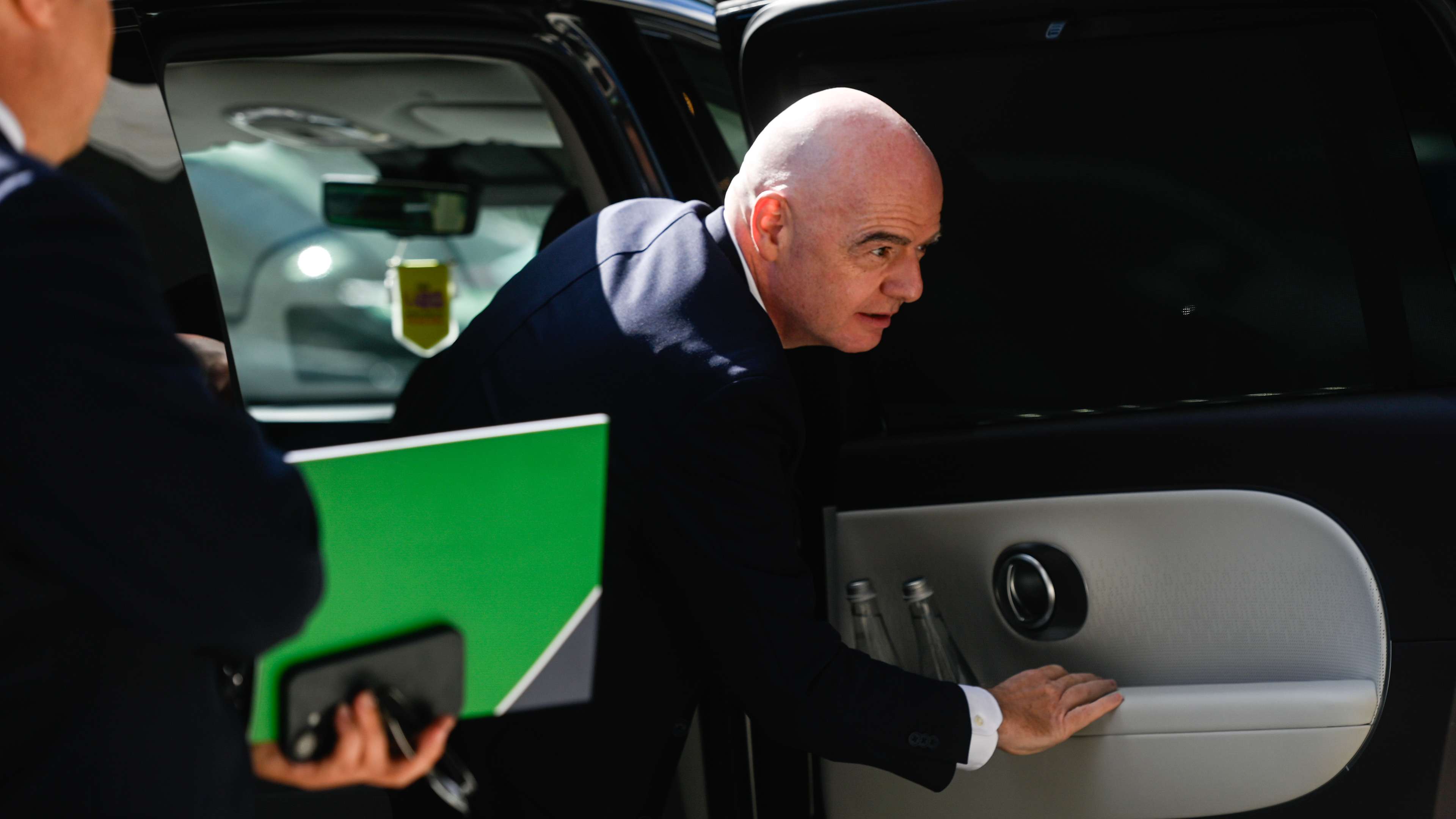
The world of football is currently embroiled in a tumultuous upheaval that threatens to reshape the leadership and governance of the sport globally. Less than a day after FIFA President Gianni Infantino issued a seemingly conciliatory message aimed at reform, the response from within his own ranks has been anything but cooperative. This development has sent shockwaves through the football community, raising questions about the future direction of the sport and the integrity of its governing body.
Internal Dissent Erupts: Germany’s Bernd Neuendorf Launches Sharp Criticism
In an extraordinary turn of events, Bernd Neuendorf, president of the German Football Association (DFB) and a prominent member of the FIFA Council, publicly dismissed Infantino’s efforts as nothing more than a political ploy aimed at securing his re-election. Neuendorf’s blunt critique marked a significant escalation in the ongoing crisis, highlighting divisions within FIFA’s leadership that threaten to undermine the credibility of its top officials.
Neuendorf described Infantino’s recent initiatives as “blatant electoral tactics,” asserting that the Swiss FIFA president has completely lost the trust of many confederations and national associations. His remarks underscore a growing skepticism about Infantino’s leadership, particularly amid mounting allegations of mismanagement and controversial decisions surrounding the governance of the sport.
The Context: A Volatile Climate in Global Football Governance
To understand the depth of this upheaval, it’s essential to grasp the broader context. Earlier this week, Infantino sent a comprehensive message to all 211 member associations, proposing a series of reforms to address the ongoing crisis that has engulfed FIFA in recent years. His letter outlined plans to conduct an independent review of FIFA’s decision-making processes, emphasizing transparency and inclusivity.
In his message, Infantino emphasized that the consultation process would involve extensive discussions with continental confederations, national associations, and other stakeholders. His aim was to foster a more democratic and accountable governance structure—an effort to reassure critics and restore confidence.
Additionally, Infantino assured stakeholders that their positions on governance matters would not influence FIFA’s support for their development and solidarity programs. This reassurance was part of his broader strategy to project stability and unity amid mounting criticism.
The Road to Reforms: Controversies and Opposition
However, these efforts to reform FIFA are not happening in a vacuum. The backdrop to this internal crisis is Infantino’s controversial proposal to sell a 20% stake in FIFA’s commercial rights, including lucrative World Cup broadcasting and sponsorship deals, to private investors. Announced with much fanfare, the plan was met with fierce opposition from major confederations and national associations.
Opponents argued that the proposal lacked transparency and sidelined key stakeholders. The plan faced immediate backlash, with UEFA, the Asian Football Confederation, and CONCACAF threatening to boycott if the initiative proceeded. After intense pressure, Infantino was forced to abandon the idea last July, but the damage to his credibility had already been done.
This episode underscored a broader demand for urgent leadership change within FIFA. Critics accused Infantino of acting unilaterally—without consulting confederations—and called for a thorough overhaul of the organization’s governance structures.
Neuendorf’s Bold Attack: Questioning Infantino’s Credibility
The most striking development came from Neuendorf, who directly challenged Infantino’s authority and motives. Speaking to Reuters, Neuendorf accused the FIFA president of using reform proposals as a strategic move for personal political gain. “I regard Gianni Infantino’s message as a blatant ploy to ensure his re-election next year,” Neuendorf stated. “It seems FIFA has now recognized, in principle, the necessity of making changes, but the real question is whether meaningful reform will follow.”
Neuendorf’s critique extended further, asserting that Infantino’s credibility has been irreparably damaged. “Gianni Infantino is not the right person to lead the reform process, as he has completely lost the trust of many stakeholders,” he added. This statement underscores the deep divisions within FIFA’s leadership and the challenges facing any efforts to implement genuine change.
Implications for the Upcoming FIFA Election
Looking ahead, Infantino faces a critical re-election vote scheduled for March. While he remains a formidable candidate—many sources suggest he still commands enough votes to secure another term—his opponents are strategizing to limit his powers or challenge his leadership directly.
Some insiders believe that instead of attempting to unseat Infantino outright, rival factions are now focusing on curbing his influence within FIFA’s decision-making processes. This shift reflects a recognition that a direct confrontation may be less feasible than negotiating reforms that limit his authority, thereby reshaping the organization’s power dynamics.
Football Prediction and the Future of FIFA
As the leadership crisis unfolds, football fans and industry analysts are closely watching how these internal conflicts might influence the sport’s future. Will the reforms lead to a more transparent and democratic FIFA? Or will ongoing political struggles result in continued instability that could impact upcoming tournaments?
From a prediction standpoint, many experts believe that unless meaningful reforms are enacted swiftly and transparently, FIFA could face further crises that jeopardize the integrity of international competitions. The upcoming World Cup, scheduled for 2026, could serve as a pivotal moment—either as a showcase of renewed governance or a symbol of ongoing turmoil.
Additional Context: The Global Impact of FIFA’s Leadership Crisis
The fallout from this internal struggle extends beyond immediate governance concerns. Football’s global reputation hinges on FIFA’s ability to maintain integrity, fairness, and transparency. The controversy surrounding the sale of World Cup rights and the leadership disputes threaten to undermine trust not just among confederations and associations but also among fans worldwide.
Furthermore, the crisis highlights the complex interplay between sports, politics, and business. High-stakes negotiations involving commercial rights, sponsorship deals, and electoral politics are at the heart of this turmoil, making reform a challenging but essential endeavor.
Conclusion: A Pivotal Moment in Football History
The ongoing upheaval within FIFA represents a critical juncture in the history of international football. The clash between reform-minded leaders like Neuendorf and the incumbent president, Infantino, underscores the broader struggle for transparency and accountability in sports governance.
As the football world awaits the upcoming election, the key question remains: will FIFA be able to restore its credibility and lead the sport into a new era of integrity and openness? Or will internal divisions and political machinations continue to cast a shadow over the beautiful game?
For fans, analysts, and stakeholders alike, this is a defining moment—a test of leadership, vision, and the true spirit of football. The predictions are uncertain, but one thing is clear: the future of FIFA and the global game hangs in the balance.