
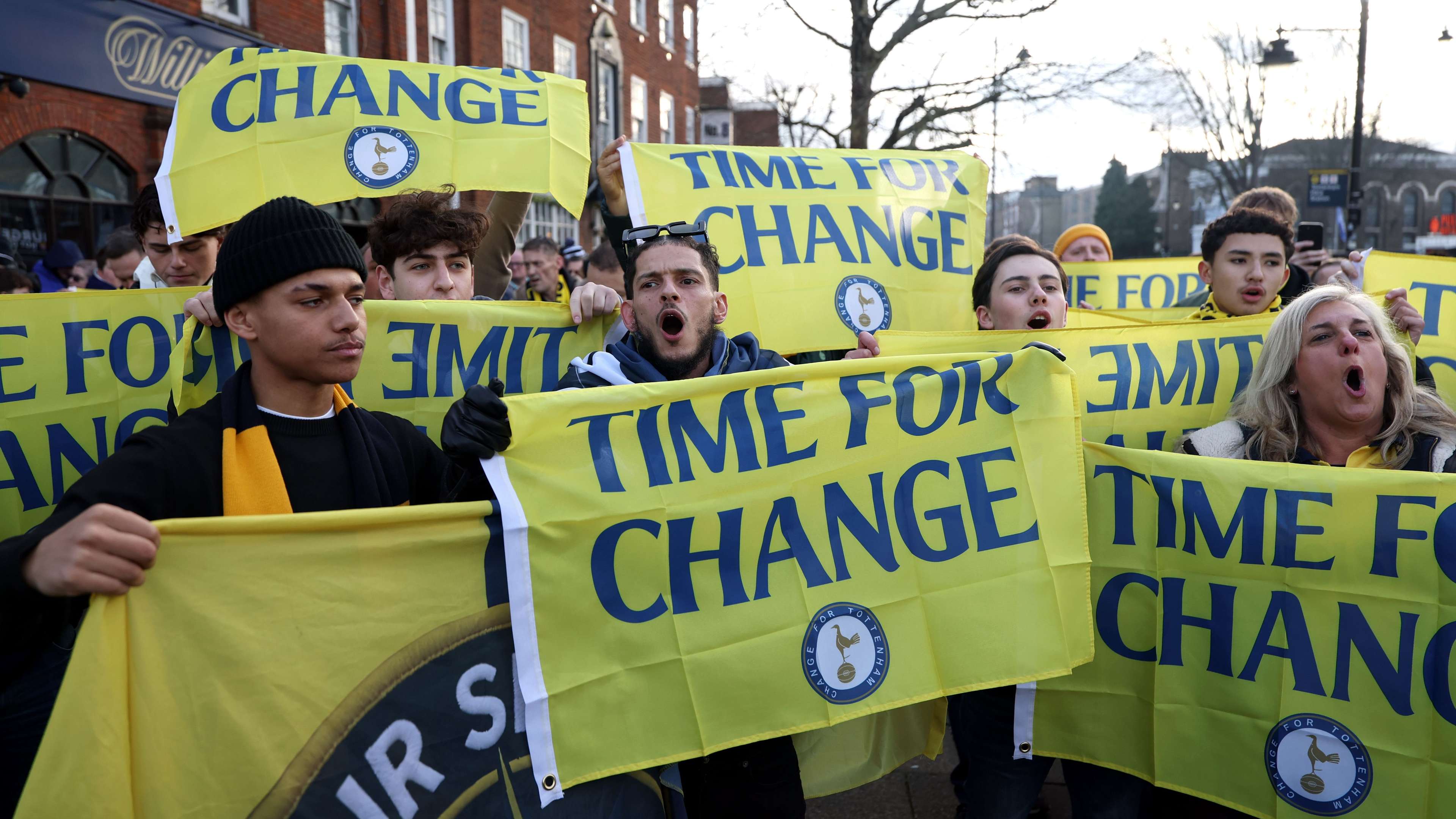

Tottenham Fans Plan Mass Walkout During Manchester City Match
Tottenham Hotspur supporters are gearing up for a major protest during Sunday’s Premier League showdown against Manchester City. The campaign group ‘Change for Tottenham’ is calling on fans to stage a mass walkout in the 75th minute of the match to voice their dissatisfaction with the club’s board.
Protests Against the Board Intensify
The unrest among Tottenham fans has been brewing for some time, with many supporters unhappy with the club’s direction, ticket prices, and transfer strategy. ‘Change for Tottenham’ sees the mass walkout as a way to send a clear message to the hierarchy that changes need to be made.
Spokesperson for ‘Change for Tottenham’, John Smith, stated, “We believe that staging a mass walkout during a high-profile match like this will generate widespread attention and show the board that the fans are united in their frustration. It’s time for the club to listen to its supporters and make changes for the better.”
Supporters Divided Over Protest
While many Tottenham fans are in support of the planned walkout, there are others who are divided over whether it is the right approach to take. Some believe that such actions could have a negative impact on the team’s performance, while others see it as a necessary step to force the board to address fans’ concerns.
Long-time Tottenham supporter, Sarah Jones, shared her thoughts on the planned protest, saying, “I understand the frustration that many fans are feeling, but I worry that a mass walkout could disrupt the team and affect their chances in such a crucial match. However, I also believe that the board needs to take fans’ opinions into account and make changes accordingly.”
Club’s Response
As news of the planned walkout spreads, Tottenham Hotspur has yet to issue a formal statement regarding the protest. However, sources within the club have indicated that they are aware of the fans’ discontent and are open to hearing their concerns.
A representative from Tottenham, who spoke on condition of anonymity, stated, “We value our fans’ opinions and are always looking for ways to improve their experience. While we cannot control the actions of individual supporters, we are committed to engaging with them and addressing their concerns.”
Impact on the Club
The mass walkout during the match against Manchester City is expected to draw attention not only from fans but also from the media and football community at large. It remains to be seen what effect this protest will have on the club’s board and whether it will lead to any tangible changes in the future.
Overall, the planned protest highlights the passion and dedication of Tottenham supporters who are willing to take a stand for what they believe in, even if it means making a bold statement during a high-stakes match.
Historical Context of Fan Protests in Football
Fan protests and demonstrations have a long history in football, with supporters often using their collective voice to express discontent with club management, ownership, or policies. From boycotts to mass walkouts, fans have employed various methods to make their grievances known and push for change within their clubs.
Notable examples of fan protests in football include the ‘We Care Do You?’ campaign by Arsenal supporters against the club’s ownership, as well as the ‘Against Modern Football’ movement that criticizes the commercialization of the sport. These protests have not only raised awareness about fan concerns but have also led to tangible changes within clubs, demonstrating the power of collective action.
Strategic Timing of the Mass Walkout
The decision to stage a mass walkout during the 75th minute of the match against Manchester City is significant for several reasons. The timing of the protest, during a high-profile game against a top opponent, ensures maximum visibility and impact. It also serves as a symbolic gesture, as the 75th minute represents a critical moment in the match where fans can make their voices heard.
By choosing to stage the protest during a key fixture, Tottenham fans are leveraging the spotlight of the media and the football community to amplify their message and pressure the club’s board to address their concerns. The strategic timing of the walkout adds a sense of urgency and importance to the protest, signaling that fans are serious about demanding change.
The Role of Social Media in Fan Activism
In today’s digital age, social media plays a pivotal role in mobilizing fans and organizing protests within football clubs. Platforms like Twitter, Facebook, and Instagram enable supporters to connect, coordinate efforts, and spread awareness about their cause. Hashtags, videos, and online petitions are often used to rally support and garner attention from a wider audience.
The ‘Change for Tottenham’ campaign has utilized social media channels to promote the mass walkout and engage with fans who share similar concerns. By harnessing the power of online activism, supporters can amplify their message, reach a larger audience, and build momentum for their cause both within the fanbase and beyond.
Potential Outcomes of the Protest
As the planned mass walkout gains traction and generates buzz within the football community, it raises questions about the potential outcomes and impact on Tottenham Hotspur as a club. While the protest may put pressure on the board to address fan concerns, its success ultimately depends on how the club responds and whether tangible changes are implemented.
If the protest leads to productive dialogue between fans and the club’s leadership, it could pave the way for improved communication, transparency, and fan engagement. However, if the board dismisses the protest or fails to address fan grievances, it may deepen the rift between supporters and the club, potentially affecting attendance, loyalty, and overall morale among fans.
The Importance of Fan Engagement in Football
Ultimately, fan engagement is crucial for the success and sustainability of football clubs. Supporters are the lifeblood of any team, providing unwavering loyalty, passion, and support through wins and losses. By listening to fan feedback, addressing concerns, and involving supporters in decision-making processes, clubs can foster a sense of community, unity, and shared ownership among fans.
As the ‘Change for Tottenham’ campaign demonstrates, fans have the power to influence change within their clubs and shape the future direction of football. Whether through protests, petitions, or other forms of activism, supporters play a vital role in holding clubs accountable, promoting transparency, and ensuring that the spirit of the game remains true to its roots.
By expanding on the historical context of fan protests in football, the strategic timing of the mass walkout, the role of social media in fan activism, potential outcomes of the protest, and the importance of fan engagement in football, this content provides readers with a deeper understanding of the impact and significance of the planned protest by Tottenham Hotspur fans.