

The Conundrum of Ball-Change Rule in IPL 2022: A Strategic Dilemma for Captains
As the IPL 2022 season unfolds, teams are grappling with the implications of two new rule changes aimed at assisting bowlers. However, these changes have presented captains with a challenging decision-making scenario that could potentially impact the outcome of matches.
The New Ball-Change Rules
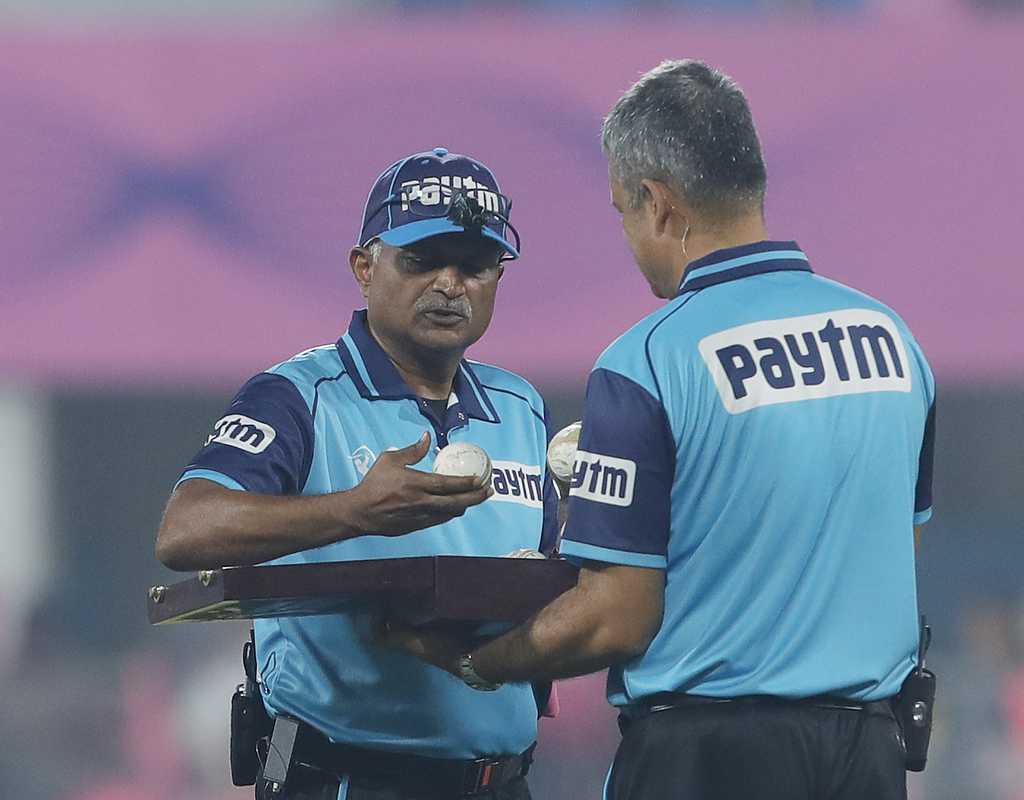
One of the rule changes permits the use of saliva to shine the ball, enabling the bowlers to achieve reverse swing. The other rule allows the fielding captain to replace the ball with one of “similar wear and tear” after the 10th over during the second innings of a night game, regardless of visible dew. This rule essentially allows teams to exchange a soft or damp ball for a harder and drier one.
While these rules were introduced to restore balance between bat and ball, they can sometimes conflict with each other in practice. Captains are faced with the dilemma of whether to stick with a ball that has been worked on all innings for reverse swing or opt for a new one that could potentially benefit the spinner in the final 10 overs of the match.
Strategic Decisions on the Field
The strategic implications of these rule changes were evident in a recent match between Punjab Kings and Gujarat Titans. Punjab’s captain, Shreyas Iyer, chose not to change the ball and stuck to the plan of bowling wide yorkers to Sherfane Rutherford. This decision paid off as Arshdeep’s input on the ball reversing slightly due to saliva proved crucial in changing the game’s momentum.
On the other hand, Royal Challengers Bangalore decided to change the ball before the 20th over in a match against Chennai Super Kings. While the game was already leaning towards a loss for RCB, this move demonstrated another way to leverage the rule change by providing the spinner with a dry, hard ball towards the end.
Impact on Player Performance
The decision on whether to change the ball can have a direct impact on individual player performance. For instance, Punjab Kings’ decision not to opt for a harder ball meant that their star spinner, Yuzvendra Chahal, could not complete his quota of overs. Chahal, who was acquired for a record-breaking sum, was expected to bolster PBKS’ spin department and address their historical struggles in that area.
As the tournament progresses, teams will need to assess the conditions and make strategic decisions based on the playing conditions and the opposition’s strengths. The ball-change rule adds a layer of complexity to the game, requiring captains to weigh the benefits of maintaining the existing ball for reverse swing against the advantages of providing spinners with a dry ball for impact in the final overs.
Looking Ahead
As the IPL season unfolds and teams adapt to the new rules, the decision-making process around ball changes will continue to evolve. Captains will need to strike a balance between exploiting the conditions to their advantage and limiting the damage caused by big-hitting batsmen like Nicholas Pooran.
Ultimately, the ability to make informed decisions around the ball-change rule could be a key factor in determining success in the tournament, especially on nights where a single over can sway the outcome of the contest.
The Psychology of Decision-Making for Captains
It is essential to delve into the psychological aspect of decision-making for captains in the context of the ball-change rule. The pressure to make the right call can weigh heavily on captains, especially in high-stakes matches where the outcome hangs in the balance. The fear of making the wrong decision and facing criticism from fans, analysts, and team management adds an extra layer of complexity to the strategic dilemma.
Moreover, the timing of the ball change can significantly impact a team’s fortunes. Captains must assess the match situation, the condition of the ball, the strengths and weaknesses of their bowlers, and the opposition’s batting lineup before deciding whether to opt for a new ball. This constant evaluation and analysis require a sharp strategic acumen and a deep understanding of the game.
The Role of Data Analysis in Decision-Making
With the increasing emphasis on data analytics in cricket, captains now have access to a wealth of statistics and insights that can inform their decision-making process regarding the ball-change rule. By analyzing historical data on ball behavior, pitch conditions, player performance, and match outcomes, captains can make more informed choices that are backed by evidence and trends.
Data analytics can help captains identify patterns and trends that may influence their decision on whether to change the ball. For example, if a particular bowler has had success with a new ball in the past, the captain may be more inclined to opt for a ball change. Conversely, if the pitch conditions favor reverse swing and spin, sticking with the current ball may be the wiser choice.
The Evolution of Tactics and Strategies
As teams continue to experiment with different tactics and strategies around the ball-change rule, we can expect to see an evolution in gameplay and approach. Captains may develop new techniques to maximize the benefits of the rule changes, such as rotating bowlers strategically, using different field placements, or varying bowling speeds to exploit the conditions effectively.
Coaches and analysts play a crucial role in guiding captains on strategic decisions related to the ball-change rule. By providing real-time data, insights, and tactical advice, the support staff can help captains navigate the complexities of the game and make optimal choices that align with the team’s overall strategy and objectives.
The Specter of Uncertainty and Adaptability
Cricket is a sport rife with uncertainty, where variables such as weather conditions, pitch behavior, player form, and match dynamics can change rapidly. Captains must possess the ability to adapt quickly to unforeseen circumstances and make split-second decisions that can tilt the game in their team’s favor. The ball-change rule introduces an additional element of unpredictability that captains must factor into their decision-making process.
Adaptability is a key trait that distinguishes great captains from good ones. The ability to read the game, assess the situation accurately, and make bold decisions under pressure can separate the best from the rest. Captains who can embrace uncertainty, think on their feet, and pivot their strategies dynamically are more likely to succeed in the fast-paced and competitive environment of the IPL.
Conclusion
In conclusion, the ball-change rule in IPL 2022 presents a strategic conundrum for captains, forcing them to make difficult decisions that can shape the outcome of matches. The interplay between tactical acumen, data analysis, psychological resilience, and adaptability will play a pivotal role in determining which teams emerge victorious in the tournament.
As the IPL season progresses, fans can expect to witness captivating battles of wits on the field as captains grapple with the complexities of the ball-change rule. The evolution of tactics, the role of data analysis, and the psychological dimensions of decision-making will continue to shape the narrative of the tournament, making each match a compelling showcase of strategic brilliance and sporting excellence.
