
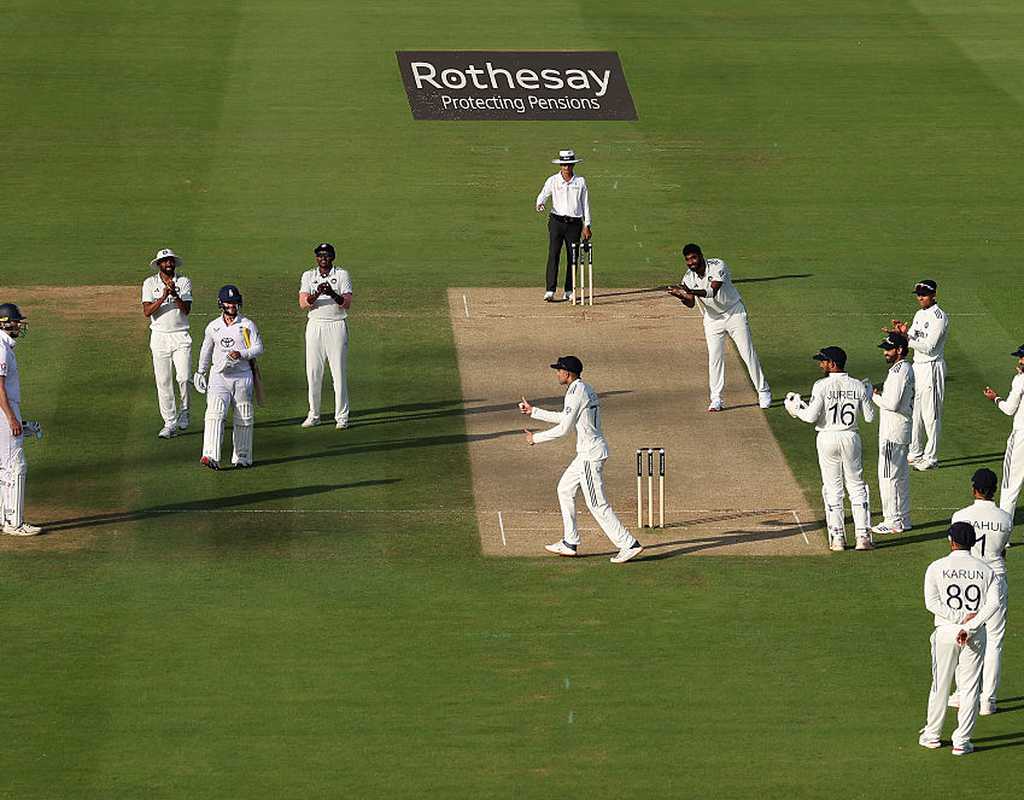

India Captain Shubman Gill Calls Out England’s Time-Wasting Tactics in Fiery Test Match
During the recent Lord’s Test between India and England, tensions ran high as the English openers arrived at the crease 90 seconds late on the final day, leading to accusations of time-wasting from India captain Shubman Gill. The incident has added a layer of tension to an already closely fought Anderson-Tendulkar series.
Clearing the Air
Gill addressed the issue ahead of the upcoming Manchester Test, stating, “The English batsmen on that day, they had seven minutes of play left. They were 90 seconds late to come to the crease. Not 10, not 20, 90 seconds late.” He clarified that his frustration was not directed at the England opener for calling for medical attention but rather at the manner in which the delay occurred.
Gill emphasized that while it is common for teams to utilize tactics to play fewer overs, there is a proper way to do so, and the delay in this instance was not in the spirit of the game. He also hinted that the tensions that boiled over on the field were a result of underlying issues that had been building up over time.
England’s Response
The intense atmosphere of the match spilled over into Day 5, with England increasing their verbal aggression. Head coach Brendon McCullum was seen encouraging players to target Washington Sundar with sledging, in response to Sundar’s confident remarks about chasing down the target. Harry Brook revealed that England aimed to create an ’11-v-2′ scenario on the field, with Captain Ben Stokes backing this approach.
Stokes clarified that while sledging wasn’t premeditated, it often arises in the heat of competition. He stated, “It is not something we are going to purposely go out and start in a game of cricket, but we are not going to take a backward step and let any opposition try to be confrontational towards us.” He acknowledged that in a high-pressure series like this, moments of heightened emotions and intensity are to be expected.
Looking Ahead
As the series moves to Manchester, the question remains whether the needle between the two teams will persist. Stokes indicated that while both teams may engage in verbal jousting, it is not a deliberate strategy but rather a response to the competitive nature of the game.
Overall, the recent confrontations between India and England have added an extra layer of drama to the series, with both teams displaying their determination to come out on top. As the rivalry continues to intensify, fans can expect more fierce battles and heated exchanges on the cricket field.
Impact of Time-Wasting Tactics on Cricket Matches
The issue of time-wasting in cricket matches has been a point of contention for many years, with teams often accused of employing tactics to slow down the game and disrupt the opposition’s momentum. While strategic delays can be a legitimate part of the game, there is a fine line between gamesmanship and unsportsmanlike conduct. The recent incident involving England’s late arrival at the crease has reignited the debate over the ethics of time management in cricket.
Cricket is a sport known for its strategic intricacies and mental battles as much as its physical prowess. Time-wasting tactics can disrupt the rhythm of the bowling team, break concentration, and create unnecessary tension on the field. It also has the potential to alter the outcome of a match by affecting the overall flow of play. As seen in the case of the India-England Test match, even a minor delay can escalate into a heated confrontation and impact the dynamics of the game.
The Psychology of Verbal Aggression in Cricket
Verbal aggression, commonly known as sledging, is another aspect of cricket that often surfaces during intense matches. Players engage in verbal exchanges to unsettle their opponents, provoke reactions, or gain a psychological edge. While some may view it as a form of gamesmanship, others see it as unsportsmanlike behavior that detracts from the spirit of the game.
In high-stakes encounters like the Anderson-Tendulkar series, emotions run high, and players are under immense pressure to perform. Verbal jousting can be a manifestation of this pressure, with players seeking to assert dominance, intimidate the opposition, or simply vent their frustrations. However, the line between friendly banter and offensive remarks is often blurred, leading to controversial moments on the field.
Fostering a Competitive yet Respectful Environment in Cricket
As cricket continues to evolve, there is a growing emphasis on promoting a culture of respect and sportsmanship on and off the field. While competition is an inherent part of the game, it is essential to uphold the values of fair play, integrity, and mutual respect among players, coaches, and fans. Instances of time-wasting and verbal aggression serve as reminders of the need for greater sportsmanship in cricket.
Both India and England have a rich history of cricketing rivalries, with each match contributing to the narrative of their competitive spirit. As the series progresses, it is crucial for both teams to strike a balance between competitiveness and respect, ensuring that the focus remains on the skill, strategy, and camaraderie that define the sport of cricket.
Conclusion
In conclusion, the recent incidents involving time-wasting tactics and verbal aggression in the India-England Test series have added a layer of drama to the competition. While tensions may flare on the field, it is essential for players and teams to uphold the values of sportsmanship and fair play. As the series heads to Manchester, fans can expect more thrilling encounters, intense battles, and moments that showcase the true essence of cricket as a sport that combines skill, strategy, and respect.
