
AZ Suffer First Defeat of the Season as Meerdink Questions VAR Decision
AZ Alkmaar’s unbeaten start to the season ended at De Kuip, where Feyenoord claimed a 2-0 victory on Saturday evening. The result gave the home side an important win, but much of the post-match discussion centred on a contentious penalty decision involving AZ striker Mexx Meerdink.
Meerdink believed Feyenoord goalkeeper Tjark Ernst had brought him down shortly before half-time. Referee Danny Makkelie initially pointed to the spot, only to overturn his decision after being sent to the pitchside monitor by the video assistant referee. The call became one of the defining talking points of a match in which AZ struggled to create clear attacking opportunities.
Meerdink believes contact warranted a penalty
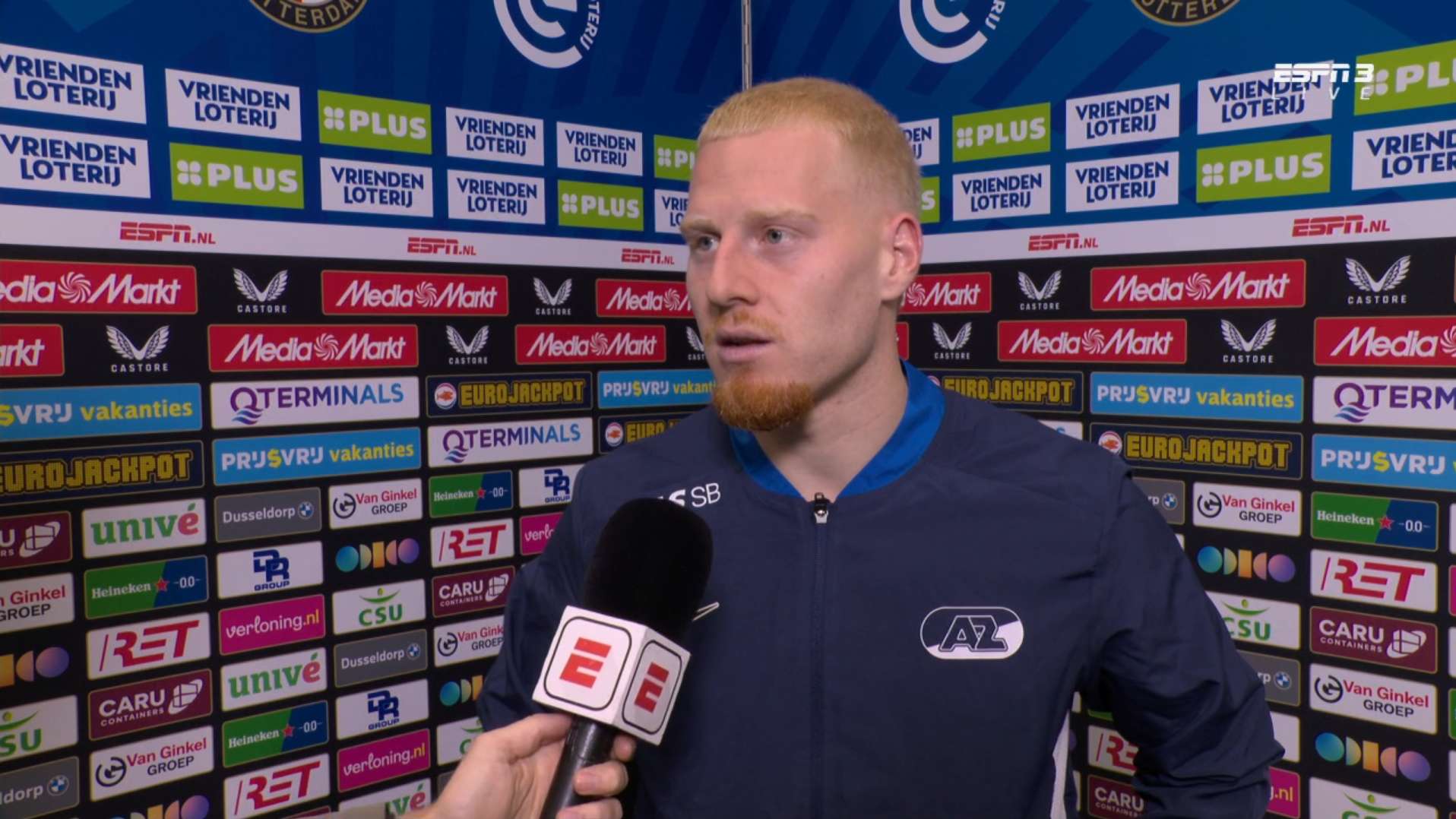
Speaking to ESPN after the final whistle, Meerdink said he felt contact from Ernst and remained convinced that AZ should have been awarded a spot-kick.
“I feel contact. I don’t know what footage he has seen, but I think this is simply a penalty,” the striker said. “He just puts it on my foot. If you see the image from behind, you can clearly see that he touches me.”
The incident unfolded as AZ looked for a chance to equalise before the break. Makkelie first judged that the contact was enough to award a penalty, but after reviewing the replay, he changed his mind. Under VAR protocol, the referee can reconsider a decision when the footage suggests a clear and obvious error. In this case, Makkelie concluded that the challenge did not merit a penalty.
Meerdink also questioned whether the same contact would have been penalised elsewhere on the pitch. “If this happens in midfield, for example, he does blow for it,” he said. “And he did blow for it, went to the screen and stood there for quite a long time as well. But it’s a shame.”
Frustration spills over after the review
The reversal clearly frustrated the young forward. Feyenoord midfielder Gjivai Zechiël stepped in to calm him down, urging him not to let the decision take over his emotions. Meerdink acknowledged the gesture, even as he maintained that the goalkeeper had made contact.
“He said: ‘Calm down, nothing’s going on,’” Meerdink explained. “I understand why he says that. But I think the goalkeeper was a bit startled as well.”
Such exchanges are familiar in high-pressure football, particularly when a decision is changed after a VAR review. For the attacking team, the initial award can create an expectation that a penalty is coming. When the referee then reverses course, players may be left frustrated by both the outcome and the uncertainty surrounding how the incident was interpreted.
Whether the decision was correct will remain open to debate among supporters. Penalty calls often depend on details such as the timing of the contact, the goalkeeper’s movement and whether the attacker’s progress was genuinely impeded. Different camera angles can also shape how viewers interpret the same moment, which helps explain why close VAR decisions continue to prompt discussion long after a match ends.
AZ’s attack finds chances hard to come by
The disputed call was not the only challenge for AZ. Meerdink said he had limited involvement in the game and did not receive many opportunities to influence the attack. Feyenoord’s defenders, including Jerry St. Juste and Mika Mármol, made life difficult for him by limiting space and disrupting AZ’s forward play.
“Today I didn’t get many balls and I wasn’t involved in the play very much,” Meerdink said. When reporter Wouter Bouwman noted the quality of his direct opponents, the striker responded with a laugh: “Yes, they were good today. But it’s up to me to learn to reach that level in every match.”
His response reflected a willingness to look beyond the penalty controversy and assess his own performance. For a striker, limited service can make it difficult to affect a match, but movement, hold-up play and the ability to create space can still offer ways to contribute. Meerdink’s comments suggest he understands that developing consistency will be important as AZ face stronger opponents across domestic and European competition.
What the result means for AZ
The 2-0 defeat marked AZ’s first loss of the season and offered a reminder of how challenging a visit to Feyenoord can be. De Kuip is among the Netherlands’ most demanding venues, where the home crowd and Feyenoord’s intensity can put visiting teams under sustained pressure. AZ will need to review both their defensive work and their ability to build attacks if they are to respond quickly.
For supporters looking ahead, the next fixtures bring further tests, including European commitments. Those matches will demand careful squad management and sharper execution in the final third. AZ’s response will be more revealing than the defeat itself: a strong performance in the following games could show that the loss was a setback rather than the start of a difficult run.
From a football prediction perspective, the Feyenoord result should be treated as one piece of evidence rather than a complete measure of AZ’s form. Their early-season performances, availability of key players and attacking output in upcoming matches will all matter when assessing their prospects. The team’s ability to create clearer chances for Meerdink and other forwards may be particularly important.
A controversial moment in a match Feyenoord controlled
Meerdink’s penalty appeal will likely remain the headline for AZ fans, but Feyenoord’s 2-0 win was also shaped by the hosts’ ability to control key periods and restrict the visitors’ attacking threat. For AZ, the task now is to move on, learn from the defeat and turn frustration into a better performance in the matches ahead.
The striker may continue to believe the contact deserved a penalty, while the referee’s VAR review produced a different verdict. Either way, the episode underlined how a single decision can dominate the conversation after a closely watched match—and how quickly teams must refocus when the call does not go their way.