
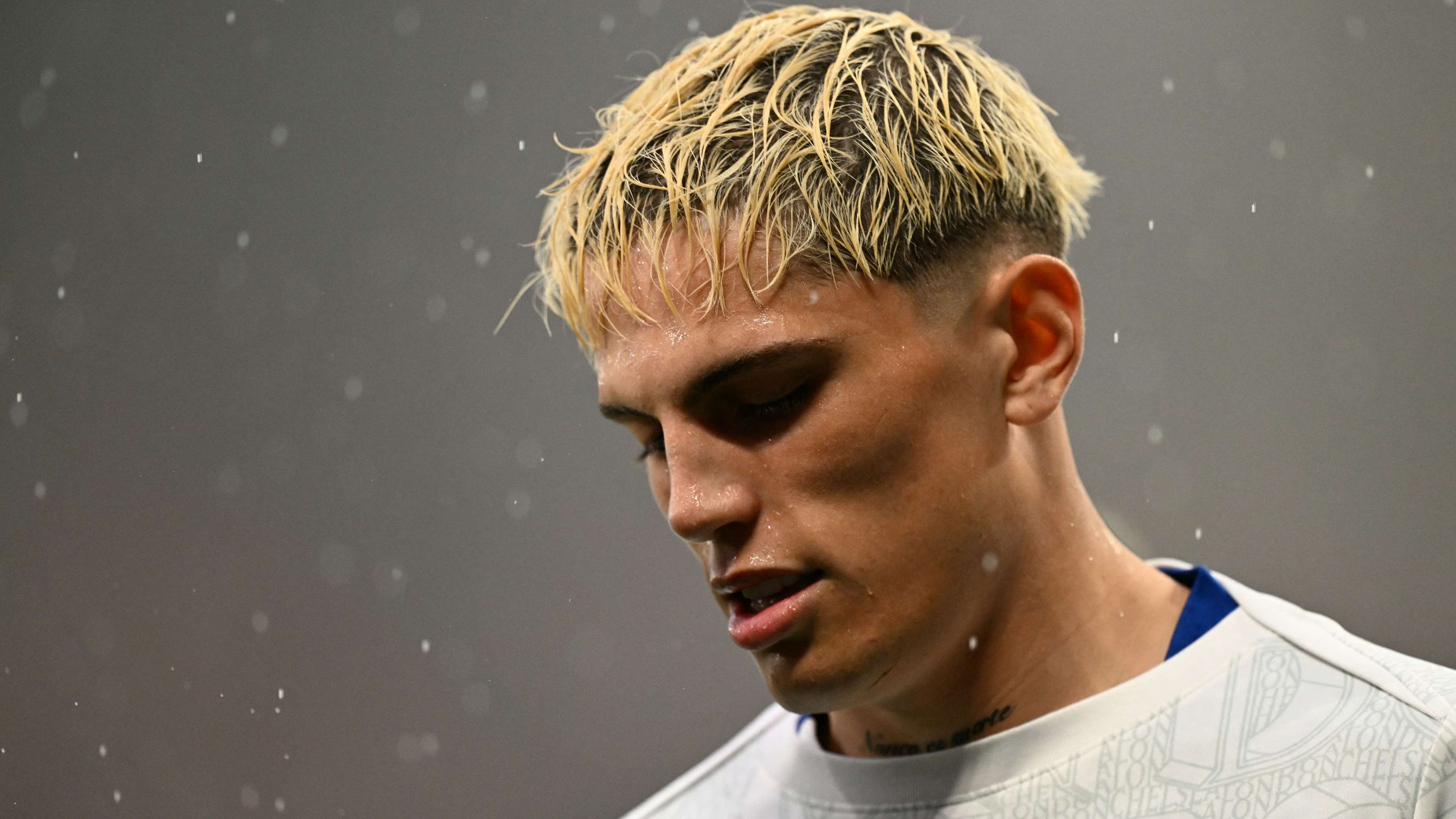

Chelsea Coach Enzo Maresca Addresses Decision to Bench Alejandro Garnacho
Chelsea head coach Enzo Maresca has recently spoken out regarding his decision to leave winger Alejandro Garnacho on the bench during their match against Manchester United. The Argentina international was met with a chorus of boos from the United fans as he prepared to face his former club, leading to speculation that Maresca avoided bringing him on due to the hostile reception.
Clarifying the Decision
However, Maresca has dismissed these suggestions, stating that his choice to bring on Tyrique George and Malo Gusto instead of Garnacho was purely tactical. In a post-match interview, Maresca explained that he believed George and Gusto’s playing styles would better suit the team’s needs at that particular moment in the game.
“I have a lot of respect for Alejandro Garnacho and his abilities as a player. The decision to bring on George and Gusto was based on what I felt would give us the best chance of securing a positive result against Manchester United,” Maresca said.
Supporting Garnacho
Despite the boos directed at Garnacho from the United supporters, Maresca made it clear that he has full confidence in the winger’s abilities and sees him as an important part of the Chelsea squad moving forward. He emphasized that Garnacho’s omission from the match was not a reflection of his performance or the reception he received from the opposing fans.
“Alejandro Garnacho is a talented player who has a bright future ahead of him. He will have plenty of opportunities to showcase his skills on the pitch, and I have no doubt that he will continue to contribute positively to our team,” Maresca added.
Looking Ahead
As Chelsea prepares for their upcoming matches, including important fixtures in both domestic and European competitions, Maresca’s handling of the squad and rotation of players will be closely monitored by fans and pundits alike. The coach’s decision-making process, especially in high-pressure situations like the match against Manchester United, will continue to be scrutinized as the team aims for success on multiple fronts.
With Garnacho eager to prove himself and make a positive impact for Chelsea, supporters will be eagerly awaiting his next opportunity to shine on the pitch. Maresca’s trust in the young winger’s abilities suggests that he will have a significant role to play in the team’s pursuit of silverware this season.
Overall, Maresca’s decision to bench Garnacho against Manchester United appears to have been a tactical choice rather than a response to the player’s reception by the opposing fans. As the season progresses, it will be interesting to see how Garnacho’s role in the team evolves and how Maresca continues to manage his talented squad to achieve their goals.
Strategic Considerations in Football Management
When it comes to football management, decisions regarding player selection and substitution are often influenced by a myriad of factors beyond just individual talent. Coaches like Enzo Maresca are constantly analyzing the tactical requirements of a game, opponent strengths and weaknesses, and team dynamics to make informed choices that they believe will give their team the best chance of success.
In the case of Alejandro Garnacho, Maresca’s decision to bench him against Manchester United highlights the strategic nature of football management. While fans and pundits may focus on individual players and their performances, coaches must consider the bigger picture and make decisions that align with the team’s overall objectives.
The Mental Aspect of Player Management
Another crucial aspect of managing a football team is understanding the mental and emotional state of players. The boos directed at Garnacho by Manchester United fans could have potentially impacted his confidence and focus if he had been brought on during a crucial stage of the match. Maresca’s decision to shield the young winger from such a hostile environment speaks to his awareness of the psychological aspects of player management.
By supporting Garnacho publicly and emphasizing his value to the team, Maresca not only boosts the player’s morale but also sends a message to the rest of the squad about the importance of unity and solidarity within the team. This kind of leadership and man-management can have a significant impact on team dynamics and cohesion, ultimately contributing to on-field performance.
The Evolution of Player Roles
In modern football, player roles and positions are constantly evolving, with versatility and adaptability becoming increasingly important qualities for players to possess. Maresca’s decision to opt for George and Gusto over Garnacho may have been driven by a desire to introduce different skill sets and playing styles to the team in response to the specific demands of the game.
As the game continues to evolve tactically, coaches are faced with the challenge of finding the right balance between traditional positions and formations and innovative approaches that can give their team a competitive edge. By being open to experimentation and adaptation, coaches like Maresca can keep their teams dynamic and unpredictable, making them harder to counter for opponents.
Conclusion
Enzo Maresca’s decision to bench Alejandro Garnacho against Manchester United was a calculated move based on tactical considerations and the broader context of team dynamics and strategic objectives. By clarifying his decision and showing support for Garnacho, Maresca demonstrated his ability to manage not just individual players but the team as a whole.
As the season progresses, fans can expect to see how Maresca continues to navigate the challenges of football management, making tough decisions while keeping the team motivated and focused on their goals. With Garnacho eager to prove himself and contribute to Chelsea’s success, his role in the team’s journey will be one to watch as the season unfolds.
Ultimately, the complexities of football management extend far beyond what happens on the pitch, encompassing psychological, strategic, and tactical elements that all play a role in shaping a team’s performance and success. Enzo Maresca’s handling of the Garnacho situation serves as a reminder of the many facets of coaching that go into building a winning team.
