
Intense Tensions Mount Ahead of Ireland vs Israel in the UEFA Nations League
The upcoming UEFA Nations League fixture between Ireland and Israel, scheduled for Sunday evening in Serbia, has been overshadowed by a series of controversial incidents and heated exchanges that have sparked widespread discussion across football communities worldwide. As fans and analysts gear up for what promises to be a compelling encounter on the pitch, off-field events have added a layer of complexity, raising questions about sportsmanship, racial abuse, and the broader political tensions intertwined with international football.
Background: A Match Marked by Political and Social Tensions
Last week, the two teams faced off in Hungary, with Ireland securing a commanding 3-0 victory. However, the aftermath of that match has generated more headlines than the game itself. Irish players exhibited visible signs of protest and solidarity, notably lowering their heads during the Israeli national anthem, refusing to shake hands with their opponents, and wearing black armbands as a tribute to the victims of the ongoing Gaza conflict. These gestures, while symbolic, have ignited debates about the role of politics in football and whether such actions are justified expressions of moral stance or disruptive to the sport’s neutrality.
Adding fuel to the fire, the Football Association of Ireland announced an investigation into reports of racist abuse directed at Irish striker Adam Idah. According to sources, Israeli fans allegedly directed racial slurs at the young player, an incident that further heightened tensions and prompted calls for stringent measures against discrimination in international football. Such allegations are not uncommon in high-stakes matches, but when they involve sensitive political and cultural issues, they tend to provoke a broader societal conversation about racism, xenophobia, and the responsibilities of football organizations to combat these problems.
Controversy During the Pre-Match Press Conference
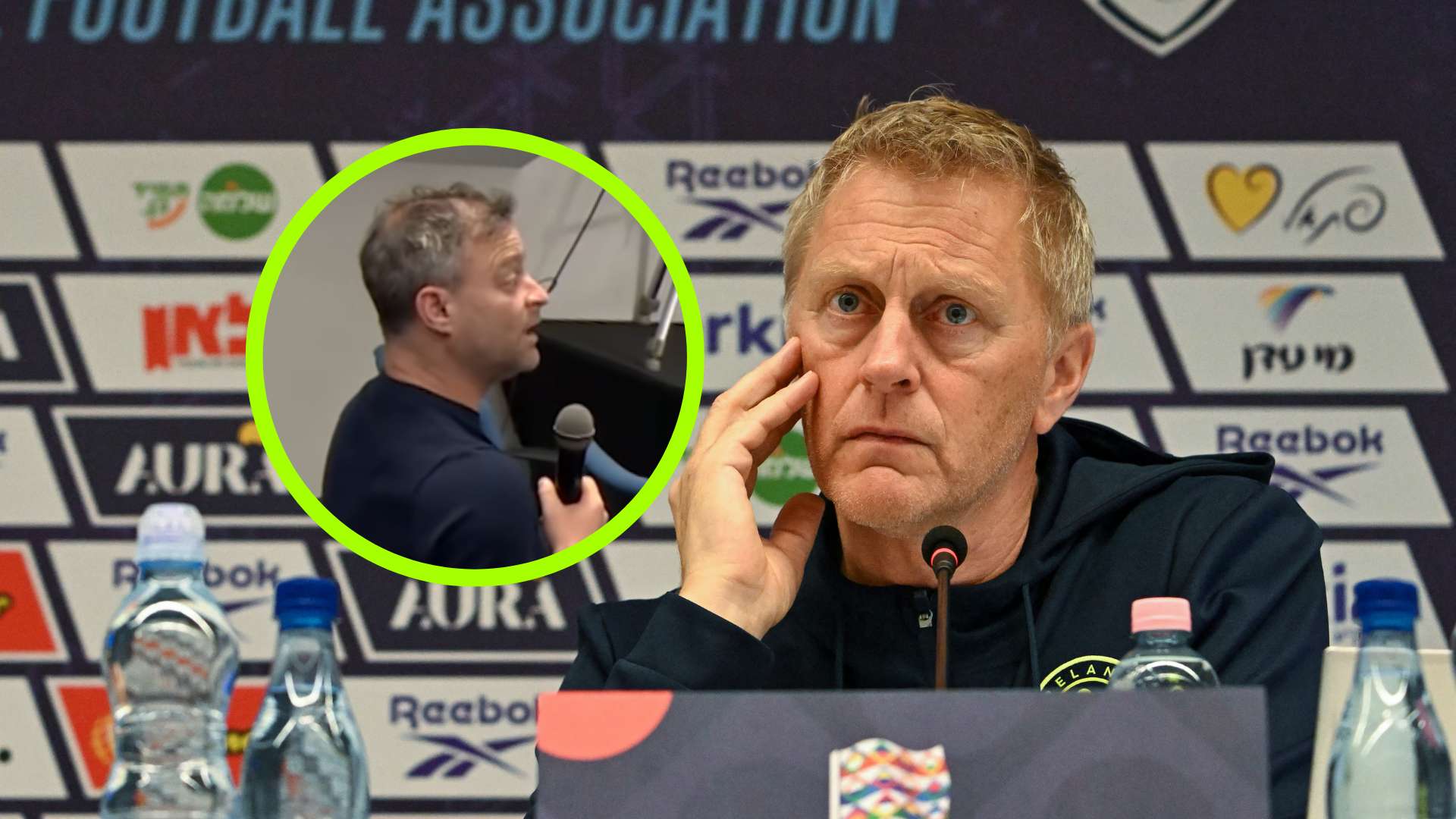
The controversy escalated on Saturday during the pre-match press conference, an event typically designed to foster sportsmanship and facilitate transparent dialogue. However, this particular press conference was abruptly interrupted by a heated exchange involving an Israeli journalist and Ireland’s coaching staff.
As the journalist posed a provocative question to Ireland’s head coach, Heimir Hallgrímsson, claiming that Irish players had called Israeli players “monkeys” during the match, the atmosphere turned tense. The Irish press officer quickly interjected, denying the allegations and attempting to end the questioning. The journalist, however, refused to relinquish the microphone, insisting that he had the right to ask questions and that the claims were truthful.
“You cannot take the microphone away from me,” the journalist declared, escalating the confrontation. “This is what they are saying. This is a press conference we were invited to, and we have the right to ask questions.”
This incident not only disrupted the official proceedings but also cast a shadow over the upcoming game, raising concerns about the potential for further conflicts and the overall atmosphere surrounding the fixture.
Implications for Football’s Role in Addressing Societal Issues
The Ireland vs Israel match in the Nations League exemplifies the complex intersection of sports, politics, and social justice. While football is often celebrated as a unifying force that transcends borders, recent events highlight its vulnerability to becoming a battleground for ideological disputes and societal tensions.
Experts and fans are now debating whether the gestures made by Irish players—such as wearing black armbands and silent protests—are effective ways to raise awareness or whether they risk politicizing the sport in ways that could alienate fans and players alike. Similarly, the allegations of racial abuse underscore the ongoing challenge of combating discrimination in football, an issue that FIFA, UEFA, and national associations continue to grapple with through education campaigns and stricter sanctions.
What to Expect in the Upcoming Match: Predictions and Key Factors
Turning to the football prediction aspect, the match promises to be a fascinating contest, both in terms of tactics and team dynamics. Ireland, having demonstrated resilience and tactical discipline in their recent victory, will aim to build upon that momentum. Their defensive organization and quick counter-attacks could pose problems for Israel, who have shown flashes of skill but struggle with consistency.
Israel, on the other hand, will likely come into the game determined to redeem themselves and overturn the recent negative narratives. Their attacking options, led by key players with international experience, could be decisive if they capitalize on Ireland’s defensive lapses. The match’s outcome could hinge on which team better manages the psychological pressure and maintains focus amid the surrounding controversy.
Based on current form and team strengths, football prediction models suggest a tight contest, with a slight edge to Ireland due to their recent dominance and solid defensive record. However, Israel’s offensive potency means they cannot be underestimated. Fans and analysts alike are eager to see how these factors translate on the pitch and whether the game will be remembered for its footballing quality or the off-field tensions.
The Broader Impact: Football as a Platform for Change
As the world watches this highly charged fixture, it underscores the responsibility of international football organizations to foster an environment of respect and inclusion. The incidents surrounding the Ireland-Israel matchup serve as a reminder that football can be a powerful platform for raising awareness about critical societal issues, provided it is approached responsibly.
Moving forward, stakeholders—including UEFA, national federations, players, and fans—must work collaboratively to ensure that the sport remains a force for positive change. This involves rigorous anti-discrimination initiatives, open dialogues about political sensitivities, and a commitment to upholding the integrity of the game.
Conclusion: A Match That Goes Beyond Football
The upcoming UEFA Nations League clash between Ireland and Israel is more than just a football prediction; it is a reflection of broader societal currents and the ongoing struggle to balance sportsmanship with political expression. As the teams prepare to take the field in Serbia, the world will be watching not only for the outcome but also for how the game’s integrity is maintained amid the tumult.
Ultimately, this fixture could serve as a catalyst for meaningful discussions about the role of football in promoting unity, combating discrimination, and addressing political conflicts—reminding us that, at its best, football is a mirror of society and a catalyst for positive change.