
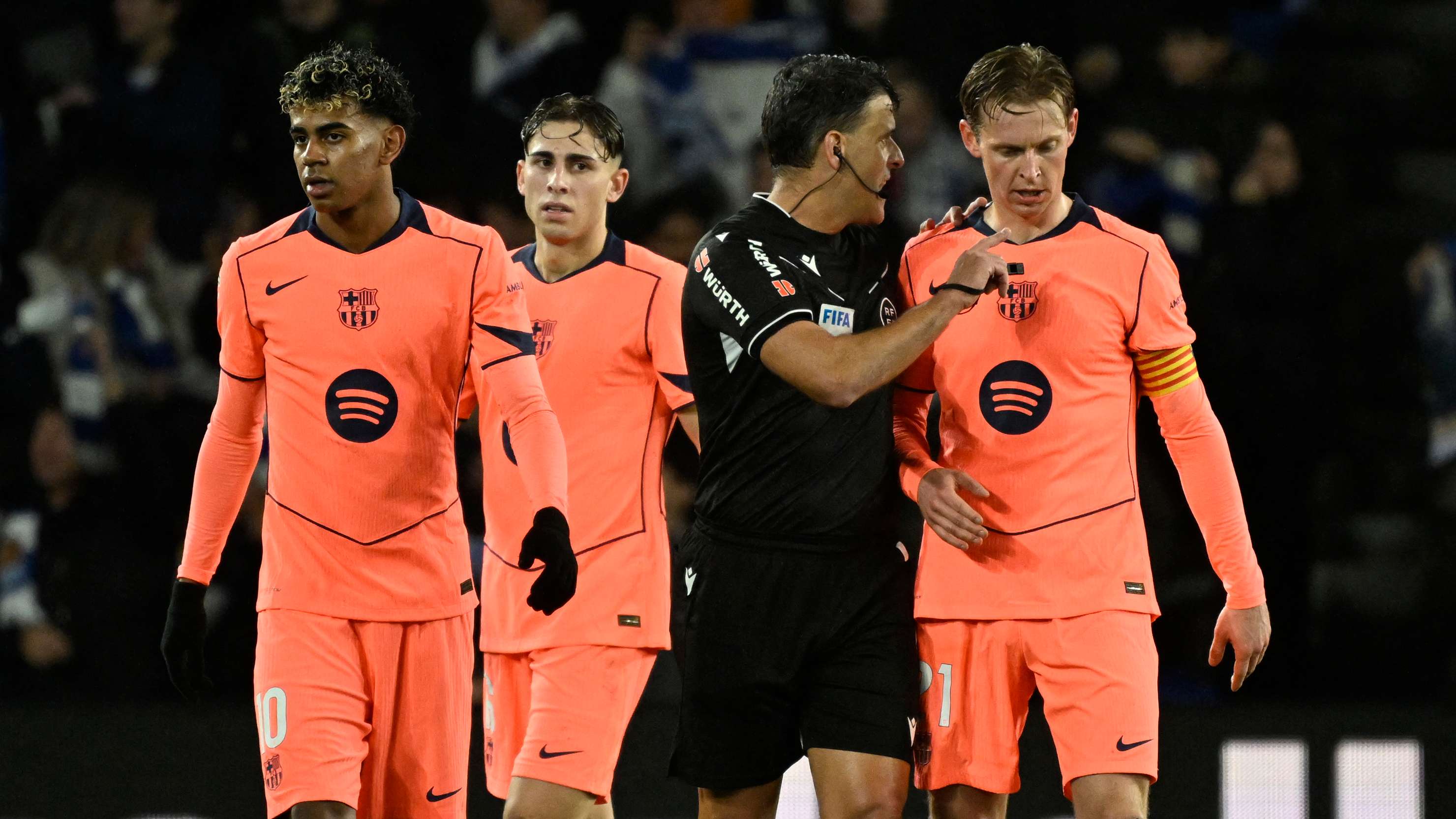

Barcelona captain Frenkie de Jong did not hold back in his criticism of referee Jesus Gil Manzano following the team’s unexpected 2-1 loss to Real Sociedad at the Reale Arena. De Jong’s frustration was palpable as he accused the official of arrogance and poor time-keeping in a match that was marred by controversy.
The Dutch midfielder was vocal in his post-match interview, expressing his disbelief at the decisions made by the referee that ultimately had a significant impact on the outcome of the game. Barcelona, who are currently at the top of the La Liga table, had three goals disallowed during the match, leaving De Jong and his teammates feeling aggrieved.
In a heated moment, De Jong described the officiating as “insane” and questioned the fairness of the calls that went against Barcelona throughout the game. His comments have since sparked a debate among fans and pundits alike, with many questioning the consistency and accuracy of the refereeing decisions in the match.
The defeat against Real Sociedad was a blow to Barcelona’s title hopes, as they were looking to maintain their lead at the top of the table. The loss also highlighted the team’s vulnerability in high-pressure situations, as they struggled to break down their opponents despite dominating possession for much of the game.
Despite the disappointment of the result, De Jong’s passionate reaction has resonated with many fans who share his frustration with the perceived injustices of the match. The controversy surrounding the referee’s decisions has reignited the debate around the role of officiating in football and the impact it can have on the outcome of a game.
Moving forward, Barcelona will need to regroup and focus on their upcoming fixtures as they aim to bounce back from this setback. The team’s ability to respond to adversity will be put to the test in the coming weeks, as they look to maintain their position at the top of the table and keep their title hopes alive.
In conclusion, De Jong’s criticism of the referee after Barcelona’s defeat to Real Sociedad has brought attention to the challenges and controversies that can arise in football. The outcome of the match has sparked discussions about the role of officiating in the sport and the impact it can have on the outcome of games. As Barcelona looks to move past this setback, all eyes will be on how they respond in the face of adversity in the remainder of the season.
Unpacking the Impact of Refereeing Decisions in Football
In the realm of football, the role of referees is often a subject of intense scrutiny and debate. The recent match between Barcelona and Real Sociedad, which saw Barcelona suffer a surprising defeat, has once again brought to light the significant influence that refereeing decisions can have on the outcome of a game.
Referees are tasked with ensuring fair play, upholding the rules of the game, and making crucial decisions that can sway the course of a match. However, as seen in the Barcelona vs. Real Sociedad game, the human element of refereeing can sometimes lead to controversy and frustration among players, coaches, and fans.
In the heat of the moment, emotions can run high, as seen in Frenkie de Jong’s passionate criticism of the referee’s decisions. Players like De Jong, who pour their heart and soul into each match, can feel the impact of seemingly unfair calls deeply, especially when those decisions directly affect the outcome of the game.
The aftermath of such matches often sees a flurry of discussions and debates regarding the consistency and accuracy of refereeing decisions. Fans and pundits alike dissect every moment, analyzing replays and scrutinizing each call, searching for clarity and understanding in the midst of chaos and controversy.
The nature of football as a high-stakes, emotionally charged sport means that the actions of referees can come under intense scrutiny. The pressure to make split-second decisions in real-time, often with limited visibility and under immense pressure, highlights the difficult task that referees face in every match.
As Barcelona looks to regroup and refocus after their loss to Real Sociedad, the team must also consider the broader implications of the role of officiating in football. While it is natural to feel frustration and disappointment in the face of perceived injustices, it is essential for players and teams to channel that energy into constructive responses and focus on the challenges ahead.
In the grand scheme of football, matches like the one between Barcelona and Real Sociedad serve as poignant reminders of the unpredictable and sometimes unforgiving nature of the sport. While referees play a crucial role in maintaining order and fairness on the field, they are also subject to human error and the inherent complexities of the game.
As the season progresses and Barcelona navigates through the highs and lows of competition, the lessons learned from challenging moments like this match will undoubtedly shape the team’s resilience and determination moving forward. In the end, it is how teams respond to adversity and setbacks that truly defines their character and resilience in the face of uncertainty.
In conclusion, the impact of refereeing decisions in football cannot be understated, as seen in the aftermath of Barcelona’s loss to Real Sociedad. While emotions may run high and frustrations may mount, it is crucial for players, teams, and fans to maintain perspective, resilience, and a focus on the future. As the season unfolds, the role of officiating will continue to be a point of contention and discussion, highlighting the complexities and challenges inherent in the beautiful game of football.