
India’s Men’s Kabaddi Team Kicks Off Asian Games 2026 with Dominant Victory Over Japan
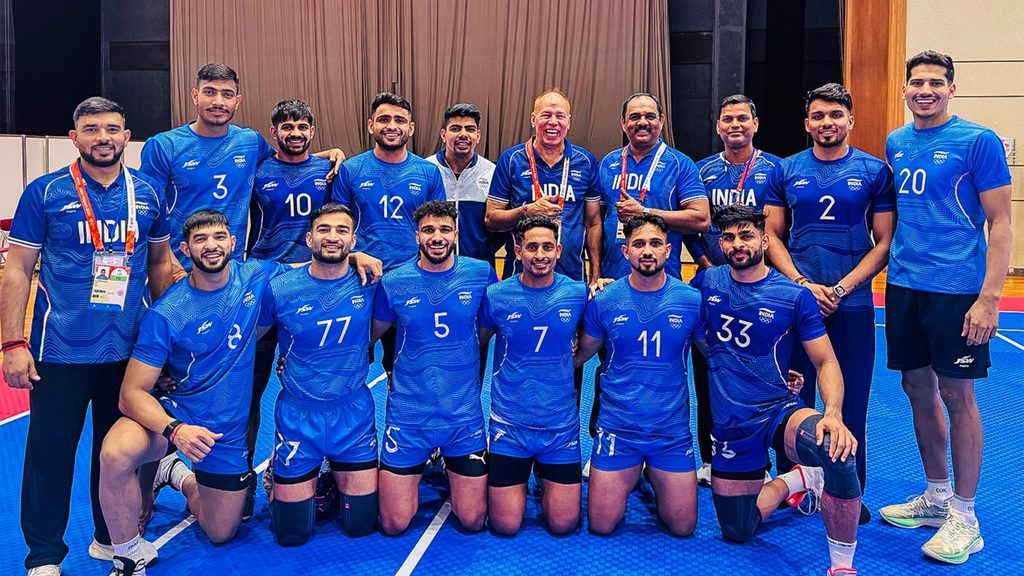
The Indian men’s kabaddi team has officially begun their quest to defend their prestigious Asian Games title with a commanding performance against the host nation, Japan. Demonstrating their prowess and tactical discipline, India secured a comprehensive 49–24 victory in their opening Group A match at the Tokai Citizens Gymnasium in Aichi-Nagoya. This match not only showcased India’s continued dominance in the sport but also set an optimistic tone for their medal ambitions in the 2026 Asian Games, where they aim to extend their remarkable record of gold medals in kabaddi.
Strong Start and Early Authority
Under the astute leadership of captain Sunil Kumar, India launched an aggressive assault right from the first whistle. The team’s strategic approach was evident, with Ashu Malik setting an electrifying tone early in the game through a spectacular three-point Super Raid. This bold move ignited the Indian offense, demonstrating their intent to dominate from the outset. Malik’s high-impact raid was supported by a stellar performance from renowned PKL (Pro Kabaddi League) stars such as Arjun Deshwal, Devank Dalal, and Ayan Lohchab, whose agility and sharp reflexes kept the Japanese defense under relentless pressure.
The Indian raiding unit’s effectiveness was further amplified by their disciplined defensive strategies. The team managed to keep Japan’s raiders in check during the first half, inflicting three All-Outs that resulted in six crucial points. Meanwhile, India’s raiders capitalized on the Japanese defense’s vulnerabilities, accumulating 24 out points before halftime. Japan struggled to sustain any offensive momentum, managing only five touch points and relying heavily on bonus points to stay afloat. The relentless pressure from the Indian defense and attack created an insurmountable 22-point lead at the break, with the scoreboard reading 31–9 in favor of India.
Japan’s Resurgence and Tactical Adjustments
Refusing to concede defeat, Japan regrouped during the second half with renewed tactical discipline and sharper execution. The Japanese team adopted a more calculated approach, focusing on quick bonus-line hunting and swift hand touches, which allowed them to chip away at India’s lead. Their improved coordination resulted in an 18–15 second-half score, significantly reducing India’s points tally to just 12 after the break. This tactical shift demonstrated Japan’s resilience and their ability to adapt, keeping the contest competitive and engaging for the spectators.
Indian Defense Holds Firm Amid Japanese Comeback
Despite Japan’s efforts to mount a comeback, India’s defensive resolve proved decisive. The Indian team executed a critical fourth All-Out, which further dampened Japan’s hopes of a late rally. Notably, the Indian defense showcased exceptional clutch performance with a Super Tackle while being numerically disadvantaged, effectively thwarting Japan’s attempts to narrow the gap. These timely interventions underscored India’s experience and mental toughness — qualities that have become synonymous with their dominant run in Asian Games kabaddi history.
Outstanding Offensive Performance and Key Highlights
India’s offensive success was primarily driven by their ability to secure points through direct dismissals, which contributed 36 out of their total 49 points. This demonstrates the team’s aggressive and skillful raiding strategies that consistently broke through Japanese defensive formations. Meanwhile, Japan’s offense relied heavily on bonus points, drawing more than a third of their score from the bonus line — a testament to their effort to compensate for the defensive gaps.
Captain Sunil Kumar’s leadership was evident throughout, as he marshaled his team’s defensive formations and orchestrated the attack with precision. The combined efforts of the star raiders and disciplined defenders set a high standard for India’s campaign, reaffirming their status as the team to beat in Asian Games kabaddi.
Context and Significance of the Victory
This victory marks a strong start for India’s men’s kabaddi team in their bid to maintain their historic streak of dominance at the Asian Games. With eight gold medals secured in the last nine editions, India has established itself as an indomitable force in the sport. Their comprehensive win over Japan not only boosts morale but also sends a clear message to other competing nations about their readiness and capacity to defend their title.
The Asian Games have always been a pivotal platform for kabaddi, a sport deeply ingrained in the cultural fabric of the Indian subcontinent. The game’s growing popularity across Asia has seen more nations investing in developing competitive teams. However, India’s consistent success underscores the depth of talent and strategic expertise that the country has cultivated over decades.
Looking Ahead: Challenges and Expectations
While the victory against Japan was impressive, the Indian team recognizes the need to maintain this level of intensity and tactical sharpness throughout the tournament. Upcoming matches against other Group A teams will test their consistency and adaptability. Moreover, as the competition intensifies, teams from Iran, South Korea, and other Asian nations are expected to pose significant challenges, pushing India to innovate and refine their gameplay further.
Experts and fans alike are optimistic about India’s prospects, given their robust squad, experienced coaching staff, and a history of clutch performances under pressure. The team’s focus will now shift to fine-tuning their strategies, ensuring injury prevention, and maintaining the high standards of discipline and teamwork that have defined their recent successes.
The Cultural Significance of Kabaddi at the Asian Games
Kabaddi holds a special place in Asian sporting culture, especially in India, where the sport’s roots trace back thousands of years. Its inclusion in the Asian Games not only promotes athletic excellence but also highlights the sport’s cultural heritage and its role as a unifying force across nations. India’s ongoing success in kabaddi continues to inspire young athletes and bolster the sport’s profile on the continental stage, contributing to its growth and popularity.
Conclusion: A Promising Start for India’s Kabaddi Team
India’s men’s kabaddi team has made a commanding statement with their opening victory at the 2026 Asian Games. Their combination of tactical brilliance, physical prowess, and mental resilience exemplifies why they are perennial favorites in this sport. As they advance through the tournament, fans and supporters will be eager to see if this team can extend their medal-winning streak and further elevate the sport’s profile in Asia and beyond.
With this strong foundation laid early in the competition, India’s kabaddi team is well-positioned to chase their ninth gold medal in Asian Games history, reaffirming their status as the undisputed champions of the sport in Asia.