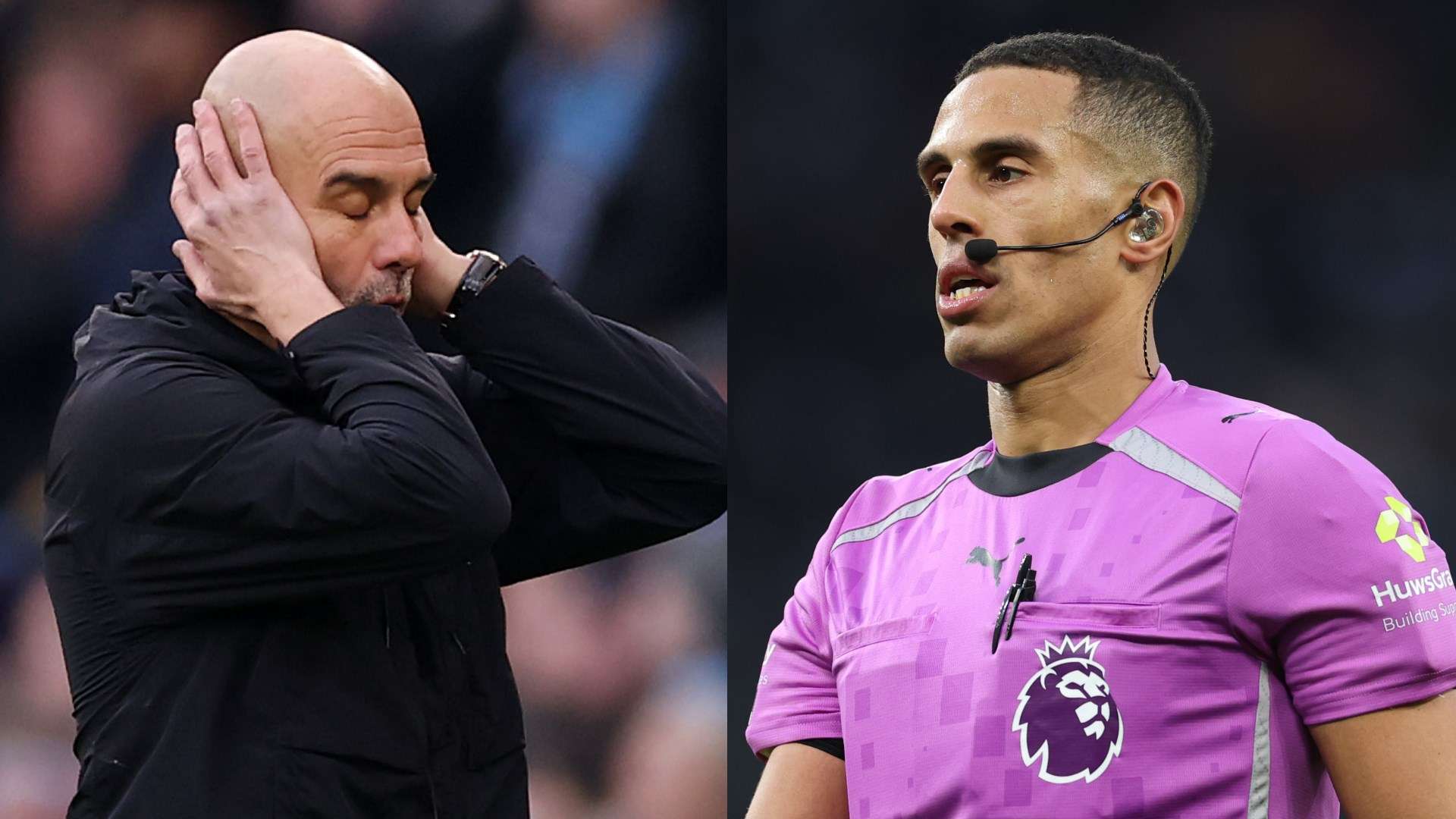

Pep Guardiola Apologizes for Remarks on Referee Decisions
Manchester City manager, Pep Guardiola, has issued an apology to Farai Hallam, the official at the center of controversy over a recent match against Wolves. Guardiola made pointed remarks towards Hallam after he chose not to award City a penalty for handball during the game, despite being prompted to review the play by VAR.
Guardiola’s Apology
In a press conference following the match, Guardiola expressed regret for his comments towards Hallam, acknowledging that emotions were running high in the heat of the moment. However, he stood by his belief that there have been numerous instances where key refereeing decisions have gone against Manchester City in recent matches.
Guardiola’s apology highlights the intense pressure and scrutiny that referees face in the world of professional football, especially with the advent of technologies like VAR that aim to improve decision-making but can still lead to contentious moments.
Controversy in Football
The incident involving Hallam and Guardiola is just one example of the ongoing controversies that often surround football matches. Refereeing decisions, particularly those related to penalties, offside calls, and fouls, can have a significant impact on the outcome of games and fuel intense debates among fans, players, and managers.
Guardiola’s frustration with the perceived injustices against his team is a common sentiment among managers in the high-stakes world of professional football. The pressure to perform at the highest level, coupled with the scrutiny of every call made by officials, can lead to tense moments on and off the pitch.
The Role of VAR
Video Assistant Referee (VAR) technology was introduced to help referees make more accurate and fair decisions during matches. While VAR has been successful in many instances, it has also been criticized for its impact on the flow of games and the subjectivity of certain calls.
The reliance on VAR has added a new layer of complexity to the already challenging job of being a football referee. The pressure to make split-second decisions in real-time, combined with the need to uphold the integrity of the game, can create difficult situations for officials like Hallam who must navigate the complexities of modern football.
Looking Ahead
As Manchester City and other teams continue their campaigns in various competitions, the spotlight on refereeing decisions and the use of VAR will only intensify. Guardiola’s apology to Hallam serves as a reminder of the emotions and tensions that run high in the world of football, where every call can have a significant impact on the outcome of a match.
Ultimately, the controversies surrounding referee decisions are an inherent part of the sport, adding an element of unpredictability and drama that keeps fans engaged and passionate about the beautiful game of football.
The Impact of Refereeing Decisions on Team Performance
Refereeing decisions in football can often be a defining factor in a team’s performance and ultimately their success in a season. The outcome of a match can hinge on a single penalty call, offside decision, or red card, leading to significant swings in momentum and results. Managers like Guardiola understand the importance of fair officiating in maintaining the integrity of the game and giving their team a level playing field.
For Manchester City, a single decision by a referee can have far-reaching consequences, impacting their position in the league standings, their chances in cup competitions, and even their financial prospects. The pressure on referees to get every call right is immense, as the implications of a missed call can be felt by players, managers, and fans alike.
The Psychological Impact on Players and Managers
Controversial referee decisions can also have a psychological impact on players and managers, affecting their confidence, motivation, and mindset going into future matches. When a team feels they have been wronged by a referee, it can lead to feelings of frustration, anger, and a sense of injustice that may linger long after the final whistle.
Managers like Guardiola must carefully manage their players’ emotions and channel their frustrations into positive energy on the pitch. The ability to bounce back from perceived injustices and focus on the task at hand is crucial for a team’s success in the face of adversity.
Fairness and Transparency in Football Officiating
As technology continues to evolve and shape the landscape of football, the need for fairness and transparency in officiating becomes even more crucial. While VAR has the potential to improve decision-making and reduce errors, its implementation must be balanced with maintaining the flow and spirit of the game.
Creating clear guidelines for the use of VAR, providing more transparency in the decision-making process, and ensuring consistency in officiating standards are essential steps towards promoting fairness and integrity in football. Referees like Hallam play a pivotal role in upholding these values and ensuring that the game is played on a level playing field for all teams.
The Fans’ Perspective
For football fans, controversies surrounding referee decisions add an element of drama and excitement to the sport. Debates over contentious calls, VAR reviews, and the impact of officiating on match outcomes are common topics of discussion among supporters, adding to the passion and intensity of the game.
While fans may have differing opinions on specific referee decisions, their unwavering support for their team and their shared experiences of triumphs and disappointments create a sense of community and belonging within the footballing world. The unpredictability of the sport, fueled in part by referee decisions, is what makes football such a captivating and beloved global phenomenon.
Conclusion
In conclusion, the apology issued by Pep Guardiola to referee Farai Hallam sheds light on the complexities and challenges faced by officials in the world of professional football. Refereeing decisions have a profound impact on teams, players, managers, and fans, shaping the narrative of each match and the overall season.
As the sport continues to evolve and adapt to new technologies like VAR, the focus on fairness, transparency, and consistency in officiating will be paramount in ensuring the integrity of football. Controversies will always be a part of the game, but it is how teams, managers, and fans respond to these challenges that truly define the spirit and resilience of football as a sport.