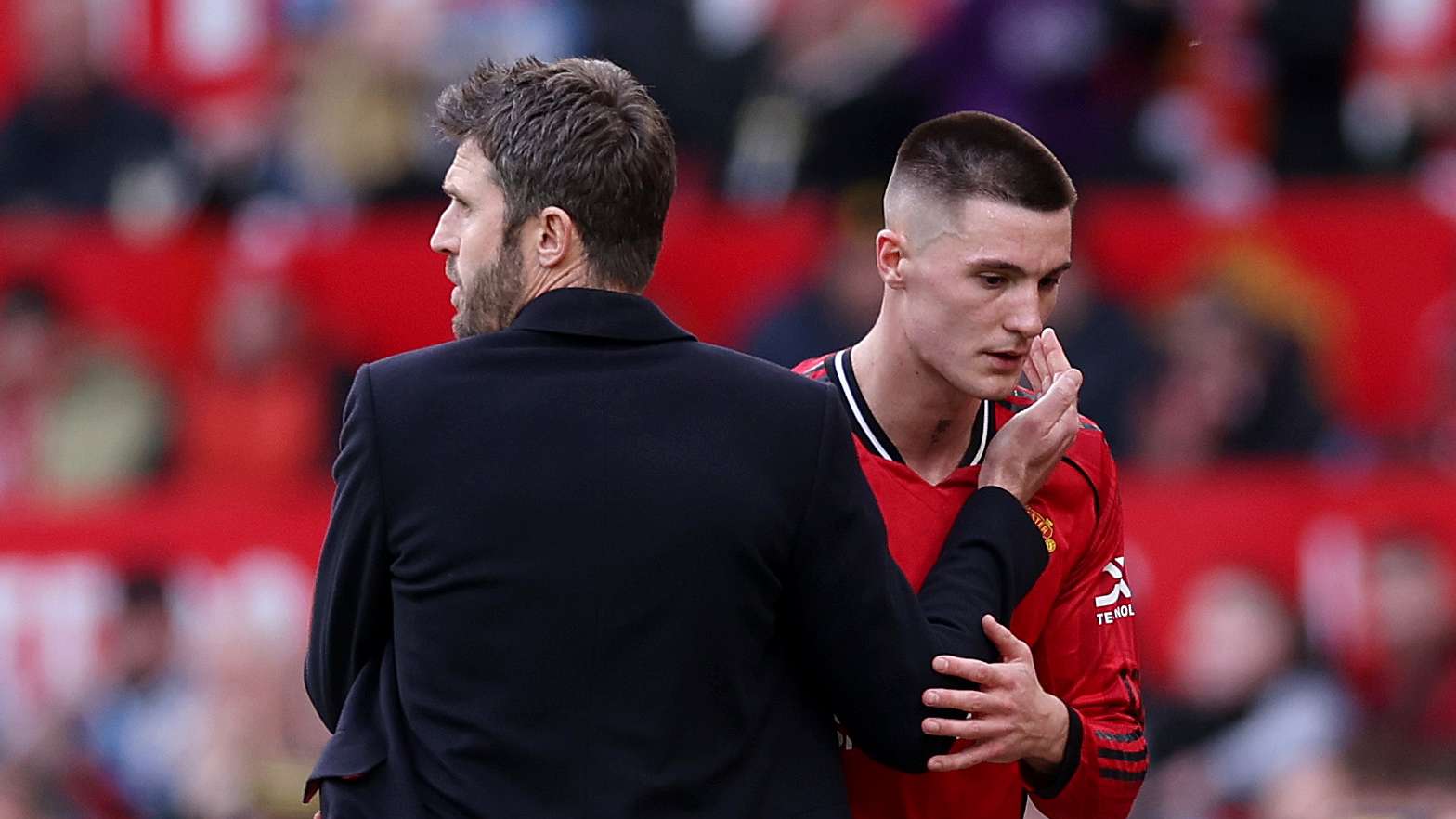

Dwight Yorke Questions Michael Carrick’s Use of Benjamin Sesko at Manchester United
Manchester United legend Dwight Yorke has raised concerns about the way manager Michael Carrick is handling striker Benjamin Sesko, arguing that the forward should be given a more prominent role when he is fit and available. Yorke is puzzled by the apparent reluctance to start the £74 million signing and believes the situation deserves closer attention as United look to strengthen their attack.
Sesko arrived at Old Trafford with considerable expectations. His physical presence, ability to threaten in behind and potential to develop into a leading centre-forward made him an eye-catching addition. Yet, as with many high-profile signings, a substantial transfer fee does not guarantee an immediate starting place. Carrick must weigh the striker’s readiness against the demands of each match, the form of other attackers and the tactical plan.
Why Yorke wants Sesko to start
Yorke’s concern centres on the difference between having a fit striker available and making full use of him. From the former United forward’s perspective, Sesko offers qualities that can give the team a different dimension: height and strength in the penalty area, the ability to contest long passes and the potential to occupy defenders. Those attributes can be especially valuable when United face compact opponents or need a direct route into the final third.
A centre-forward’s contribution is not limited to scoring. A powerful striker can create space for wide players, bring midfielders into attacks and provide a reliable target when the team is under pressure. If Sesko is left on the bench despite being ready to play, Yorke’s question is a straightforward one: what more does the player need to show before he is trusted from the start?
That argument also reflects a broader issue at United. Supporters often expect major signings to be central to the team, particularly when the club has invested heavily in a position that has demanded reinforcement. When a costly forward is used mainly as a substitute, uncertainty can grow about his role, his progress and the manager’s longer-term plans.
Carrick’s selection choices may have a tactical explanation
However, a place on the bench does not necessarily signal a lack of confidence. Carrick may be managing Sesko’s minutes, adapting to the striker’s fitness, or choosing a different profile to suit a particular opponent. A team that relies on quick combinations and pressing, for example, may favour a forward who is currently better suited to those responsibilities. Match preparation can also influence whether a target man starts or is introduced later, when tired defenders are more vulnerable.
There is a practical distinction between being medically available and being ready to complete a full match at the required intensity. A player can be cleared for selection while still building sharpness after an injury or a period without regular football. If that is a factor in Sesko’s case, a gradual return could be sensible. The challenge for Carrick is to explain the reasoning clearly enough that the player and supporters understand the plan.
Team balance matters, too. Starting Sesko may require adjustments elsewhere in the forward line, including how United press from the front and how quickly they move the ball into attacking areas. The manager must decide whether the striker’s strengths fit the overall approach, not simply whether he is one of the squad’s most expensive players. Still, those tactical considerations need to produce a clear pathway to meaningful opportunities.
What Sesko could bring to United’s attack
Sesko’s potential gives the debate added significance. A young striker benefits from regular involvement, especially in a new league where the pace, physicality and defensive organisation can differ from what he has previously experienced. Starting matches can help him build an understanding with United’s midfielders and wingers, learn their movement patterns and develop confidence in the club’s attacking system.
His presence could also give United more options in games that become difficult to control. When opponents press aggressively, a striker capable of holding up the ball can help the side move up the pitch. When defenders sit deep, an aerial threat can offer another way to create danger from crosses and set pieces. That variety can make United less predictable, provided the team supplies him with quality service.
At the same time, expectations should remain realistic. A transfer fee can shape public discussion, but it cannot dictate a player’s development timetable. Sesko may need time to adjust, improve his link-up play and establish consistency. The best route forward is likely to combine patience with genuine opportunity: carefully managed minutes are useful, but they must eventually lead to a meaningful role if the club believes in his long-term value.
Why the decision matters for United’s season
United’s selection choices at centre-forward could influence more than one player’s confidence. A settled attacking structure helps the entire team understand how to create chances, where to make runs and who should lead the press. Frequent changes can be necessary, but a clear hierarchy can also help forwards build momentum and develop reliable partnerships.
For Carrick, the issue is therefore one of both performance and communication. If Sesko is not starting, the manager will be judged on whether the alternative approach is producing results and whether the striker is still progressing. If the forward does start, he will need to respond with energetic performances, intelligent movement and consistent involvement—not just goals.
Yorke’s comments capture a familiar tension in modern football: supporters and former players want expensive, high-potential signings on the pitch, while managers make decisions based on tactics, training and match conditions. Neither perspective can be dismissed outright. The clearest answer will come from how United perform and whether Sesko receives enough opportunities to demonstrate what he can offer.
Manchester United prediction: a bigger role could be next
Looking ahead, the most constructive prediction is that Sesko should become a more regular part of United’s attacking rotation if he remains fit and responds well in training and match appearances. That does not mean he must start every fixture. Instead, Carrick could use him strategically: beginning against teams vulnerable to direct play and introducing him in matches where United need greater physical presence in the penalty area.
Yorke’s concern is ultimately a call for clarity and opportunity rather than a claim that one selection decision will define United’s season. Sesko has the tools to become an important striker, but potential only becomes useful when it is tested consistently. Carrick’s task is to balance patience with trust. If the forward is ready, a run of starts could help answer the questions surrounding his role—and show whether the £74 million investment can become a decisive asset in United’s football plans.