
India’s Epic Cricket Victory: Shubman Gill’s Double Century and a Historic Chase
The recent cricket match between India and West Indies has captivated fans worldwide, showcasing a thrilling display of batting prowess, strategic gameplay, and record-breaking achievements. This contest not only demonstrated India’s dominance with the bat but also highlighted some of the most remarkable performances in One Day International (ODI) cricket history. At the heart of this spectacle was Shubman Gill’s sensational unbeaten 223 off 133 balls, which became the fastest double century in ODI history, setting a new benchmark for cricket prediction enthusiasts and fans alike.
Unraveling the Match: A Historic Chase and Record-Breaking Innings
The match unfolded on a flat, batsman-friendly pitch in Guwahati, where West Indies’ batsmen made full use of the conditions, posting an imposing total of 405 runs for 7 wickets in their 50 overs. This score marked the highest target ever chased in ODI history—surpassing South Africa’s 438 against Australia in Johannesburg back in 2006—highlighting the evolving nature of cricket and the increasing importance of aggressive batting and strategic prediction in the modern game.
India’s response was nothing short of extraordinary. Led by Shubman Gill’s record-breaking 223 not out and Rohit Sharma’s stellar 101, the hosts achieved the highest successful chase in ODI history, reaching the target with 39 balls remaining. Their total of 406 runs in just 43.3 overs not only surpassed previous records but also underscored India’s prowess in batting dominance and strategic execution—elements crucial for cricket prediction models and analyses.
Key Performances and Match Dynamics
West Indies’ Bold Batting: Setting the Stage
The West Indies innings was characterized by aggressive and high-quality batting. Promoted to open the innings in the absence of the injured Justin Greaves, Keacy Carty showed resilience despite falling early, caught out for nine runs. The real fireworks began with John Campbell’s scintillating 101 off 68 balls, featuring nine fours and five sixes. His partnership of 110 runs with Shai Hope, who scored a vital 104 off 94 balls, laid the foundation for a massive total.
Hope, batting at number three, anchored the innings with a composed and technically sound approach, while Jangoo accelerated at the end, scoring a rapid century off 70 balls. Their combined efforts resulted in a remarkable 182-run stand, putting West Indies in a commanding position and challenging India’s bowling attack to perform under pressure—a common scenario in cricket prediction and analysis.
India’s Bowling: Facing an Unforgiving Pitch
Despite the formidable total, India’s bowlers struggled to contain the West Indies’ onslaught. Debutant Auqib Nabi endured a tough debut, finishing with figures of 0 for 84 in 8.5 overs—the most expensive debut by an Indian bowler—highlighting the unpredictable nature of cricket and the importance of strategic prediction in selecting bowlers for specific match conditions.
However, India’s spinners, including Kuldeep Yadav and Ravindra Jadeja, made crucial breakthroughs, with Kuldeep claiming his 200th ODI wicket—fastest among Indian spinners—adding a significant milestone to his career. Despite the setbacks, the West Indies’ batting was resilient, culminating in a competitive total that tested India’s chase capabilities.
India’s Masterclass: Gill and Rohit’s Explosive Partnership
The Indian reply began with a solid opening stand. Rohit Sharma, renowned for his aggressive batting style, reached his 12,000 ODI runs, becoming only the third Indian after Tendulkar and Kohli to achieve this feat. His innings was marked by a quickfire 101 off 72 balls, including a dropped catch that could have changed the game’s momentum. The drop, a rare mistake in such a high-stakes match, was a pivotal moment, but Rohit’s resilience kept India on track.
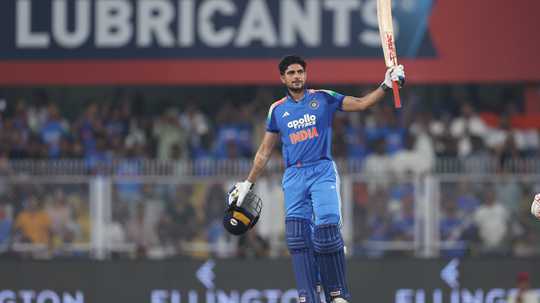
Partnering with Gill, Rohit set the tone early, and the duo’s partnership was a testament to India’s prediction of a high-octane chase. Gill’s remarkable innings, which included reaching 150 off 89 balls and culminating in a double century off 117 balls, was a masterclass in aggressive batting. His innings broke multiple records, including becoming the fastest Indian to reach a double hundred and the second-fastest in ODI history overall.
Shubman Gill’s Historic Double Century: A Game Changer
Gill’s innings was a blend of power, timing, and strategic shot selection. His ability to come down the pitch against spinners, hit sixes, and accelerate the scoring rate exemplified the modern aggressive batting style. His double century not only broke records but also demonstrated the importance of cricket prediction in understanding player form, pitch conditions, and match scenarios.
He faced initial early overs challenges, including a thick edge off Jayden Seales, but quickly found his rhythm, scoring at an astonishing rate. His partnership with Rohit, which amassed 255 runs—the highest opening stand for India in ODIs—set the stage for a historic chase, illustrating how strategic planning and prediction can align with real-time game dynamics.
India’s Record Chase: A Historic Milestone
Crossing 200 runs in just over 21 overs, India’s batting display was an aggressive testament to the evolving nature of ODI cricket. The team’s ability to chase such a formidable target with ease surprised many cricket prediction models, which have previously favored more conservative approaches in similar scenarios. Gill’s 223* and Rohit’s century were instrumental in achieving this feat, reflecting the importance of player performance analysis in predicting match outcomes.
Despite losing some wickets later in the innings, including Kohli’s dismissal and a quick wicket from Jadeja, India maintained composure, with Ruturaj Gaikwad and Jadeja contributing vital runs to seal the victory. The match’s final moments reaffirmed India’s dominance in the format and underscored the significance of strategic batting and accurate prediction in winning high-stakes cricket matches.
The Significance of This Match in Cricket Prediction and Future Outlook
This exhilarating contest has profound implications for cricket prediction enthusiasts. The record-breaking chase, combined with individual milestones such as Gill’s double century and Kuldeep’s 200th wicket, showcase how deep analysis, player form, pitch conditions, and game strategies intertwine to produce unpredictable yet fascinating outcomes.
Furthermore, the match highlighted the importance of adaptability—both in batting and bowling strategies—and the evolving standards of aggressive play in ODIs. As cricket prediction models continue to develop with advanced data analytics, such matches serve as benchmarks for forecasting future performances and understanding the nuances of high-pressure cricket.
Final Thoughts: A Match for the Ages
The India versus West Indies encounter has entered cricket folklore, not only for its record-breaking statistics but also for its demonstration of skill, resilience, and strategic planning. Shubman Gill’s historic double century was the standout achievement, symbolizing the exciting future of Indian cricket and the ever-increasing importance of prediction models in the sport’s analysis.
As fans and analysts analyze every detail of this thrilling game, one thing remains clear: cricket continues to captivate audiences worldwide, with each match offering new insights, records, and memorable moments that define the spirit of the game.
Brief Match Summary
West Indies: 405/7 in 50 overs (Amir Jangoo 114, Shai Hope 104, John Campbell 101; Kuldeep Yadav 2-65, Ravindra Jadeja 2-75, Gurnoor Brar 2-96)
India: 406/2 in 43.3 overs (Shubman Gill 223*, Rohit Sharma 101; Shamar Joseph 1-52, Jayden Seales 1-78)
Result: India won by 8 wickets, taking an unassailable 2-0 lead in the three-match series.
This match will be remembered for its record-breaking performances, strategic brilliance, and the thrilling unpredictability that makes cricket one of the world’s most beloved sports. Whether you’re a cricket prediction enthusiast or a passionate fan, this game provided a masterclass in modern cricketing excellence.