
Steven Nzonzi backs Kylian Mbappé as the leading Ballon d’Or contender
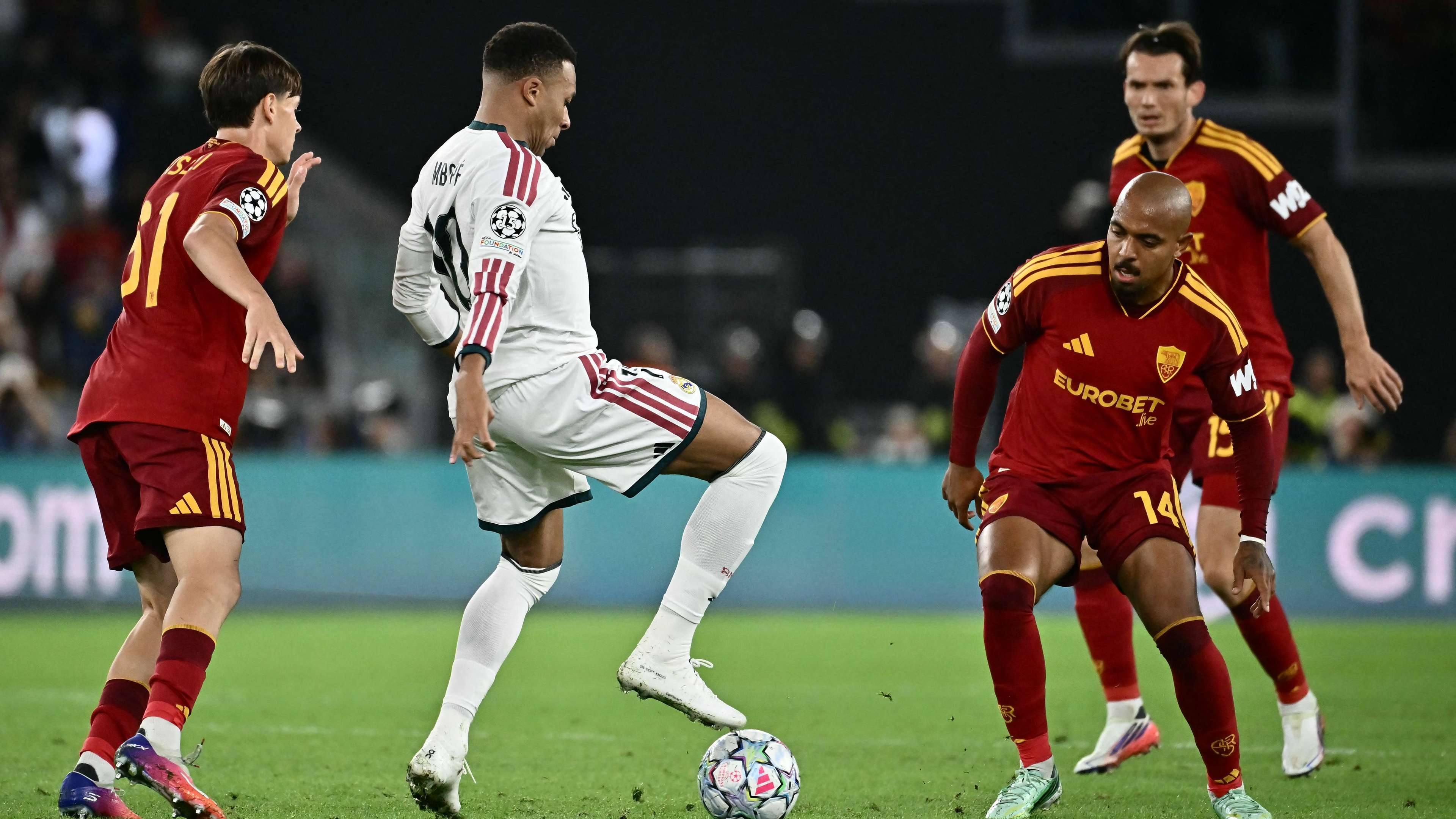
Former France international Steven Nzonzi believes Kylian Mbappé is the most deserving candidate for the Ballon d’Or, arguing that individual quality and influence should carry more weight than the number of trophies won by a player’s team. The former Sevilla and Roma midfielder also offered a measured assessment of Eduardo Camavinga and Aurélien Tchouaméni, praised Rodri’s command of midfield, and named Michael Olise and Lamine Yamal as the world’s leading wingers.
Nzonzi, now continuing his playing career with Dunkerque in France’s second division, shared his views in an interview with Spanish newspaper AS. His comments provide an experienced perspective on several of football’s most prominent young stars—and on the debate over what should determine the sport’s most prestigious individual award.
Why Nzonzi believes Mbappé deserves the Ballon d’Or
For Nzonzi, Mbappé’s case rests on the level of performance he delivers, rather than simply the trophies collected by his club. The former midfielder acknowledged that the forward has not won every major title, but said his individual achievements and overall impact make him the strongest choice for the award.
“I think he is the best in the world at present,” Nzonzi said, adding that he believes the next Ballon d’Or should belong to Mbappé. He argued that while other candidates may have enjoyed more success as part of a winning team, few players can match the Frenchman’s ability and influence on the pitch.
The discussion reflects a familiar tension in Ballon d’Or voting. Some voters place great importance on collective success, reasoning that major trophies are a clear measure of a player’s contribution. Others focus more heavily on individual performance, consistency and the ability to shape games. Nzonzi’s position is firmly in the latter camp: in his view, the award should recognise the player who has offered the most as a footballer, even when team honours do not tell the whole story.
Any Ballon d’Or prediction remains uncertain until the voting picture becomes clear, and the final outcome can depend on a player’s performances during the relevant period, the importance of key matches and the strength of the competition. But Nzonzi’s comments underline why Mbappé is likely to remain central to the conversation. His pace, finishing and capacity to create danger make him a constant threat, while his reputation ensures that every major performance is closely scrutinised.
Mbappé still has ground to cover before matching Messi and Ronaldo
Although Nzonzi considers Mbappé the world’s best player at present, he stopped short of placing him alongside Lionel Messi and Cristiano Ronaldo. The two icons, he said, have reached a level built on years of extraordinary individual and collective success.
“He is on the way, but he has not reached that status yet,” Nzonzi explained. Mbappé, he added, still has a long career ahead in which to prove himself. That distinction is important: being the leading player of the moment is not the same as building a legacy comparable to two footballers who dominated the game across multiple eras.
For Mbappé, the next stage will be about sustaining excellence while adding the biggest honours to his record. His talent is not in question, but the comparisons with Messi and Ronaldo bring a different standard—one based on longevity, consistency and repeated success at the highest level. Nzonzi’s prediction is therefore confident about Mbappé’s present standing, while leaving the question of his ultimate place in football history open.
Nzonzi sees Camavinga’s potential despite setbacks
Nzonzi also discussed Eduardo Camavinga, whom he knows from their time together at Rennes. He described the midfielder as a top-level talent and said he believes Camavinga can still become one of Europe’s best in his position.
In Nzonzi’s assessment, injuries have interrupted the progress of a player who has the technical ability and understanding to make a major impact. He also pointed to the importance of confidence and stability, suggesting that consistent opportunities can help Camavinga rediscover his strongest form. At 23, he has time to develop, but Nzonzi’s message was that belief in his own ability will be essential.
Camavinga’s situation highlights a broader challenge for young players at elite clubs. Talent can open the door, but regular minutes, fitness and a settled role often determine how quickly a player matures. A promising spell can be followed by competition for places or an injury setback, making patience and continuity crucial to long-term progress.
Rodri and Tchouaméni bring different strengths to midfield
Asked to compare Rodri with Aurélien Tchouaméni, Nzonzi resisted treating the two as direct rivals. He described both as outstanding midfielders, while identifying Rodri as the best in the world in that role at present.
Nzonzi praised Rodri’s intelligence and all-round quality, particularly his ability to control the centre of the pitch. A midfielder’s influence is not always captured by goals or assists: positioning, decision-making, ball retention and the ability to dictate a team’s rhythm can be just as important. Rodri’s value, in Nzonzi’s view, comes from how effectively he manages those responsibilities.
Tchouaméni, meanwhile, was also described as a top-class player. The comparison illustrates how elite midfielders can offer different qualities depending on their role, team structure and responsibilities. Rather than dismissing one player in favour of the other, Nzonzi recognised the strengths of both while giving Rodri the edge in the current ranking.
Olise and Yamal earn praise as the leading wingers
Nzonzi was more decisive when asked about Michael Olise and Lamine Yamal. He said he strongly believes the pair are the best wingers in world football at present, praising their star quality, influence and entertainment value.
Both players have attracted attention for their ability to change the direction of a match from wide areas. They can take on defenders, create chances and provide moments of individual skill that energise supporters. Nzonzi believes they are operating at a similar level, a notable endorsement given the different stages of their careers and the expectations surrounding each.
His assessment also reflects the changing profile of the modern winger. Today’s wide attackers are expected to do more than stay near the touchline: they must contribute to build-up play, make intelligent runs and create opportunities for teammates as well as themselves. Olise and Yamal’s impact, as Nzonzi sees it, comes from combining technical flair with a meaningful role in their teams’ attacking play.
A possible move from playing to coaching
While Nzonzi continues to play for Dunkerque, he is also preparing for a possible future in management. He said he is close to completing a top-level European coaching qualification and wants to explore whether coaching could become the next chapter of his career.
Nzonzi believes players who have operated in central midfield may have useful qualities to bring to the touchline. The position demands constant awareness of space, teammates and opponents, as well as an understanding of how a team’s shape changes during a match. Those experiences could provide a strong foundation for coaching, although success will also depend on communication, leadership and the ability to turn tactical ideas into clear instructions.
For now, Nzonzi’s comments offer a snapshot of the debates shaping modern football: how to judge Ballon d’Or candidates, how young midfielders can fulfil their potential and which attackers are setting the standard. His verdict is clear on Mbappé’s current standing, but his wider analysis leaves room for the next generation—and for his own possible transition from the pitch to the dugout.