
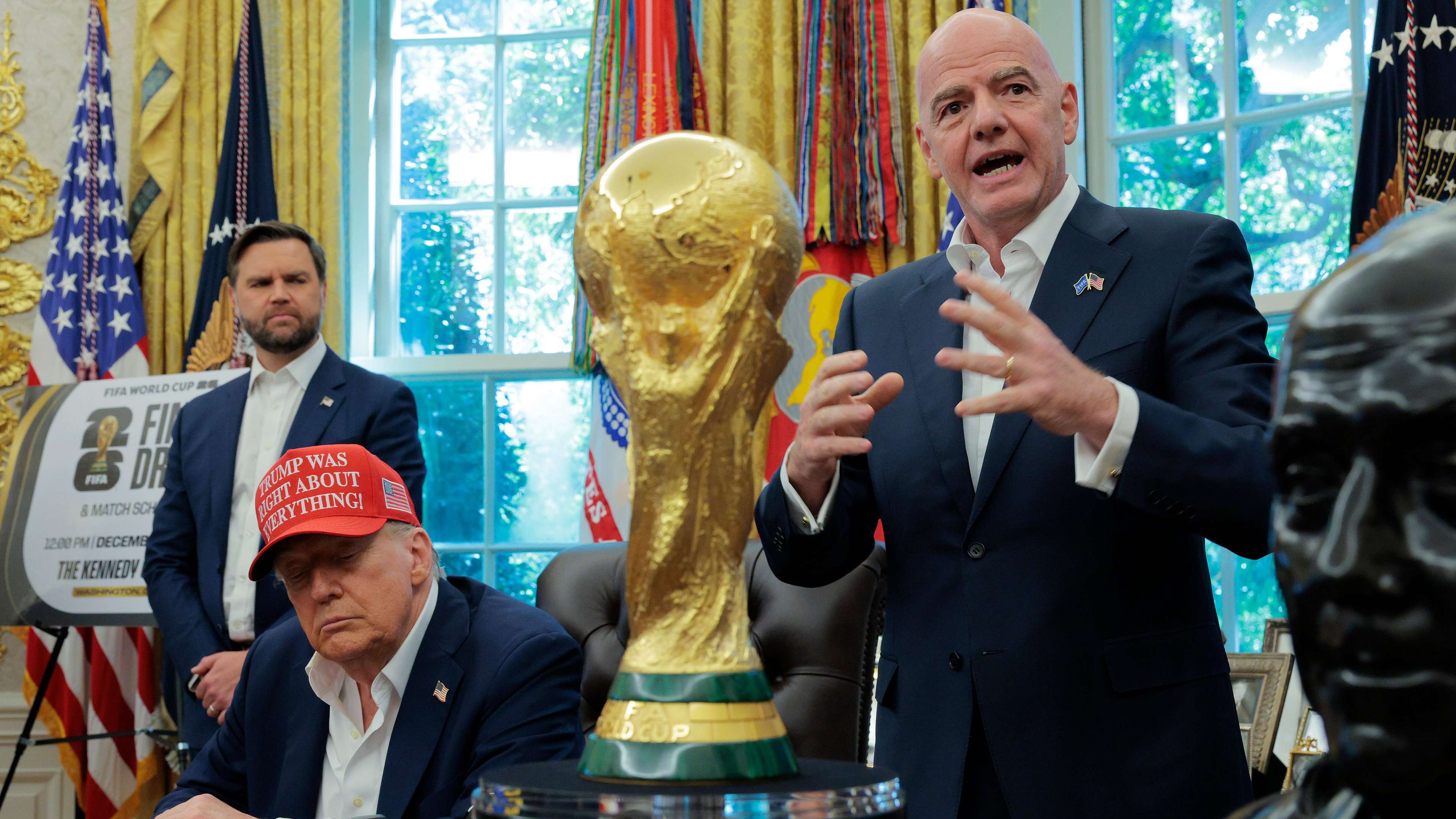

FIFA VP Dismisses Trump’s Influence on 2026 World Cup Host Cities
In a recent conference in London, Victor Montagliani, FIFA’s vice-president and president of CONCACAF, addressed US President Donald Trump’s comments about potentially deciding which cities will host games in the 2026 World Cup. Montagliani firmly stated that Trump does not have the authority to determine the host cities for the prestigious tournament.
Trump’s Controversial Remarks
Trump had previously suggested that he could intervene in the selection process for World Cup host cities, expressing his concerns about safety. He mentioned the possibility of relocating games from cities that he deemed “even a little dangerous for the World Cup.” These remarks sparked debates and raised questions about the extent of political influence on international sporting events.
FIFA’s Autonomy in Deciding Host Cities
Montagliani emphasized that the decision-making process for selecting host cities for the 2026 World Cup is solely within FIFA’s jurisdiction. The organization follows a rigorous and transparent bidding process to evaluate potential host cities based on various criteria, including infrastructure, security, facilities, and overall readiness to host such a significant global event.
As FIFA’s vice-president, Montagliani reiterated the importance of upholding the integrity and independence of the organization when it comes to determining the logistics of major tournaments like the World Cup. He emphasized that political interference in the selection of host cities could undermine the credibility and fairness of the process.
Implications for the 2026 World Cup
The controversy surrounding Trump’s comments has raised concerns about the potential impact on the 2026 World Cup, which is set to be jointly hosted by the United States, Canada, and Mexico. With the tournament expanding to 48 teams and 80 matches, the selection of host cities plays a crucial role in ensuring the success and smooth execution of the event.
Montagliani’s statements serve as a reassurance to stakeholders and fans that FIFA remains committed to upholding its principles of transparency and fairness in the selection of host cities. The organization’s dedication to promoting football as a unifying force that transcends political boundaries is essential in maintaining the spirit of the World Cup as a celebration of global diversity and sportsmanship.
Looking Ahead
As preparations for the 2026 World Cup continue, the focus remains on fostering collaboration among the three host nations and delivering a memorable tournament for players and fans alike. With FIFA’s assurance of autonomy in selecting host cities, the stage is set for a spectacular showcase of football talent on an international scale.
In conclusion, Montagliani’s decisive response to Trump’s remarks underscores the importance of separating politics from sports and highlights FIFA’s commitment to ensuring a fair and unbiased selection process for the 2026 World Cup host cities.
Role of Politics in International Sporting Events
The intersection of politics and sports has been a longstanding issue in the world of international competitions. Political leaders often seek to influence or capitalize on major sporting events to bolster their image or promote national interests. However, FIFA and other governing bodies aim to maintain the integrity of the sports they oversee by keeping political interference at bay.
Trump’s remarks regarding the 2026 World Cup host cities are just one example of the potential impact of political rhetoric on the world of football. While concerns about security and safety are valid, it is essential to ensure that decisions about hosting such events are based on objective criteria rather than political agendas.
Transparency in the Bidding Process
FIFA’s bidding process for selecting host cities is designed to be transparent and impartial, giving each potential host the opportunity to present its case based on merit. By following strict evaluation criteria, FIFA aims to ensure that the chosen cities are well-equipped to handle the logistical challenges of hosting a major tournament like the World Cup.
Montagliani’s assertion of FIFA’s autonomy in deciding host cities reinforces the organization’s commitment to fairness and integrity. By distancing itself from political pressures, FIFA can maintain the credibility of its decision-making process and uphold the values of transparency and accountability.
Collaboration Among Host Nations
With the 2026 World Cup set to be jointly hosted by the United States, Canada, and Mexico, the tournament presents a unique opportunity for cross-border collaboration and unity. The three nations must work together to ensure the success of the event and provide a welcoming and hospitable environment for teams and fans from around the world.
By emphasizing the importance of cooperation among the host nations, FIFA promotes the idea that football has the power to transcend political differences and bring people together in the spirit of friendly competition. The 2026 World Cup can serve as a platform for fostering international goodwill and celebrating the universal appeal of the beautiful game.
Legacy of the 2026 World Cup
As the 2026 World Cup approaches, the legacy of the tournament extends beyond the final whistle of the last match. The event has the potential to leave a lasting impact on the host cities, from infrastructure improvements to increased tourism and economic opportunities. By hosting the World Cup, the United States, Canada, and Mexico can showcase their capabilities on a global stage and leave a lasting impression on football fans worldwide.
Ultimately, the successful execution of the 2026 World Cup will depend on the collaborative efforts of FIFA, the host nations, and all stakeholders involved in the planning and execution of the event. By prioritizing transparency, fairness, and cooperation, the tournament has the potential to be a memorable and transformative experience for all involved.
Conclusion
In conclusion, the controversy surrounding Trump’s comments about the 2026 World Cup host cities highlights the delicate balance between politics and sports. By reaffirming FIFA’s autonomy in selecting host cities and emphasizing the values of transparency and cooperation, Montagliani’s response underscores the organization’s commitment to upholding the integrity of international football competitions. As the world eagerly anticipates the 2026 World Cup, the focus remains on delivering a world-class event that celebrates the spirit of unity, diversity, and excellence in football.